Tugadaily
PT
Christine Lagarde, ECB president
Business 28 June 2026

ECB raises rates to 2.25% and Euribor follows

The European Central Bank lifted its rate to 2.25% in June. The 3-month Euribor is heading to about 2.4% this year — bad news for borrowers.

Anyone whose mortgage is tied to Euribor already knows which way the wind is blowing. The European Central Bank raised its key rate from 2.00% to 2.25% in June, and Euribor, which tracks Frankfurt’s decisions closely, is moving with it.

The forecast is for a gradual climb: the 3-month Euribor should rise from 2.2% in 2025 to about 2.4% this year, 2.8% in 2027, and settle at 2.7% in 2028. No dramatic leaps, but enough to nudge the monthly budget of anyone with a loan.

What to do with this

If you’re paying off a home, it’s worth doing the maths: simulate the payment with Euribor a touch higher and, if it makes sense, talk to your bank about terms or conditions. If you’re a saver, deposits may regain some shine.

The backdrop also helps explain the move: with energy pushing prices up, the ECB prefers to keep its guard high.

See also: inflation at 3.3% and the housing market. Decisions come from the European Central Bank.

Image: Wikimedia Commons

European Central Bank headquarters in Frankfurt
Business 29 June 2026

The ECB lines up another rate hike and Euribor bites again

Markets are pricing in two to three rate rises by year-end. Euribor is already at an 18-month high — and that moves both loans and savings.

After a long stretch of falling, interest rates have changed course again — and this time upward. Markets now expect two, possibly three, rate rises from the European Central Bank by the end of 2026, with the deposit rate potentially nearing 2.75% by December.

The practical translation comes through Euribor. In early June, the six-month rate, the one most used for home loans in Portugal, was around 2.59%, and the twelve-month rate near 2.85% — roughly 18-month highs. Anyone on a variable-rate loan will feel the difference at the next instalment review.

Two sides of the same coin

For borrowers, it is bad news: higher payments and less room in the household budget. For savers, there is finally an upside — term deposits and savings certificates are paying interest worth a look again, after years of returning almost nothing.

The ECB’s logic is the usual one: rein in inflation without strangling the economy. The balance is delicate, because raising rates too far risks cooling growth at a time when Europe is hardly in glowing health.

For Portugal, heavily indebted at variable rates, every tenth of a point counts. It is worth checking the Euribor term on your contract and comparing it with what banks pay on savings.

See also: the ECB’s first rate hike since 2023 and how Euribor moves home loans. Decisions and statements are on the ECB website.

Imagem: Wikimedia Commons

Sam Altman, chief executive of OpenAI
Business 29 June 2026

OpenAI's mega-round reignites fears of an AI bubble

With the ChatGPT maker valued at $852 billion, the question grows louder: are world markets leaning too hard on a single bet?

That OpenAI closed the largest round ever was already known. The question left hanging over the markets is a different, more awkward one: is artificial intelligence inflating a bubble the size of a continent?

The maths is dizzying. The company was valued at around $852 billion, with giant cheques from Amazon, Nvidia and SoftBank. The trouble is that much of the rise in world stock markets over recent months rests on a handful of AI-linked firms. When so much hope is concentrated in so few names, any stumble is felt by everyone.

What it changes for investors here

For the Portuguese investor, the lesson is not to rush out and buy OpenAI shares — it is not even listed. It is to grasp that even an apparently diversified global index fund is now heavily exposed to this bet. If AI fails to deliver profits at the expected pace, the correction could be broad.

That does not mean it is a bubble doomed to burst tomorrow. It means it is worth looking at your portfolio and asking how much of it depends, directly or indirectly, on a single narrative. Diversifying has gone from textbook advice to plain financial hygiene.

See also: the numbers behind OpenAI’s record round. The company’s official updates are at openai.com.

Imagem: Wikimedia Commons

Avenida da Liberdade, Lisbon
Business 29 June 2026

PSI near a 16-year high: Lisbon's stock market is having a moment

Lisbon's index is up almost 7% in four weeks and more than 34% over the year. What's driving the Portuguese market?

Good news if you’ve got money on the Lisbon exchange: the PSI is in fine form. Portugal’s benchmark index is hovering around 8,900 points, close to highs not seen in roughly 16 years. And it’s no one-day wonder — it’s up nearly 7% over four weeks and more than 34% over the past year. For an index that was long the Cinderella of Europe, that’s quite the return to the ball.

What’s pulling the index up

The momentum has come mainly from banking, utilities and telecoms — the heavyweights that dominate the PSI’s market cap. When banks rise with margins still healthy and utilities pay strong dividends, the index says thank you. Dividend season helps, too: June tends to bring several payment dates that keep investors interested.

There’s also a European tide at work here. Markets across the continent have been buoyant, and Lisbon, being small, catches those winds nicely when they blow the right way.

Keep your feet on the ground

Record highs always feel good, but the usual caveat applies: an index concentrated in a few sectors climbs fast and can correct just as quickly if banking or energy stumbles. Long-term investors do well to look at fundamentals, not just the chart. Official data and the index composition are available at Euronext Lisbon.

See also: Brent at the year’s lows and the record house prices.

Image: Wikimedia Commons

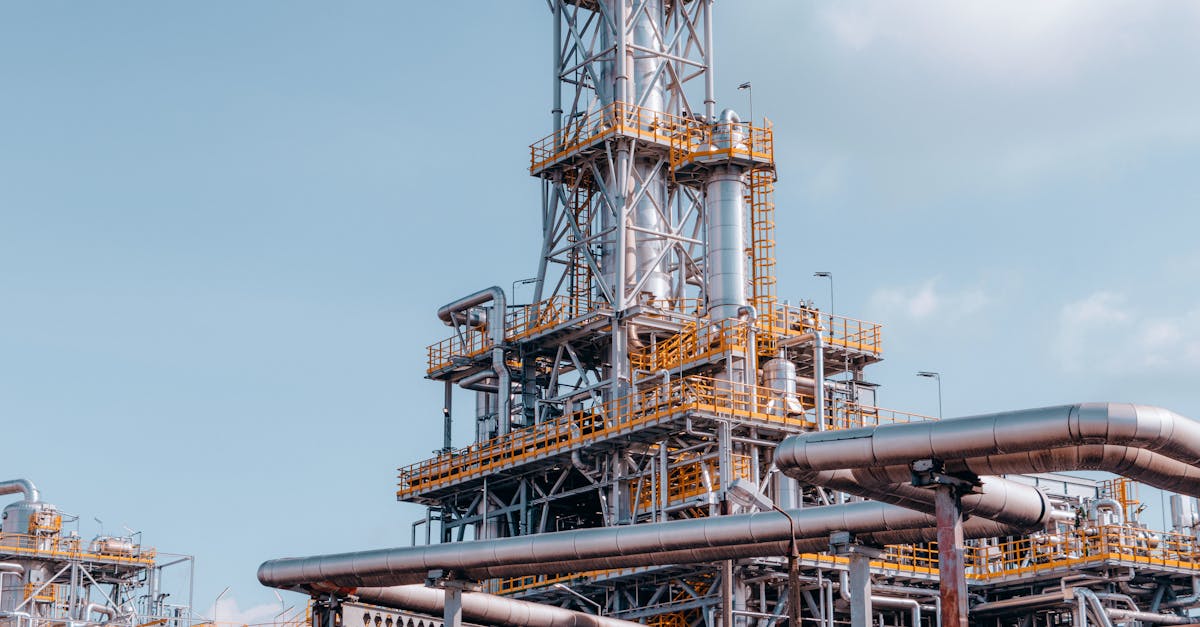
An oil refinery at the end of the day
Business 29 June 2026

Brent at a yearly low: is relief at the pump on the way?

With Hormuz reopened, oil prices tumbled to around $72. Good news for anyone filling the tank — with the usual fine print.

Anyone who’s been wincing at fuel prices these past weeks can breathe a little. Brent, the benchmark that matters most for what we pay, fell to around $72 a barrel — its lowest since late February.

The reason is geopolitical: with the Strait of Hormuz open again and tankers moving, the fear of a supply cut has drained away. When the market stops panicking, crude falls. And when crude falls, sooner or later that reaches the pump.

Mind the fine print

Before celebrating, two brakes. First, the oil price doesn’t reach the station instantly: there’s always a lag of days to weeks, plus taxes that don’t move with the barrel. In Portugal, the tax slice of each litre is huge, so a 5% drop in crude never translates into a 5% drop in what we pay.

Second, the calm is fragile. The US-Iran ceasefire still hangs by a thread, and one spark could send the barrel jumping again. Anyone budgeting for the household would do well not to assume low prices are here to stay.

Even so, the direction is good. After weeks of watching the numbers climb, it’s the first time in a while that the wind is blowing in drivers’ favour.

See also: The Strait of Hormuz breathes again. Reference prices can be checked at the DGEG.

Imagem: Wikimedia Commons

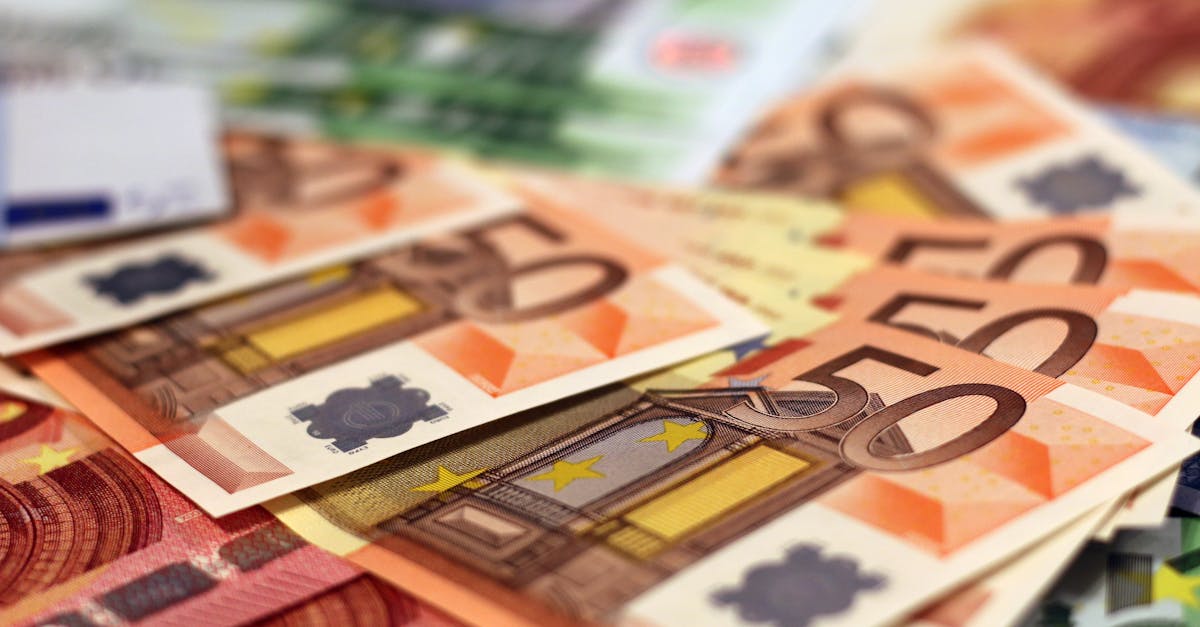
Euro notes and coins
Business 28 June 2026

Bank of Portugal: economy holding up, but inflation still nags

June's Economic Bulletin points to a favourable labour market and more investment from EU funds, with inflation driven by energy prices.

The Bank of Portugal laid its mid-year cards on the table, and the picture is not bad. In June’s Economic Bulletin, the regulator describes an economy that is holding up: a favourable labour market, more investment pushed by incoming EU funds, and a budget stance still on the expansionary side.

Translated into kitchen-table terms: there are jobs, money is flowing in for works and projects, and the state is not tightening its belt. Added up, these are ingredients that help the economy grow.

The catch is called inflation

Not everything is rosy. The rise in prices in 2026 largely reflects costlier oil tied to instability in the Middle East, which hit an important slice of the world’s energy supply. When energy goes up, it drags almost everything with it, from the electricity bill to the price of what we put on the plate.

This is why the recent calm in the barrel price is so welcome. If oil stays well-behaved, inflation tends to ease, and that is felt directly in family budgets.

For now, the snapshot is of an economy that keeps resisting, with one eye on jobs and funds and the other, watchful, on the price thermometer.

See also: Inflation at 3.3% and the weight of energy. Read the Economic Bulletin at the Bank of Portugal.

Illustrative · Photo: Pixabay / Pexels

Sample of crude oil
Business 28 June 2026

Oil returns to pre-crisis levels and gives fuel prices some slack

Brent eased back toward 72 dollars, returning to levels seen before the Middle East conflict. At home, petrol and diesel should hold steady.

After weeks of jumping with every headline out of the Middle East, oil finally caught its breath. The Brent barrel eased back toward 72 to 73 dollars, returning to the levels it held before tensions in the region spiked.

The explanation is almost mechanical: when the market fears the conflict will cut supply, prices rise; when the fear eases, they fall again. That is what happened in recent days, with Brent dropping more than five per cent in a single session.

And at the pump?

The good news comes with the usual fine print. A falling barrel tends to take a while to reach the tank, but estimates point to stability as soon as next week: standard 95 petrol should sit around 1.877 euros a litre and standard diesel around 1.769 euros. In other words, no big shocks for now.

It is worth remembering why this matters even to people who never look at markets. The oil price feeds into almost everything: what we pay to fill the car, the cost of moving fruit to the supermarket and, further down the line, inflation. When the barrel calms down, we all breathe a little easier.

Whether the calm lasts is another matter. With the Gulf still on edge, one fresh jolt could send the barrel climbing again.

See also: European markets and gold near record highs. Check the Brent quote on Trading Economics.

Imagem: Wikimedia Commons

Stacked gold bars
Business 28 June 2026

European stocks fall on AI-bill jitters; gold hovers near highs

The Euro Stoxx 50 slips as tech sells off, while gold trades near 4,090 dollars after weeks of decline.

European markets closed the week lower, and the culprit has a name: artificial intelligence. Not the technology itself, but the bill it’s running up. Investors have started eyeing the billions big tech is pouring into data centres and chips, and asking when the payback arrives.

The result: the Euro Stoxx 50 slid toward the 6,200 mark, down on the week, with the broader Stoxx 600 following suit. When tech sneezes, the rest of the market catches a cold.

Gold as the cushion

On the other end of the see-saw sits gold, which traded near 4,090 dollars an ounce. Even so, the metal logged its fourth straight weekly fall, held back by a strong dollar and a tougher tone from the US Federal Reserve. Pulling back or not, it’s still at historic levels.

For anyone with savings or a retirement plan, the message isn’t to panic. It’s to read the room: jittery markets, still-high rates, and close attention to every inflation print. Weeks like this tend to be a rollercoaster, not a straight line.

The read for Portugal is indirect but real: a good chunk of our savings and funds track these indices. When Europe drops, it’s felt here too.

See also: ECB raises rates to 2.25% as Euribor follows.

Imagem: Wikimedia Commons

Bank of Portugal headquarters
Business 28 June 2026

Inflation holds at 3.3%, and energy is still calling the shots

Portugal's inflation stayed at 3.3% in May, with energy up 13.1%. The Bank of Portugal warns of weaker real incomes.

Inflation isn’t running away, but it isn’t letting go either. In May, prices rose 3.3% year on year, the same pace as the month before and the highest since September 2023. The main culprit has a name: energy, up 13.1%, driven by the Middle East war and tensions in the Strait of Hormuz.

There is a calmer note, though. Core inflation, which strips out energy and unprocessed food, held at 2.2% for the second month running. Services, meanwhile, ticked up slightly, from 3.2% to 3.4%.

The Bank of Portugal’s warning

In its June Economic Bulletin, the Bank of Portugal underlines the obvious but uncomfortable point: this temporary rise in prices eats into real income growth this year. In plain terms, even with wages rising, purchasing power feels the squeeze.

For households, the practical takeaway is to budget with room to spare: energy remains the most unpredictable variable, and while Hormuz stays tense, that’s where the shocks come from.

See also: the ship hit in Hormuz and the ECB’s rate hike. Official data at the Bank of Portugal and INE.

Image: Wikimedia Commons

Headquarters of the Bank of Portugal, in Lisbon
Business 27 June 2026

Bank of Portugal: economy growing 1.8%, but inflation keeps nagging

The June Economic Bulletin keeps 2026 growth at 1.8% and revises inflation up to 3.1%. International conflict is weighing on the numbers.

The Bank of Portugal laid its cards on the table in its June Economic Bulletin, and the read is of an economy that keeps growing — but with an increasingly loud catch: inflation isn’t easing the way it was supposed to.

Let’s start with the good news. The GDP growth forecast holds at 1.8% for 2026, with 1.6% in 2027 and 1.8% in 2028 rounding out the horizon. It’s not a spectacular figure, but it’s solid growth and above the euro area average, which the ECB has meanwhile revised down to a modest 0.8% this year. The engine is still investment, fuelled by larger inflows of European funds, and a labour market that remains favourable.

The problem is prices. The central bank revised inflation up, to 3.1% in 2026 — three tenths higher than it projected in March — before expecting a return to values closer to 2% in the following years (2.4% in 2027 and 2.0% in 2028). Behind this revision is, above all, energy: international conflict has sent uncertainty soaring and pushed oil-price assumptions higher.

In other words, it’s the old dilemma. The economy keeps moving forward, creating jobs and attracting investment, yet the cost of living continues to eat into part of those gains in household budgets. Anyone doing the maths at the end of the month feels that gap between the headline numbers and the price of the weekly shop.

There’s also a brighter note on public finances: the Bank of Portugal was more optimistic about the deficit, a sign that the budgetary effort of recent years hasn’t been lost along the way. But the underlying message is one of caution. In a year shaped by geopolitical tension and volatile energy, projections are worth what they’re worth — and could change at the next revision. For now, the picture is of a resilient economy keeping a wary eye on inflation.

Image: Wikimedia Commons

Screen showing market analysis and price trends
Business 27 June 2026

IMF trims Portugal's growth forecast to 1.7% — but sees the books balanced

The International Monetary Fund cut its outlook for Portugal's economy this year while projecting a balanced budget.

There are two pieces of news here, and they pull in different directions, so it’s worth reading slowly.

The first: the International Monetary Fund again trimmed its growth forecast for Portugal’s economy this year, from 1.9% to 1.7%. It’s no collapse — it’s a cooling, a sign the engine isn’t accelerating at the pace many had hoped.

The second, cheerier one: the same IMF expects Portugal to close the year with a balanced budget, better than the small 0.1%-of-GDP deficit it flagged in April. In other words, the country spends roughly what it takes in — a historical rarity that a few years ago looked like fiction.

Two portraits of the same country

How do a growth downgrade and balanced books fit in the same sentence? Because they measure different things. Growth tells us how fast the economy is fattening up; the budget balance tells us whether the state is living within its means. You can have the second tidy and still be running at half-throttle on the first.

It’s also worth remembering that each institution has its own thermometer. The Bank of Portugal is more upbeat in the short term, buoyed by incoming EU funds and a labour market that stays robust. The IMF, more cautious, looks at the risks abroad — the Middle East chief among them.

The takeaway

For someone at home, the translation is simple: no drama, but no party either. The economy keeps growing, just more slowly; and the state, on paper at least, is balancing its ledger. In a Europe full of deficits, that’s not a bad calling card.

Illustrative · Photo: Alesia Kozik / Pexels

Stacked euro banknotes
Business 27 June 2026

Inflation stuck at 3.3% — and energy is (again) to blame

Prices in Portugal keep rising 3.3% a year, dragged up by a 13% jump in energy tied to Middle East tensions.

If your money feels like it stretches less than a year ago, it’s not your imagination. Inflation in Portugal held at 3.3% in May, one of the highest readings since 2023 — and the main culprit is, once again, energy.

Energy costs jumped about 13% over the year, pushed up by Middle East tensions and the scares around the Strait of Hormuz, through which much of the world’s oil passes. When the barrel rises abroad, the bill lands at home — first at the pump, then on nearly everything else, because moving goods costs more too.

What to expect

The good news is that forecasts point to a cooldown: economists expect annual inflation near 3% in 2026, easing to 2.3% in 2027. In other words, prices are still rising, just more slowly.

For daily life, the takeaway is simple. It’s worth comparing electricity and gas tariffs, because that’s where the biggest pressure sits. And savers feel the bite: with inflation above 3%, money sitting idle in the bank loses real value every month.

It’s no cause for panic — the economy is still growing and unemployment is low — but it’s a reminder that energy, far away, still rules the household budget here.

Illustrative · Photo: Pixabay / Pexels

Stacked gold bars and coins
Business 27 June 2026

Gold loses its shine: far from January's record as Iran tensions ease

After hitting all-time highs early in the year, gold has pulled back sharply. What changed — and what investors are saying.

Anyone who bought gold early in the year thinking it would rise forever got a quick lesson in how markets work: nothing goes up in a straight line. The metal that looked unstoppable in January has lost much of its sparkle and is now keeping a far lower profile.

On 28 January, gold touched an all-time high near 5,600 dollars an ounce, driven by a perfect storm: geopolitical uncertainty, high inflation and central banks buying like never before. Five months on, it’s a different story. This week gold trades around 4,090 dollars, a drop of nearly 20% from the peak and about 5% so far this year.

What cooled the enthusiasm

The short explanation fits in one word: peace. Signs of de-escalation between the United States and Iran took away some of the fear that had sent so many people sheltering in gold. When the world breathes easier, the so-called safe-haven asset loses appeal, because investors go back to taking risks elsewhere in search of higher returns.

That doesn’t mean gold has stopped being interesting. For many portfolios it remains an insurance policy against surprises — and it only takes a few weeks of nerves for the shine to come back. The lesson, once again, is the usual one: gold protects, but it’s not a lottery ticket.

Reference prices can be tracked at the World Gold Council, the sector’s official body.

See also: Oil eases and gives wallets a breather and inflation stuck at 3.3%.

Illustrative · Photo: Zlaťáky.cz / Pexels

View of a large oil refinery with intricate pipelines
Business 27 June 2026

Oil eases and your wallet exhales: the Hormuz scare has cooled

Brent slid back toward $72 as tensions in the Strait of Hormuz eased. What it means for fuel prices in Portugal.

Remember the weeks when every headline out of the Gulf sent the price of diesel jumping? Well, the plot is shifting — and this time for the better.

Brent crude slid back toward $72 a barrel, and US WTI toward $69, after markets realised that oil is, after all, still flowing through the Strait of Hormuz. Saudi Aramco resumed loadings at its Ras Tanura terminal after nearly four months idle, and the growing sense that crude will keep moving took the pressure off prices.

Why it reaches us

Portugal has no oil wells, but it has tanks to fill and electricity bills to pay. When the barrel spikes on a geopolitical crisis, we feel it at the pump within days. When it cools, relief arrives too — though, let’s be honest, always more slowly than we’d like.

The analysts’ read is almost ironic: after months of fretting about a supply shock, what’s now on the table is the opposite — a possible glut, with China yet to fully revive its appetite for imports. Too much oil chasing too few buyers usually means falling prices.

The catch

None of this is guaranteed. The Middle East remains the great unpredictable variable, and the Bank of Portugal itself has warned that the main risks to inflation here come precisely from that board. One fresh flare-up at Hormuz and the film rewinds fast.

For now, here’s the rare bit of good news: a factor that spent months pushing prices up is, finally, pushing the other way.

Illustrative · Photo: Jakub Pabis / Pexels

Close-up image of varied US dollar bills on a black background.
Business 26 June 2026

The chip shock: AI's bill reached the shops and rattled the markets

Apple and Microsoft raised prices over memory costs, and Asian tech stocks tumbled. SoftBank fell as much as 13%.

For months we kept hearing that artificial intelligence would cost a fortune to build. This week we found out who pays the bill: us, at the tech-shop checkout.

Apple and Microsoft announced consumer price hikes within days of each other — and the markets did not like the message. Asian tech stocks took a heavy tumble, with Japan’s SoftBank falling more than 13% in a single day and dragging half the sector down with it.

Why this is happening

Blame the memory. The price of memory chips — DRAM and NAND, the stuff that stores your photos and keeps your phone snappy — has quadrupled since 2025. The reason is simple: factories have swung production toward high-bandwidth memory (HBM), the kind AI data centres swallow by the million. That leaves little capacity for everyday-device memory, and when supply shrinks, the price jumps.

What it means for your wallet

You can already see it on the price tags. Apple pushed some models up by as much as $300 — a 1TB MacBook Pro went from $1,699 to $1,999. Microsoft warned that Xbox consoles will cost $100 to $150 more from August, its second hike in under a year.

And here’s what spooks investors: if devices get pricier, people may buy fewer of them. Buy fewer, and the very memory boom that had been fattening share prices could start to cool. In other words, the AI that lifted these stocks might end up tapping the brakes on them — from the least expected direction: the shopper who looks at the price and says, “maybe next year.”

Illustrative · Photo: Sergei Starostin / Pexels