
PT
José Luís Carneiro, leader of the Socialist Party
Politics 28 June 2026

PS says it blocked the labour reform and dares Montenegro to react

José Luís Carneiro claims a Socialist win for halting the labour 'counter-reform' and the single social benefit, urging the PM to 'take his head out of the sand'.

The Socialist Party did some chest-thumping on Sunday. Meeting in Lisbon, the PS National Commission heard its leader, José Luís Carneiro, claim as a party victory the fact that it had managed to halt two government proposals: what he calls the labour counter-reform and the new single social benefit.

Carneiro did not mince words. He said that since the AD won the elections there had been two lost years, and aimed straight at the prime minister: Mr Prime Minister Luís Montenegro, take your head out of the sand, your government is not working.

Common sense or obstruction?

As with almost everything in politics, the reading depends on where you sit. For the PS, this was a brake on measures it considers unfair to workers and to those who rely on social support. For the government and its supporters, it is another example of an opposition making it hard to pass reforms they say the country needs.

What interests us is what it means in practice: for now, the changes to labour rules and the merger of various supports into a single benefit are on hold. For people who work or depend on these supports, this is the kind of tug-of-war that can move the household budget.

The debate is far from over, and the next chapter plays out in Parliament. We will follow it without taking sides, as always.

See also: The Montenegro government’s immigration and work agenda. Follow official activity at portugal.gov.pt.

Imagem: Wikimedia Commons

Flag of NATO
Politics 6 July 2026

NATO summit in Ankara: from 5% pledges to paying the bill

Leaders of the 32 allies meet on 7-8 July in Ankara. On the table: enforcing the spending targets, defence industry capacity and €70 billion for Ukraine.

The 2026 NATO summit opens on Tuesday 7 July in Ankara, and this time the theme is not promising — it is delivering. A year after allies committed in The Hague to reach 5% of GDP in defence-related spending by 2035, the 32 leaders, Donald Trump included, will be measuring who is actually paying the bill.

What is at stake at the NATO summit?

Three files dominate the agenda set by Secretary General Mark Rutte: increasing defence investment, boosting transatlantic industrial production and supporting Ukraine — with allies preparing to pledge €70 billion in military aid for 2026 and “at least equivalent” levels for 2027. The final declaration is expected to reaffirm an “ironclad commitment” to collective defence, a phrase worth more than usual this year: tensions with Washington, from the fallout over Iran to the rhetoric about Greenland, have left Europeans in need of reassurance.

What does it mean for Portugal?

For Portugal, as for most European allies, the summit is above all about money and timelines: the path to 5% forces heavy budget choices in the coming years, between defence and everything else. Then there is the industrial bill — Rutte has promised billions in new defence contracts, and countries with their own industry want their share. This morning’s mass attack on Kyiv, on the very eve of the summit, took care of reminding everyone why the conversation stopped being theoretical.

See also: the latest mass attack on Kyiv. Official summit documentation at nato.int.

Imagem: Wikimedia Commons

TAP Air Portugal aircraft at an airport
Politics 5 July 2026

TAP privatisation enters the home straight: Lufthansa and Air France-KLM circling

The State will sell 44.9% of the airline and binding offers are expected by the end of July. How the decision stands and what is at stake for the country.

The TAP saga is reaching a decisive chapter. The privatisation process has entered its final phase, with two European giants in the running to buy a slice of the airline: Lufthansa and Air France-KLM.

What is on the table in the TAP privatisation?

The State wants to sell 44.9% of TAP, reserving a further 5% for employees and keeping control of the company. It is not a sale at any price: only groups with revenues above 5 billion euros were allowed to bid, precisely to secure buyers with financial muscle and a global network into which TAP can slot.

Binding offers are expected by the end of July, and the Government’s decision should come in August or September, with the investor potentially chosen by October. Until then, expect the usual tug-of-war: guarantees over the Lisbon hub, over jobs, and over the routes linking Portugal to Brazil and Africa, where TAP holds a strategic value that is hard to replicate.

Why does the TAP sale matter to everyone?

TAP is not just a company: it is a piece of the economy and of the country’s image abroad. A stronger airline can mean more connections and more tourism; a bad deal can cost routes and influence. That is why the debate is as political as it is financial — the Government will have to show it is selling well without handing over the wheel.

The backdrop helps: Portugal’s economy has been growing above the euro-area average, which gives some negotiating room. Official progress on the process is announced by the Government.

Imagem: Wikimedia Commons

Palace of São Bento, seat of the Portuguese government, in Lisbon
Politics 4 July 2026

Montenegro flies to the World Cup and the opposition boils over

The prime minister went to Toronto for Portugal-Croatia while the country sat under a heat alert. Chega pounced.

Few images split opinion like a head of government in a football stand while, back home, people are being told to stay indoors during the hottest hours. That was exactly the picture Luís Montenegro handed the opposition when he flew to Toronto to watch Portugal beat Croatia in the World Cup round of 16.

The heat backdrop

The trip coincided with a delicate moment: the government declared a state of alert across mainland Portugal from the early hours of Friday 3 July to the night of Monday the 6th, with temperatures reaching 42 degrees inland. The alert mobilises civil-protection resources and urges extra care, especially for the elderly and anyone working in the sun.

The opposition’s line

Chega was the bluntest: if the situation is dramatic, the prime minister should have stayed in Portugal. The point is symbolic rather than operational — nobody claims an alert is managed in person from São Bento — but in politics symbols count, and a leader cheering the national team across the Atlantic while the country swelters is easy ammunition.

The government’s message has been one of confidence: Montenegro insists Portuguese life is improving and rejects what he calls pessimism and inertia. On the trip itself, the usual defence is that backing the team at a World Cup is a matter of state like any other.

The question the opposition will keep asking: where should a prime minister be when the country is on alert?

See also: what this heat alert actually means. Follow the government’s official agenda at portugal.gov.pt.

Image: Wikimedia Commons

Marcelo Rebelo de Sousa, President of Portugal
Politics 1 July 2026

Marcelo's political summer: between the beach and the veto

As the country slows down for the holidays, the President stays alert. Belém's role in a government with a right-leaning majority.

There is a very Portuguese tradition: when summer arrives, politics pretends to fall asleep. But at Belém the work never stops — and the President, Marcelo Rebelo de Sousa, remains one of the most watchful figures on the board.

The system’s referee

At a time when the government is pushing controversial reforms on immigration and labour, the President’s role grows in importance. He can sign or veto bills, send laws to the Constitutional Court and, above all, send political signals no one ignores. It is a quiet power, but a real one.

Marcelo built his image on closeness — the crowd baths, the selfies, the off-the-cuff remarks. In recent months, though, he has calibrated his tone, aware that a government with sturdier parliamentary backing gives him less room to intervene without seeming to stir up noise.

What to expect in the coming months

Summer is usually a time for taking stock and preparing the political restart in September, when the State Budget and the big parliamentary battles return. It is also when the President uses his trips around the country to take the pulse of what people really feel, far from the Lisbon bustle.

Whether on the beach or in the palace, one thing is certain: in Portugal, the political summer is never quite that calm. See also how the government’s second term is taking shape, and follow the official agenda at presidencia.pt.

Image: Wikimedia Commons

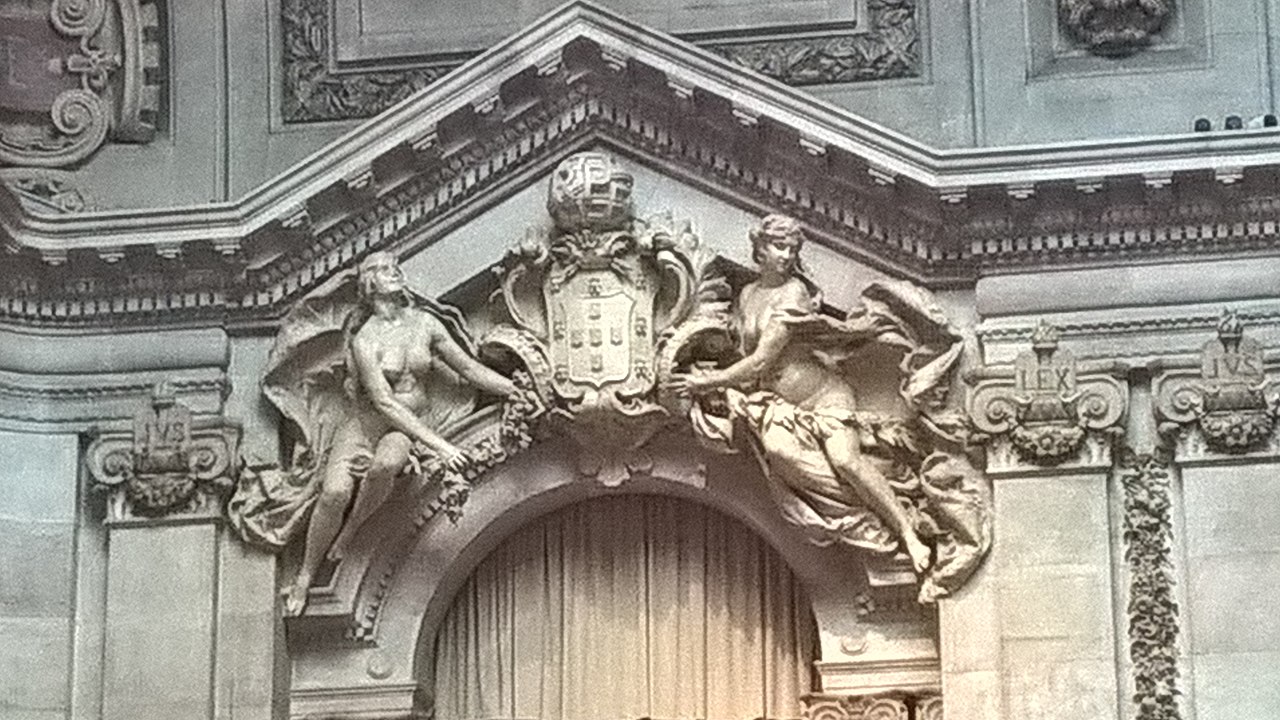
Coat of arms of the Assembly of the Portuguese Republic
Politics 1 July 2026

Immigration and labour: Montenegro's second term takes shape

The government moves ahead with tighter immigration rules and a labour reform already dividing the country. What is on the table.

With the XXV Constitutional Government now at cruising speed, Luís Montenegro’s second term is starting to show its priorities — and none of them are exactly uncontroversial.

Tighter immigration rules

The topic dominating the agenda is immigration. The government approved new legislation, backed by Chega, that restricts the rules for entering and staying in the country. It is a change of course from the years of more open doors, and it reflects a political pressure felt across Europe.

At the same time, the administrative machine is trying to sort out the backlog: AIMA keeps processing hundreds of thousands of pending applications, an effort we covered in our piece on the Golden Visa delays.

The labour reform that divides

On the economy, the big fight is labour reform. The government wants to loosen labour-market rules, and unions have already hit back with sharp criticism, warning of the risk of precarious work. It is the kind of reform that promises full streets and heated debates in Parliament.

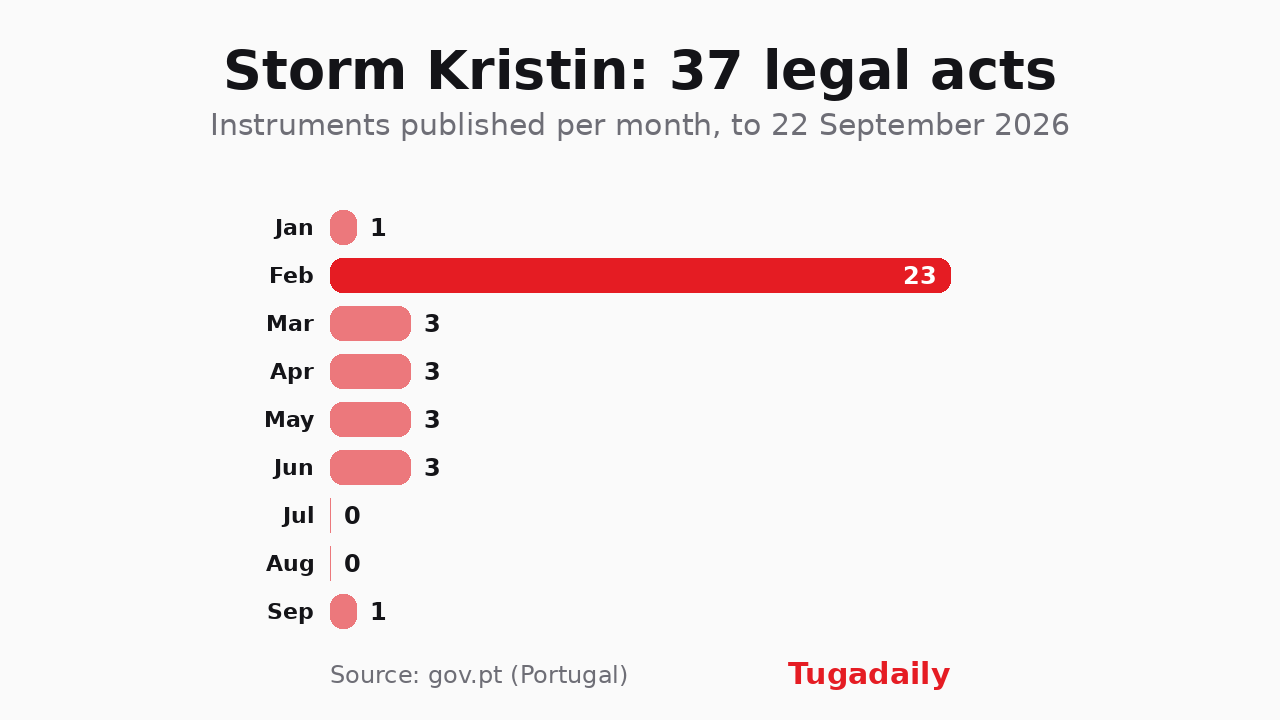
On top of that, there are still wounds to heal: the response to the Storm Kristin floods earlier this year led to the resignation of the home affairs minister and left questions about civil-protection coordination.

The term promises to be anything but calm. See also our coverage of the LIVRE leadership race and follow official measures at portugal.gov.pt.

Image: Wikimedia Commons

Rui Tavares, founder of LIVRE
Politics 1 July 2026

LIVRE heads to the ballot: Rui Tavares steps aside in leadership race

Between 10 and 12 July, LIVRE picks its leadership. Founder Rui Tavares gives up the top spot, clearing the way for a new pair of spokespeople.

LIVRE is about to turn a page. Between 10 and 12 July, party members vote in an internal ballot to choose their leadership — and the headline is who won’t be in the usual seat.

Rui Tavares, the party’s founder and public face since day one, announced on 26 June that he’s giving up the top spot on the list for the Contact Group, the body that steers LIVRE. Instead of first place, he’s taking third — a move that in practice opens the door to a new generation of leaders without the party losing its compass.

Who steps up

The list aligned with the current leadership will now be headed by Isabel Mendes Lopes, until now co-spokesperson, and Jorge Pinto, both MPs. It’s a negotiated handover, not a rupture: the goal is a fresh face for the project while keeping the political line that fuelled the party’s recent growth.

The vote won’t be a stroll, though. Two rival candidacies, opposed to Tavares’ direction, guarantee internal debate and a little suspense until the result is known.

Why it matters

In a fragmented parliament born from the 2025 election, with a minority government in charge, every party on the left counts in the voting arithmetic. How LIVRE reorganises could shape alliances and priorities in the months ahead, from housing to the environment — areas where it has staked out clear positions.

For now, the image is of a founder who’d rather pull strings from backstage than cling to the spotlight. Whether the membership agrees with the script is the open question.

See also: Portugal’s cost of living in 2026. More on the party at the official LIVRE site.

Imagem: Wikimedia Commons

Joaquim Miranda Sarmento, Minister of Finance
Politics 30 June 2026

No fresh income-tax cut in the budget: what it means for you

The Government rules out more extraordinary IRS relief before year-end. Why, and what changes in your pay.

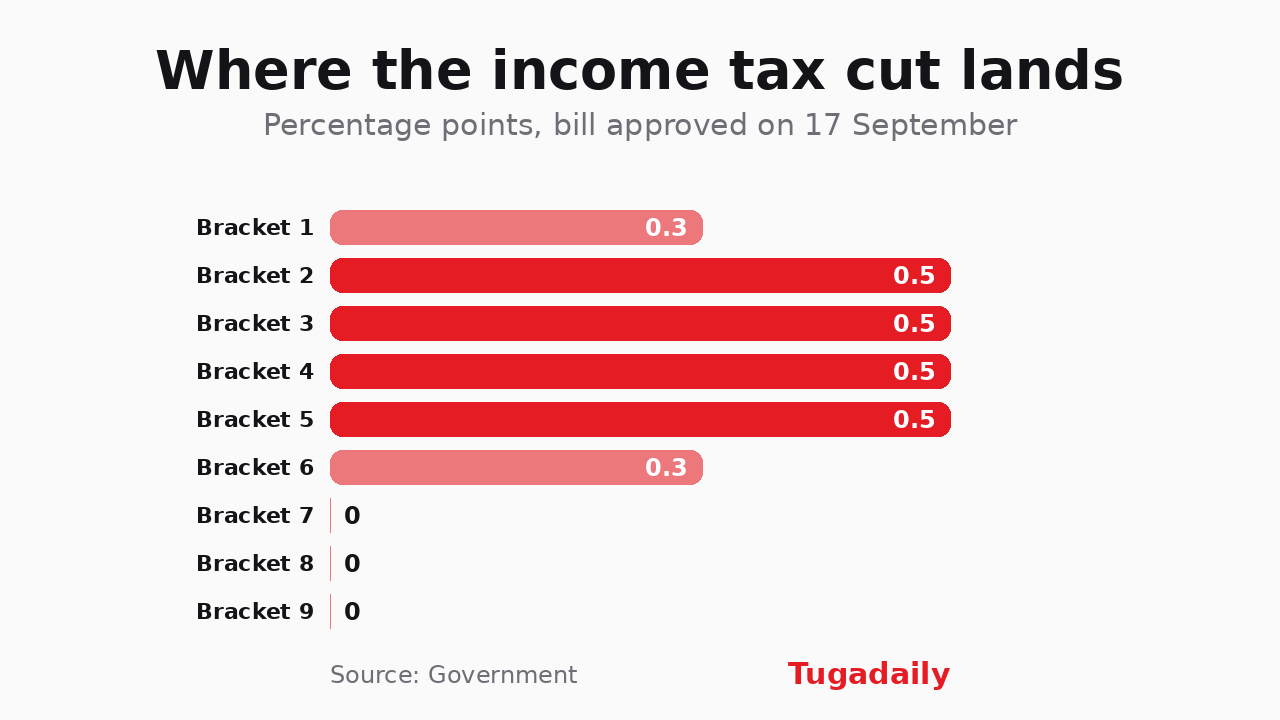
Anyone hoping for another surprise income-tax cut before the year is out will need to manage expectations. The Government has made clear that the State Budget will not bring, in this closing stretch of 2026, any new extraordinary relief on income tax. In other words: what is in force stays, but no further cut is on the horizon.

Why the Government is stopping here

The reading is one of caution. Luís Montenegro’s executive governs as a minority, depends on balances in parliament to pass its accounts, and wants to avoid opening more spending room in a year when inflation has picked up again and the European Central Bank has raised rates. Touching income tax again now would mean less guaranteed revenue at an uncertain moment.

What changes in your pocket

In practice, little changes for now: the tax bands and brackets being applied stay the same, and anyone whose withholding was adjusted this year will not feel a new difference on their payslip. The real debate is parked until the next Budget, where the usual tug-of-war will return between those calling for more breathing room for families and those defending balanced books.

For now, the political message is one of calculated stability, with the Government preferring not to promise what it might not be able to deliver.

See also: the single social benefit, approved and the economy at the start of 2026.

Official detail on the Government’s measures at portugal.gov.pt.

Imagem: Wikimedia Commons

Flag of the European Union
Politics 30 June 2026

Brussels squeezes Big Tech: heavy fines and more digital sovereignty

The EU has again fined Apple, Meta and X, and is preparing rules to depend less on the tech giants. What's at stake.

Europe is tightening its grip on the tech giants. Under its digital markets and services laws, Brussels has handed down fines totalling hundreds of millions of euros, with penalties aimed at Apple, Meta and the platform X. The message is blunt: operate in the European market and you play by European rules.

More than fines

Behind the penalties sits a bigger strategy, so-called digital sovereignty. In early June the Commission put forward a proposal to reshape how European public institutions buy cloud and artificial-intelligence services, reducing reliance on suppliers from outside the bloc. The idea is that sensitive data and critical infrastructure should not all sit in the hands of a handful of American companies.

Why it matters for Portugal

Portugal follows the European rules, so these decisions land here exactly as they are. For consumers, they can mean more choice and fewer lock-ins, such as being able to switch app or store without penalties. For businesses and public administration, the door opens to European alternatives in digital services. For the giants, it is another sign that the European market, with hundreds of millions of users, does not govern itself.

The regulation is demanding and not free of criticism, with supporters speaking of fair competition and opponents warning of the risk of slowing innovation.

See also: Apple letting you choose your AI on iPhone and Portugal back on the UN Security Council.

More official information from the European Commission.

Imagem: Wikimedia Commons

Historic centre of Guimarães
Politics 30 June 2026

Single Social Benefit approved: many supports, one payment

PSD, CDS and PS joined forces to create the Single Social Benefit, meet an RRP target and unlock 620 million euros from the EU.

For once, left and right ended up in the same place. Parliament approved the creation of the Single Social Benefit (PSU), a reform that promises to fold several scattered social supports into one payment — something long demanded by people lost in a confusing web of allowances.

What changes

The idea is easy to explain and hard to deliver: instead of trekking from counter to counter to claim separate supports, each with its own rules and deadlines, there will be a mechanism that bundles them together. Less red tape, fewer overlaps, more clarity about who gets what.

The deal between PSD, CDS-PP and PS was more than symbolic. By approving the measure, Portugal meets a target under its Recovery and Resilience Plan and unlocks a 620 million euro payment request from the European Union — money that was waiting on exactly this step.

The noise around it

Not everything is rosy in Parliament. PS leader Carlos César accused the prime minister of leaning politically on Chega, in a climate where every vote is also read as a chess move. Chega leader André Ventura remains the swing vote in many decisions.

See also: Portugal tightens its immigration law and the return to the UN Security Council. The RRP timeline is on the Government portal.

Image: Wikimedia Commons

Skyline view of Tehran, the capital of Iran
Politics 30 June 2026

US-Iran talks keep the world (and markets) holding its breath

Negotiations between Washington and Tehran drag on with no clear ending, rippling into the price of oil, gold and the energy bill in Portugal.

Some negotiations move forward, slip back and inch forward again without anyone being able to say where they will land. The peace talks between the United States and Iran are exactly that right now: a back-and-forth of signals that has half the world guessing at the next move.

The deadlock is not just diplomatic. Every rumour of a thaw or a breakdown moves the price of oil, and oil moves everything else. Tension in the Middle East has helped push inflation up in several countries and remains the big question mark for central banks.

Why this reaches Portugal

It may feel distant, but it is not. Portugal imports almost all the energy it uses, so when a barrel climbs, you feel it at the pump and on the bill. Geopolitical uncertainty is also what has been propping up gold as a safe haven, even after months of decline.

For now, nobody in Washington or Tehran is talking about a sealed deal. They talk about open channels, mediators, red lines. It is the kind of diplomacy measured in weeks, not hours.

The calm read is this: until there is a clear de-escalation, volatility stays the base case. Worth following slowly, and worth distrusting any headline that sounds too final.

See also: Iran-US negotiations had been suspended and the impact on markets and gold. Track the official position at the US State Department.

Image: Wikimedia Commons

Prime Minister Luís Montenegro
Politics 30 June 2026

Portugal tightens its immigration law: what is on the table

The minority government has pushed through stricter immigration rules with support from the right. Here is what changes and why it splits the country.

Immigration is back at the centre of Portugal’s political board. The minority government led by Luís Montenegro managed to pass a set of tighter rules for those who want to enter and settle in the country, with decisive support from the parliamentary right.

In broad strokes, the package restricts entry routes that used to be more flexible, toughens requirements for family reunification and tightens residency criteria. The government’s logic is “regulate in order to integrate better”; the critics’ is that the door is being shut on the very people the country, in practice, needs to work.

A debate that touches the real economy

Portugal is ageing, and whole sectors, from farming to hospitality and construction, depend on foreign labour. Hardening the rules without fixing the chronic processing delays could tie a knot: more demands at the door, with the administrative machine still recovering from a huge backlog.

This is where politics and bureaucracy meet. While the new rules are debated, thousands of cases are still waiting for a decision at the migration agency, a problem the government itself admits it is trying to clear.

The left-wing opposition accuses the executive of caving to pressure from Chega; the government replies that it is simply bringing order to a system that grew too fast. Either way, the topic is not leaving the agenda any time soon.

See also: AIMA’s backlog and the 525,000 decisions already made and the million foreign taxpayers in Portugal. The bills can be consulted on the Assembly of the Republic website.

Image: Wikimedia Commons

António Costa, President of the European Council
Politics 29 June 2026

The Brussels summit: what EU leaders decided (and why it touches us)

The long-term budget, support for Ukraine, defence and migration were all on the table. A clear rundown of the European Council conclusions.

Some summits pass us by, and others reach right into everyone’s wallet and safety. The Brussels one, chaired by Portugal’s António Costa as head of the European Council, was the second kind: the 27 sat down with several hot files at once and walked away with a set of conclusions that will keep coming up over the next few months.

What was decided

Top of the pile was the Union’s next long-term budget — the big argument over where European money goes in the coming years. Leaders also locked in positions on continued support for Ukraine, the competitiveness of Europe’s economy against China and the United States, common defence, and migration management. There was room too for the Middle East and for issues like the fight against drug trafficking.

Why it matters in Portugal

It can feel far away, but it isn’t. The European budget funds everything from business support to agricultural and regional money that reaches the whole country. Decisions on defence and competitiveness set how much each state has to invest, and migration rules directly affect the people who live and work here. Having a Portuguese figure steering the proceedings doesn’t change the outcome by magic, but it gives us a seat with a clear view of the table.

The honest read is that the Union is still trying to do many things at once, with pockets that don’t stretch forever. The devil, as always, lives in the details of the budget negotiation to come.

See also: labour law after the rejection. The official conclusions are published by the European Council.

Image: Wikimedia Commons

Flag of Iran
Politics 29 June 2026

Iran threatens to suspend talks with the US

Washington accuses Tehran of breaching the framework deal; Iran says it may cut talks entirely. The Strait of Hormuz is back at the centre of the board.

Dialogue between the United States and Iran is hanging by a thread again. The US president accused Tehran of breaching the framework deal both sides were trying to stitch together, and Iran answered in kind: it may halt the negotiations entirely.

For anyone who has lost the thread, the backdrop is still Iran’s nuclear programme and the game of sanctions and counter-sanctions around it. Every public accusation pulls the parties away from the table and nudges the region towards another stretch of uncertainty.

The detail that moves prices

There is one point that matters directly to Portugal: the Strait of Hormuz, through which a huge slice of the world’s oil passes. Whenever tension rises, energy markets get jittery and the price of a barrel reacts. It is the shortest bridge between geopolitics and what we pay at the pump.

The International Atomic Energy Agency keeps asking for access and transparency, while European capitals try to keep a channel open to avoid a complete breakdown. For now, the most likely scenario is the usual one: plenty of pressure, few advances and a deal that keeps getting pushed to later.

See also: the reopening of the Strait of Hormuz to shipping. The technical state of play is at the IAEA.

Imagem: Wikimedia Commons

Locator map of Lebanon
Politics 29 June 2026

Southern Lebanon flares up again between Israel and Hezbollah

Israeli airstrikes on around 150 Hezbollah-linked positions left at least ten dead, including three Lebanese soldiers.

The truce holding southern Lebanon together has cracked again. Israel carried out airstrikes on around 150 positions it says are linked to Hezbollah, in a day that ended with at least ten dead, among them three Lebanese soldiers.

It is exactly the kind of incident that keeps analysts on edge: each strike of this size tests a ceasefire that was never solid. Israel says it is hitting military infrastructure; Beirut answers that the country’s sovereignty is being trampled and that military casualties change the nature of the confrontation.

A balance always hanging by a thread

Southern Lebanon is one of those maps where a single spark can set the region alight. The Lebanese army is trying to assert itself as the sole authority on the ground, but remains squeezed between Israeli pressure and Hezbollah’s presence. When regular soldiers die in strikes, the government in Beirut is left in an almost impossible spot.

For Europe, and for the Portuguese community living and working in the region, the risk is the familiar one: an escalation that drags in neighbours, complicates routes and pushes people back into exile. International diplomacy is calling for restraint, but words have counted for little against the facts on the ground.

See also: the framework agreement announced between Israel and Lebanon. The UN mission in the country is described at unifil.unmissions.org.

Imagem: Wikimedia Commons