

Homes under €300,000: only one in three on sale in Portugal
Just one in three homes for sale in Portugal costs under €300,000, and stock in that band fell 31% in a year. A snapshot of the 2026 market.
Anyone hunting for a home under €300,000 is fighting over a third of the market. That is the picture in 2026: only one in three homes on sale in Portugal falls below that mark, and stock in that band has shrunk 31% in a single year. The problem is not just the price of each home, it is that the more affordable ones are simply vanishing from the listings.
How many homes cost less than €300,000?
Roughly one in three of the homes currently for sale. The biggest slice of the market, 44%, sits between €300,000 and €600,000, a band that was considered premium a few years ago and is now the middle of the offer. That mismatch is where the frustration lives for buyers with a realistic budget: demand is strongest precisely in the sub-€300,000 segment, yet that is where there is least to choose from.
Why are there so few affordable homes on sale?
Because total supply has collapsed and building is not keeping up. The number of homes for sale fell 19% in the first quarter of the year, and the drop was even sharper in the cheaper bands. Without enough new homes entering the market, sellers know they rarely need to cut prices, and that lack of pressure stalls any correction. It is the old Portuguese problem of supply solving itself slowly while prices keep hitting records.
Are prices still rising?
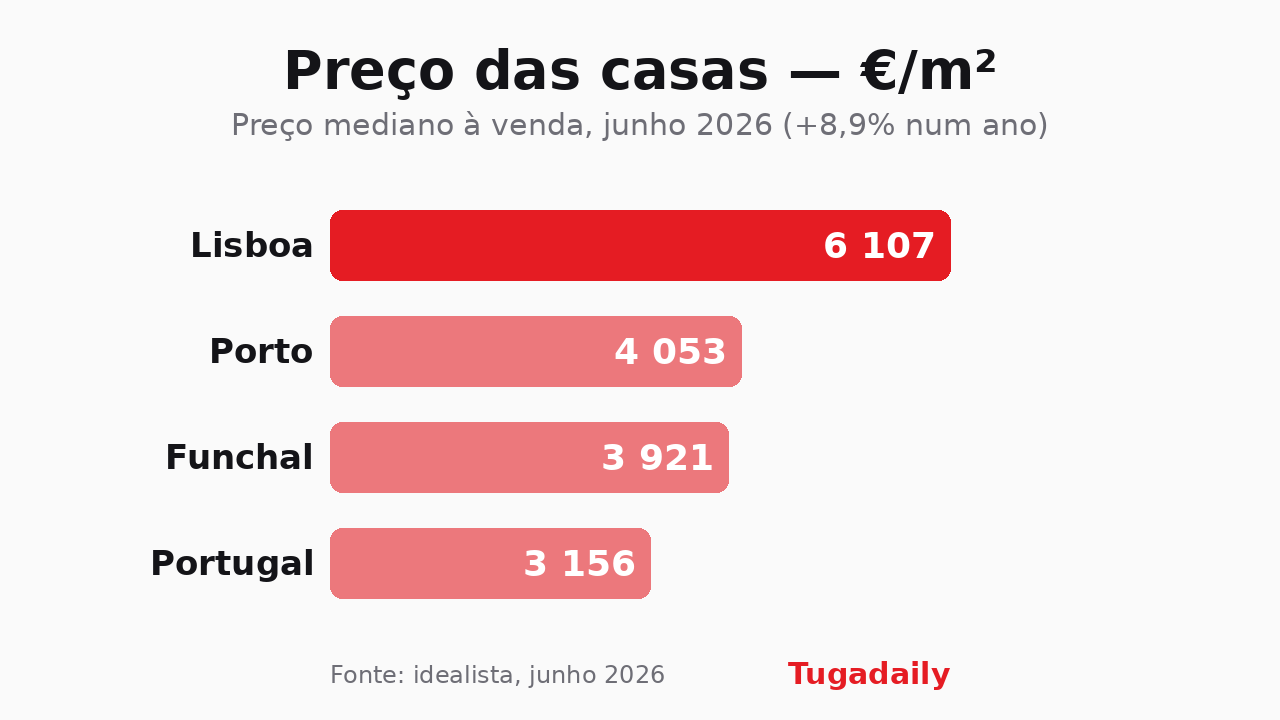
Yes, though more slowly. In June, prices rose 8.9% year on year, a gentler pace than May’s 10.2%, but still the eighth record high in a row, with the square metre reaching €3,156. According to official data from Statistics Portugal (INE), housing keeps weighing more heavily on household budgets, and the slower rise has yet to translate into cheaper homes.
To follow the month-by-month picture, we keep our house-price tracker updated. And if you are renting, it is worth understanding what changes with the end of rent controls on new contracts.
Image: xiquinhosilva from Cacau / Wikimedia Commons (CC BY 2.0)