
Police say the van was on its own side of the road when Finlay Tarling was killed
The GNR spokesman set out how the mobile escort was deployed at the moment of the collision, why no officer was posted at that junction, and why no criminal charge is expected for now.
A day after Finlay Tarling died on stage eight of the Volta a Portugal, the GNR set out how its officers were deployed on the road where the British rider was hit. The first thing it did was correct the version that spread within hours of the crash.
The van was not driving against the traffic, said Lieutenant-Colonel Carlos Canatário, the force’s spokesman. It was in the right-hand lane, on its own side. It was travelling in the opposite direction to the race, which is a different thing entirely. The rider cut the bend on the left, the way riders do on a fast descent, and that is where the two met.
How the escort was placed
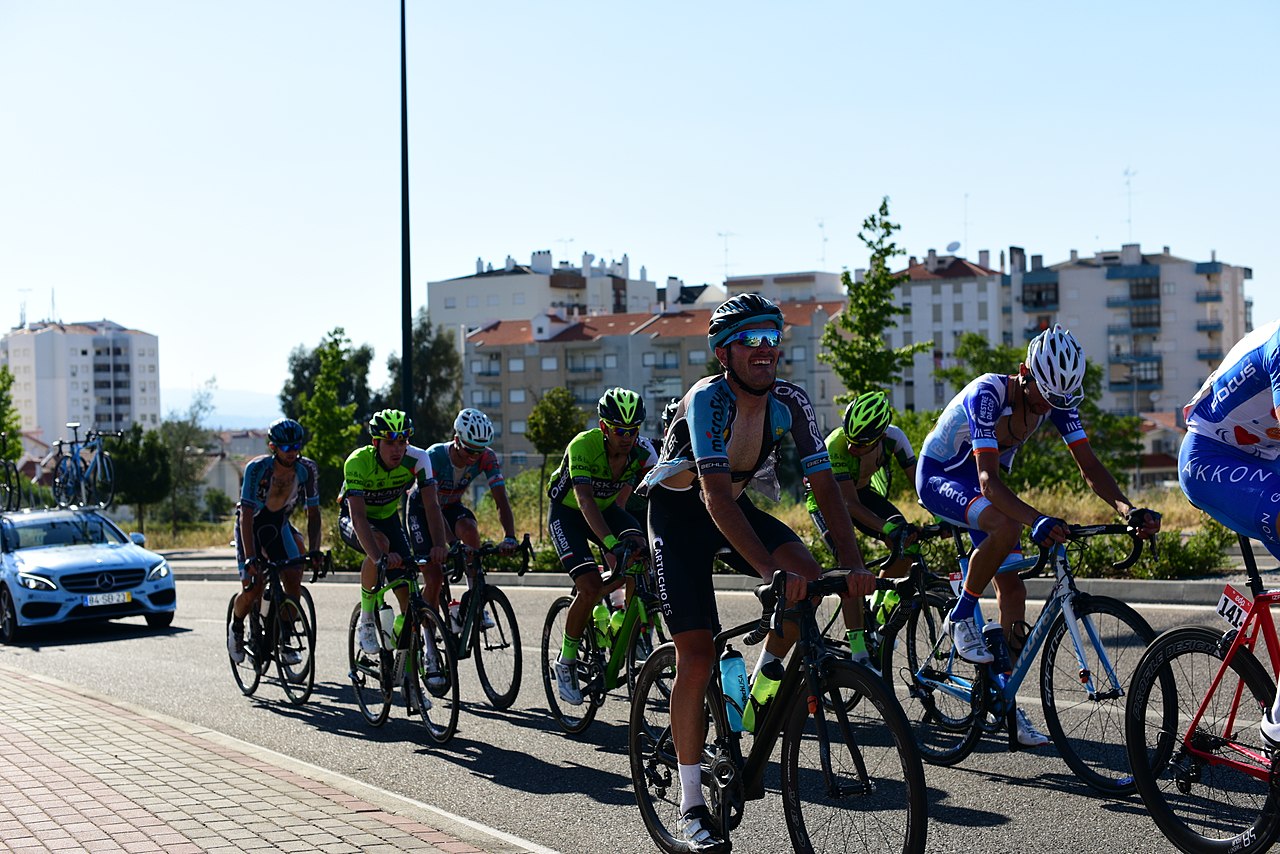
The bunch had split into three groups. Three riders had come off the back at different distances, and the mobile escort — the last car, the one that always shadows the broom wagon, plus the usual two motorbikes — was spreading out to pick up each of them. That constant reshuffling is, the GNR says, the hard part of policing a race in motion: the shape of the bunch changes through the day and the escort has to change with it.
Tarling, 19, was riding alongside his own team car for the NSN Development Team. The climb turned into a descent, he picked up speed, came away from the team car and the escort could not stay with him. It was, in the spokesman’s phrase, a combination of factors.
As for the driver: he had stopped at a side junction, watched the bunch go past, waited, saw nobody else coming and asked people standing nearby whether he could pull out. He pulled out before the broom wagon had passed. He showed no sign of alcohol or drugs and went into shock at the scene. The investigation continues and will gather more evidence, but no criminal charge is expected at this stage.
The junction is the part that still hurts
This is where the account gets uncomfortable, and the GNR did not dodge it. There was no officer at that junction. There was none because the advance assessment had not prioritised it: a secondary access, the kind you handle with signage. Posting an officer at every entrance along 150 kilometres of road is humanly impossible, the force says, and what was planned was carried out without deviation.
Which leaves the signage itself. The GNR says it is now establishing what was actually in place at that junction and whether any of it had been removed. It is the one line of Saturday’s account that could still turn.
The race
The Volta went back on the road on Friday afternoon in Paredes without the NSN riders, who withdrew. Alexis Guérin won alone at the top of Senhora da Graça and starts the final day 1:02 ahead of Artem Nych and 4:30 ahead of Pedro Silva. The 87th edition closes on Sunday between Maia and Porto, and the Portuguese Cycling Federation will publish what there is to publish about the inquiry when there is something to publish.
By Vasco Almada
Image: _morgado / Wikimedia Commons (CC BY 2.0)