Tugadaily
PT
Close-up of hands playing a racing game on a mobile device with a controller.
Tech 20 June 2026

June turned the AI race into a single month: Gemini, Claude and Grok at once

Google, Anthropic and xAI all dropped new models almost simultaneously. For anyone who uses these tools, it's good news — and a touch of chaos.

There have been quiet months in artificial intelligence. June 2026 was not one of them. In the space of a few weeks, three of the big names dumped new models almost at the same time: Google’s Gemini 3.5 Pro, Anthropic’s Claude Mythos 1 and, after much delay, xAI’s Grok 5.

When companies launch everything at once, it’s a sign nobody wants to be left behind. Each promises to be faster, smarter and more useful than the last — and the honest truth is that, version to version, you really can feel the difference on everyday tasks, from writing to coding.

One detail that broke out of the wave caught the eye: Anthropic set its model loose hunting security flaws in open-source software and, in its very first month, reportedly turned up more than 23,000 vulnerabilities across over a thousand projects. That’s AI playing digital detective — on the good guys’ side, for a change.

What this is good for day to day

You don’t have to crown a champion. These tools keep getting cheaper and more capable, and fierce competition pushes prices down and quality up. Worth trying one or two and seeing which fits your work — without marrying any of them.

Illustrative · Photo: Nino Souza / Pexels

Official Anthropic image
Tech 29 June 2026

Anthropic shuts down an operation with 25,000 fake accounts on Claude

The maker of Claude says it detected a network that used nearly 25,000 fraudulent accounts to generate more than 28 million interactions with its AI.

As AI assistants move into everyday life, an old problem comes along in new clothes: people trying to use them for less-than-clean purposes. Anthropic, the maker of Claude, has revealed it detected and shut down a large-scale operation that used nearly 25,000 fraudulent accounts to generate more than 28 million interactions with the model.

The numbers stand out for their sheer scale. This is not a curious user asking odd questions, but an organised network exploiting the service in an automated, mass fashion — the kind of abuse that forces AI companies to invest ever more in detection and usage limits.

Why it matters to everyone

The story is a useful reminder that these tools are targets. Networks like this can be used to mass-produce content, test scams or skirt usage rules, and each such case helps sharpen the defences for the next. For the ordinary user, the practical effect is more checks, limits and confirmation prompts that can feel annoying but exist for good reason.

It also shows the other half of the AI race: alongside more capable models, constant vigilance is needed to stop that capability from being turned inside out.

See also: Anthropic, its valuation and the road to a listing. Official information is at anthropic.com.

Imagem: Anthropic

Aerial view of Apple Park, in Cupertino
Tech 29 June 2026

Apple unveils AFM 3, its new family of AI models

Five models, from phone to server, built in partnership with Google. Apple is trying, at last, to find its footing in artificial intelligence.

Apple has announced its third-generation Apple Foundation Models — AFM 3 — a family of five AI models ranging from what runs inside the phone to what lives on the servers. The detail that drew most attention: they were built in partnership with Google.

For anyone who has followed the saga, it makes sense. Apple arrived late and awkwardly to the AI race, with a Siri that promised much and delivered little. Rather than trying to do everything alone, the Cupertino company seems to have decided it is better to lean on someone who already has muscle in the field.

On-device and in the cloud

The logic of AFM 3 is to split tasks: smaller models run directly on the device, fast and more privacy-friendly because the data never leaves the phone; larger ones sit on servers for heavier requests. It is the same balance the whole industry is chasing, between speed, cost and data protection.

The big question is whether this is enough for Apple to claw back ground from OpenAI and Google within its own products. Having good models is one thing; turning them into an assistant people actually use every day is quite another — and that is precisely where Apple has stumbled.

See also: Apple and the choice of an AI partner. Official announcements are at apple.com.

Imagem: Wikimedia Commons

Sam Altman, chief executive of OpenAI
Tech 29 June 2026

OpenAI gears up to go public: the biggest IPO of the AI era

The maker of ChatGPT has confidentially filed to list on the stock market, after being valued at 852 billion dollars.

The company that put ChatGPT on everyone’s lips has taken the step many expected: OpenAI has confidentially filed paperwork to go public. In other words, it’s preparing to become a listed company — and not just any one. After a giant funding round that valued it at around 852 billion dollars, this could be the largest market debut of the AI era.

Why it matters

An IPO forces you to open the books. Until now, OpenAI has moved with the discretion of a private company; once listed, it’ll have to show revenue, costs and — the most sensitive part — how much it’s actually spending to train and run its models. At a moment when the market is starting to ask when all this AI turns a profit, those numbers will be picked apart to the decimal.

There’s a backstage read, too: the company has been investing in its own inference chips, trying to lean less on Nvidia’s hardware and get a tighter grip on its energy bill. A sign that the next battle isn’t only about software — it’s about infrastructure.

And for the rest of us?

For the everyday user, little changes right away. But a publicly traded OpenAI faces more public scrutiny and the pressure of quarterly results, which tends to discipline spending and speed up products that pay the bills. Worth watching. Official product information is at openai.com.

See also: AI changing its tune, from spending to showing returns.

Image: Wikimedia Commons

A data centre seen from outside
Tech 29 June 2026

AI changes its tune: from "spend at all costs" to showing results

After months of burning cash, companies are demanding returns. OpenAI and Anthropic head for the markets in a much tougher mood.

For a good two years, the rule in the world of artificial intelligence was simple: spend without looking at the bill. More models, more chips, more data centres, on the belief that whoever got biggest would get there first. That mood has started to turn.

Last week’s news all points the same way. Corporate customers have stopped signing blank cheques and started asking the boring old question: does this pay off? The shift has a name — instead of “tokenmaxxing”, spending with abandon, the talk now is of efficiency, of doing more with less.

Markets at the door

The timing isn’t innocent. Both OpenAI and Anthropic have filed confidentially to go public, and a debut like that demands numbers that convince investors, not just promises. Anthropic is reported to have hit an annualised revenue run rate of around $47 billion, a huge jump on last year — but the market wants to see profit on the horizon, not only growth.

Meanwhile, the chip war rolls on. OpenAI teamed up with Broadcom to design its own processor, and almost everyone — Google, Meta, Apple — is racing for custom silicon to escape Nvidia’s steep bill.

Why does this matter from Portugal? Because it sets the price and speed of the tools we already use at work and at school. A race more focused on efficiency usually means cheaper, better-built products for the end user.

See also: the race to Anthropic’s IPO and Siri with outside models. More detail on Anthropic’s official blog.

Imagem: Wikimedia Commons

Aerial view of Apple Park, Apple's headquarters in Cupertino
Tech 28 June 2026

Apple's new Siri will run on Gemini and let you pick the AI

At WWDC, Apple unveiled a rebuilt Siri powered by a Google Gemini model and a system that lets users choose between ChatGPT, Gemini and Claude.

Apple tends to arrive late to the party, but it arrives in a tailored suit. At its developer conference, the company finally unveiled the big overhaul of Siri, the assistant that had been crying out for a reboot for years.

The news that got people talking is who Apple teamed up with. The new Siri will be built on a custom Google model, Gemini, in a deal that will pay the Android maker around a billion dollars a year. The assistant now speaks more naturally, back and forth, and can chain tasks together: check the dates of a concert, set a reminder to buy tickets, and even map the route to pick up a friend.

Pick your engine

The most interesting detail for the curious is the extensions system. Apple will let users choose which artificial intelligence powers certain features, between ChatGPT, Gemini and Anthropic’s Claude. It is Apple doing what it does best: taking other people’s technology and wrapping it its own way.

The company leans hard on the privacy argument, noting it collects less data than cloud-based AI services and uses information stored on the phone itself to personalise. Investors were not entirely convinced: the stock fell close to 2 per cent after the announcement.

For the everyday user, the takeaway is simple. The AI war is no longer fought only in labs, it is fought on the phone in our pocket, and Apple has just stepped into it for real.

See also: OpenAI’s GPT-5.6. More at Apple’s official site.

Imagem: Wikimedia Commons

Tesla Cybercab, Tesla's autonomous taxi
Tech 28 June 2026

Tesla's robotaxis are already on the streets (with a human watching)

After years of promises, Tesla finally put its self-driving taxis on the road in Austin, still with a safety supervisor on board.

Some promises Elon Musk has repeated for so long that they had started to sound like a joke. Fully autonomous driving was one of them. Well, in June Tesla finally put its robotaxis on the streets of Austin, Texas.

There is, of course, important fine print: for now, each car carries a human safety supervisor on board, ready to step in if something goes wrong. So autonomous, yes, but with a safety net. It is the cautious step of a company that knows a single high-profile crash can set the project back years.

Tesla’s big bet

This launch fits a larger pivot. Tesla has entered what analysts call a high-investment cycle, shifting focus from purely selling electric cars toward artificial intelligence, robotics and its own chips. The Cybercab, the taxi built specifically for this, launches on current hardware, without waiting for the next generation of processors.

And it is not alone in the race. Nvidia has already announced it has teamed up with Uber to launch a global robotaxi network, set to start in Los Angeles and San Francisco in early 2027. The driverless-car war is about to heat up.

Here at home, none of this arrives tomorrow. But it is worth following where the sector is heading, because the self-driving car has gone from science fiction to a problem of engineering, regulation and trust.

See also: Samsung and the new foldables. More at Tesla’s site.

Imagem: Wikimedia Commons

A foldable smartphone from the Galaxy Z Fold range
Tech 28 June 2026

Samsung sets Unpacked for July 22: the new foldables are coming

Samsung is expected to unveil the Galaxy Z Fold 8, the Z Flip 8 and more in London at its summer event.

The foldables are back on stage. Samsung’s next big showcase, the summer Galaxy Unpacked, points to July 22 in London. Several outlets converge on the same date, though as of writing Samsung hadn’t confirmed it officially, so read this as a strong rumour, not gospel.

The expected menu is tasty for anyone who likes phones that unfold. The Galaxy Z Fold 8 and Z Flip 8 should appear, and some chatter points to a wider Fold model and a pair of smart glasses from the brand. A new generation of the Galaxy Watch is also likely.

Why it matters

Foldables have gone from pricey curiosity to the stage where Samsung flexes. Each generation tunes the hinges, toughens the screens and tries to convince buyers it’s worth paying more for a phone that doubles as a small tablet.

For shoppers in Portugal, the practical bit comes later: new models tend to push the previous ones into discounts. Anyone eyeing a Fold or a Flip might win by waiting a few weeks, even if they don’t want the very latest.

Worth marking the date and treating the hype with a pinch of salt. In tech, between the rumour and the box on the shelf there’s always a road full of surprises.

See also: OpenAI unveils GPT-5.6: three models for three budgets.

Imagem: Wikimedia Commons

Servers in a data center
Tech 28 June 2026

AI turns to efficiency: the end of 'bigger is better'

Companies are swapping 'tokenmaxxing' for cheaper models. Some have already moved entirely to low-cost alternatives.

For years, the rule in AI was simple: bigger is better, burn whatever tokens it takes. That phase is fading. Companies have started looking at the bill and asking whether they really need the priciest model for every task, or whether a cheaper one will do.

The case that got people talking came from startup Lindy, whose CEO switched off Anthropic’s models and moved 100% of its traffic to DeepSeek, a Chinese company offering open-weight, far cheaper alternatives. It’s not a one-off: it’s the symptom of a shift.

Why it matters here

For Portuguese developers and businesses, this efficiency race is a gift. It means falling prices, more competition and the chance to test AI without torching the budget. The trick becomes choosing the right model for each task, rather than reaching for the most powerful one by reflex.

It’s an old lesson, but it fits: it’s not the size of the engine, it’s knowing how to drive.

See also: the new GPT-5.6 and Microsoft’s models. More on the alternative at DeepSeek.

Illustrative · Photo: panumas nikhomkhai / Pexels

Sam Altman, OpenAI CEO
Tech 28 June 2026

OpenAI unveils GPT-5.6: three models for three budgets

OpenAI previewed GPT-5.6 with three variants — Sol, Terra and Luna — betting on frontier reasoning and lower costs.

OpenAI has shifted the board again. The company previewed GPT-5.6, its new flagship for developers and businesses, and this time it didn’t come alone: alongside Sol come Terra and Luna, each built for a different job.

Sol is the heavy brain, made for frontier reasoning and long, autonomous tasks, the kind that demand planning and multiple steps. Terra is the balanced everyday option, with performance near GPT-5.5 at half the cost. And Luna is the fastest, cheapest of the family, for anyone who wants nimble answers without the fuss.

The war changed its axis

The technical highlight is in coding, scientific reasoning and agentic workflows, with new reasoning-effort levels. But the market read is something else: the race is no longer just about bigger models, it’s about efficient ones that do the same while spending less.

For businesses in Portugal, that’s good news: more options and lower prices mean AI stops being a luxury for big budgets.

See also: OpenAI’s earlier announcement and the turn toward efficiency. Official detail at OpenAI.

Image: Wikimedia Commons

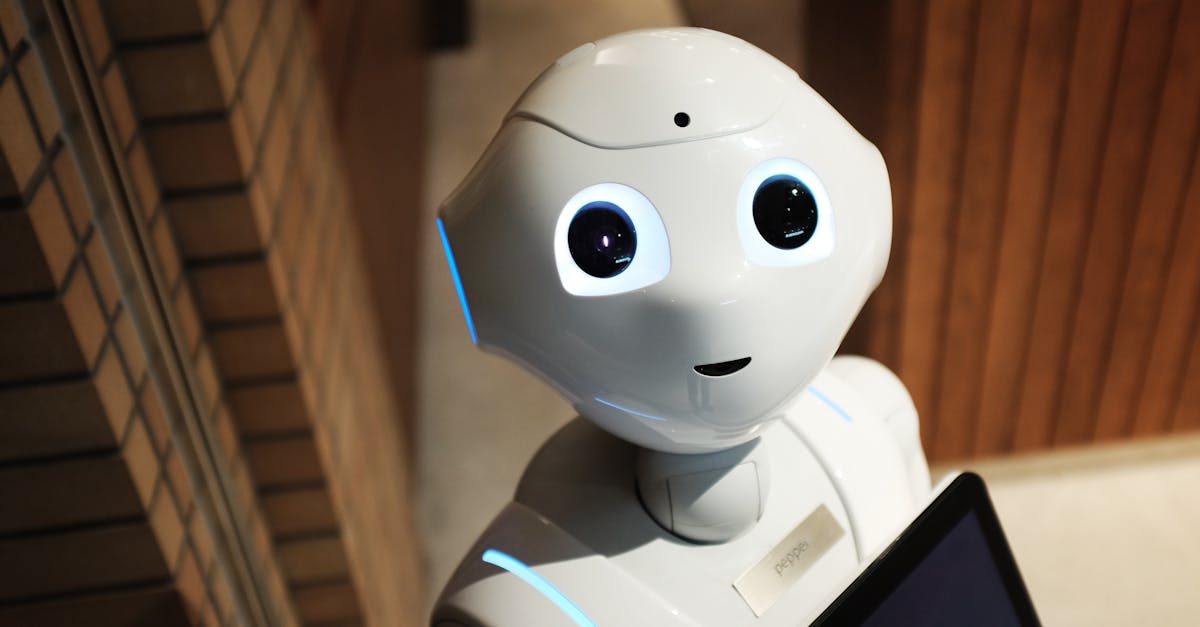
A futuristic humanoid robot in an indoor setting
Tech 27 June 2026

Portugal now has a national plan for artificial intelligence — and 25 million for the state

The government approved its National AI Agenda for 2026-2030, with investment in public administration and a centre of excellence.

Everyone talks about artificial intelligence, but what’s been missing is what the country actually intends to do with it. Now there’s a document that tries to answer: the National Artificial Intelligence Agenda, approved for the 2026-2030 period.

The premise is honest and a touch harsh: Portuguese productivity sits at around 75% of the European average, and the government sees AI as a rare chance to close part of that gap — accelerating growth, modernising the state, and freeing workers from repetitive tasks.

Where the money goes

The first concrete bet is in-house: 25 million euros are earmarked for public administration to adopt AI solutions, starting in the first half of the year. Alongside it, a Centre of Excellence for AI in Public Administration is being created, tasked with developing, testing and scaling tools applied to public services — the kind that, at best, make a trip to the tax office or the health centre hurt a little less.

There’s also a National AI Week planned for the second half of the year, with demos and events open to anyone curious about the technology without being an engineer.

Is the enthusiasm warranted?

This country never lacks plans; what usually lacks is execution. The difference will be measured not on paper, but in public services that work better and companies that actually adopt these tools. For now, the signal is right: Portugal has decided to treat AI as a state priority, not a passing fad.

What remains is the hard part — moving from the PowerPoint to the ground.

Illustrative · Photo: Alex Knight / Pexels

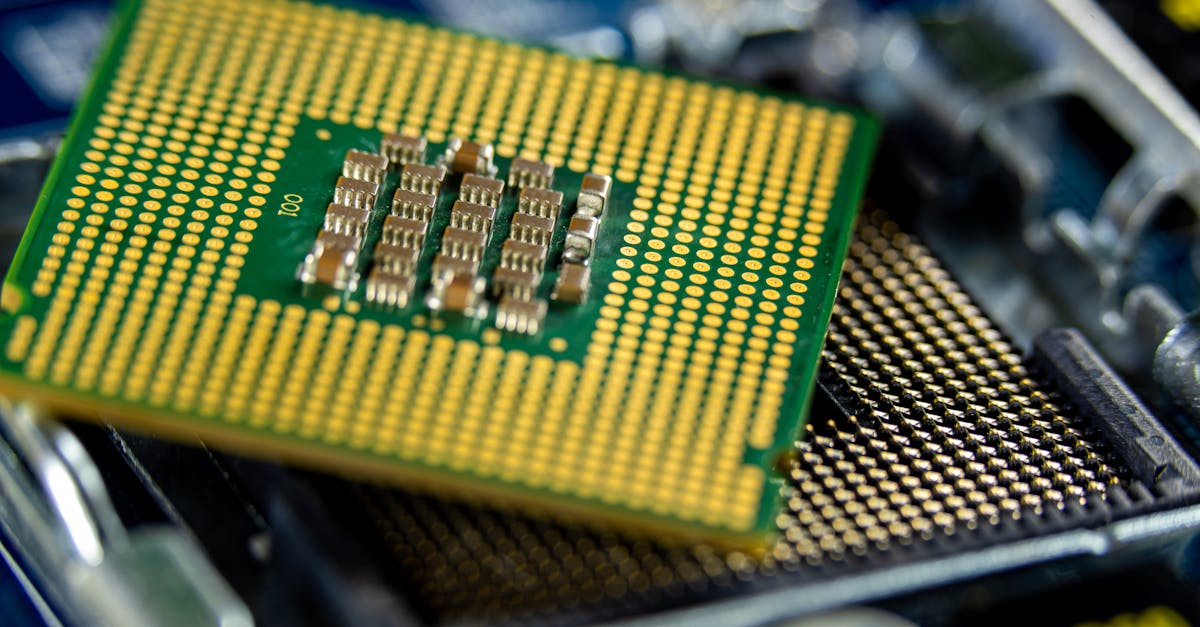
Microprocessor on a circuit board
Tech 27 June 2026

Apple's new AI runs on Google and Nvidia servers — so what about the privacy promise?

Apple always sold itself as the privacy brand. Now that its most advanced model lives in the cloud, on other companies' chips, it's worth understanding what changes.

For years, Apple hammered one idea home: “what happens on your iPhone stays on your iPhone.” It was the selling point against rivals who live off harvesting data. Now that its most powerful AI model runs in the cloud — partly on Google technology and on servers using Nvidia chips — some are asking whether the promise still holds.

The honest answer is: it depends what you mean by privacy. Plenty still happens on the device itself, never leaving it. For heavier tasks, though, the request travels to the cloud.

What Apple says it does differently

The bet is, broadly, “private” cloud computing: the idea that data is processed without being stored and without being accessible to Apple or its partners. On paper, that’s more protected than firing everything off to some random server. In practice, users are left trusting that those guarantees are genuinely met — and audited.

What it means for you

No reason to panic, but it’s worth knowing where the switches are. In settings, you can see which features use the cloud and which stay local. If you handle sensitive information, that’s exactly where to look.

The bigger lesson may be this: in the AI era, “total privacy” has stopped being an on/off switch and become a series of trade-offs. It’s worth knowing which ones we’re accepting — even when the brand has a reputation as the good student.

Illustrative · Photo: Sergei Starostin / Pexels

Team of developers working on computers in a modern office.
Tech 27 June 2026

Portugal's new startup wave: less hype, more proof

From Lisbon to Braga, the Portuguese tech ecosystem is maturing. AI, cybersecurity and digital health lead the way, and more companies are selling abroad.

There was a time when talking about startups in Portugal meant, above all, talking about promise. Today the conversation is different. The ecosystem has grown, built muscle and — more importantly — started to show results: companies with real customers, serious revenue and the ambition to sell well beyond the border.

The geography is no longer just Lisbon. Porto and Braga have established themselves as hubs that attract founders and talent, helped by public bodies like Startup Portugal and IAPMEI, which smooth some of the rough edges of the early steps. Names such as Aptoide, Jscrambler, Ethiack and Automaise prove you can build here and compete globally, no inferiority complex required.

The sectors drawing the most energy say a lot about the moment: software, cybersecurity, applied artificial intelligence, digital health, industrial tools and energy. That’s no accident. These are areas where Portugal has affordable technical talent, good universities and a useful position from which to serve European markets. Accelerator programmes like Scale Up Now have helped spotlight growth-stage companies — from health (CleoCare, Enhanced Fertility) to AI (Granter.ai, Pluggable AI) and on to virtual reality and care (Virtuleap, Usawa Care).

The big shift, though, is one of mindset. The new wave is less about the hype of the perfect pitch and more about fundamentals: proving there’s a market, that the product solves a concrete problem, and that the house is in order legally, on security and on product. It’s a maturing you can feel — and it makes these companies far more solid than those of the previous generation.

Of course, it’s not all roses. Raising capital in bigger rounds is still harder than in other European capitals, and retaining talent when salaries are higher abroad is a permanent challenge. But the direction is encouraging: Portugal is no longer just a pleasant place to found a company — it has become a place where, with proof and an export mindset, you can build businesses that hold their nerve. And that, ultimately, is worth more than any pretty slide.

Illustrative · Photo: cottonbro studio / Pexels

A laptop showing a code editor with a coffee mug
Tech 27 June 2026

Brussels calls in the scientists to watch over AI: what the new European panel changes

The European Commission appointed a scientific panel and advisory forum to help apply the Artificial Intelligence Act.

Passing a law is one thing; making it work in practice is quite another — especially when the law tries to tame a technology that changes its face every six months. That’s exactly the challenge of the European Union’s Artificial Intelligence Act, and Brussels has just reinforced the team to face it.

The European Commission has appointed a scientific panel of independent experts and an advisory forum to advise the Commission’s AI Office and national authorities. In other words: people who genuinely understand AI helping to apply the rules without killing innovation in the process.

Why this matters to Portugal

The European AI Act applies to all member states, and Portugal is no exception. Companies that use or build AI here will have to follow the same rulebook as their German or French peers — which can be either a brake or an advantage, if the rules give investors confidence.

Having scientists guide enforcement matters for a simple reason: AI evolves too fast for an inattentive regulator. Models that were fiction a year ago are routine today. A technical panel allows the interpretation of the rules to be adjusted to reality, rather than frozen in a text that ages.

The difficult balance

Europe is playing a delicate game here: protecting citizens from abuses (surveillance, algorithmic discrimination, manipulation) without falling behind in the tech race against the United States and China. Too tight a rein scares companies off; too loose and you lose trust.

This panel is the attempt to keep both hands on the wheel. We’ll see if it’s enough.

Illustrative · Photo: Daniil Komov / Pexels

A passport and boarding passes on a laptop
Tech 27 June 2026

Portugal wants to poach AI talent from the world — and will fast-track visas to do it

The government is preparing a faster visa regime to attract AI specialists. A bet to reverse the brain drain.

For years, the conversation about talent in Portugal was always the same and always sad: the best trained here and went off to earn abroad. Now the government wants to flip part of that equation — and artificial intelligence is the bait.

The idea is simple to state, hard to execute: create a faster visa regime to attract AI specialists from around the world to come and work in Portugal. Instead of months of bureaucracy, a clear path for those who master one of the planet’s most coveted skills.

Why it makes sense

AI isn’t built only with expensive computers; it’s built with people who know how to make them think. And those people are rare, costly and chased by half the world — from the United States to the Gulf, every country wants the same engineers. Without a red carpet at the door, Portugal risks watching the train go by.

Add this to the newly approved National AI Agenda, and the strategy becomes clear: attract brains from abroad while modernising the state and trying to lift national productivity, today around 75% of the European average.

The usual catch

The risk lives in execution. Announcing fast visas is easy; making them work in a system many immigrants know for its slowness is another story — just ask anyone who’s dealt with the queues and deadlines. If the regime really is nimble, it can be a magnet; if it’s just another promise, specialists will pick another destination without blinking.

The intention is good and the direction is right. What’s missing is the part that usually fails: delivery.

Illustrative · Photo: RDNE Stock project / Pexels