

Your phone should finally hold a signal on Lisbon's Blue Line
MEO has finished upgrading 5G infrastructure along the whole Blue Line and expects the Red Line done by September. Vodafone says its own network is modernised across 95% of Metro stations.
Anyone who rides the Lisbon Metro knows the rhythm: signal on the platform, nothing in the tunnel, back again three stops later. That is being fixed line by line.
MEO has completed the 5G infrastructure upgrade along the entire Blue Line, and expects the Red Line reinforcement to be finished in September. Vodafone, separately, says its own network is now modernised across 95% of Metro stations.
Why underground coverage is hard
A tunnel is close to the worst case for a radio signal. There is no line of sight, concrete and earth absorb what there is, and a moving train forces a handover from one antenna to the next every few seconds. You cannot fix that by turning up the power. You fix it by putting equipment inside the tunnels and stations, connecting it with fibre, and squeezing the installation into the hours when no trains run.
Hence the phasing. Nobody shuts a whole Metro line to hang antennas.
What riders actually get
Calls that survive the gap between stations, messages that send on the first try, and a video that plays from Reboleira to the Airport without stalling. For shift workers and for anyone relying on a phone for ticketing and directions, it is the difference between coverage existing and coverage being dependable.
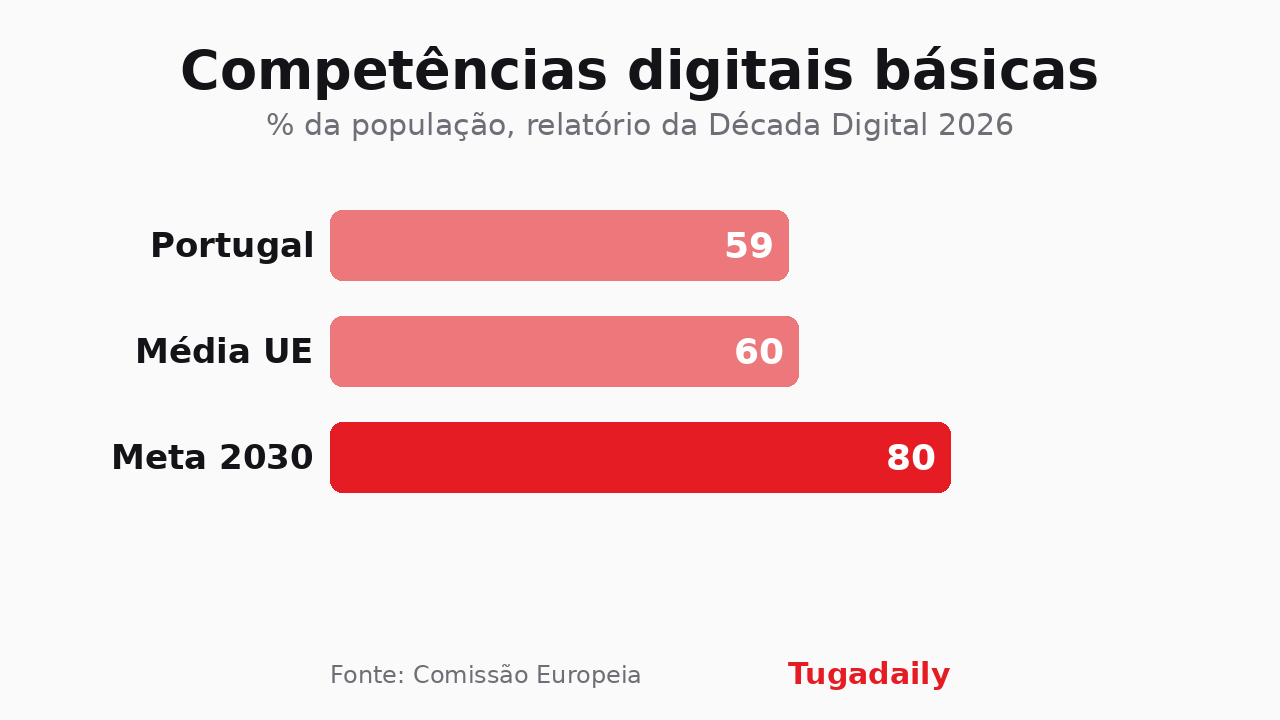
It is also a small piece of something larger. Portugal has European connectivity and digital-skills targets to hit, as the Digital Decade progress review laid out, and underground transport coverage is one of the measures that separates European capitals from each other. Network and works updates are published by Metropolitano de Lisboa.
By Oliver Grant
Image: Wikimedia Commons (CC BY 2.0)