
Do bottles without the Volta symbol vanish on Monday? No, and the agency has said so
The deposit-return scheme's transition period ends on 9 August, but stock already legally on the market can be sold until it runs out. Those containers carry no refund.
For weeks the understanding was that 10 August would be a hard stop, and that bottles and cans without the Volta symbol would have to come off the shelves. They will not. Portugal’s environment agency has clarified that containers legally placed on the market during the transition period can be sold until the stock runs out, with no fixed cut-off.
What actually changes on 10 August sits further up the chain. The obligation to join the deposit-return scheme applies to new packaging that producers put on the market. If you fill bottles and cans, you register them in the system. If you sell them, you can work through what is already in the warehouse.
The reasoning behind the change of position is practical. Forcing retailers, distributors and the hospitality trade to pull perfectly sellable stock meant throwing away drink and absorbing the loss, which is roughly the opposite of what a recycling scheme is for.
So what about the 10 cents?
This is where most of the confusion will land, and there is no grey area in it. A container without the Volta symbol never entered the scheme, so it carries no deposit and earns you no refund. It goes in the yellow recycling bin, exactly as before.
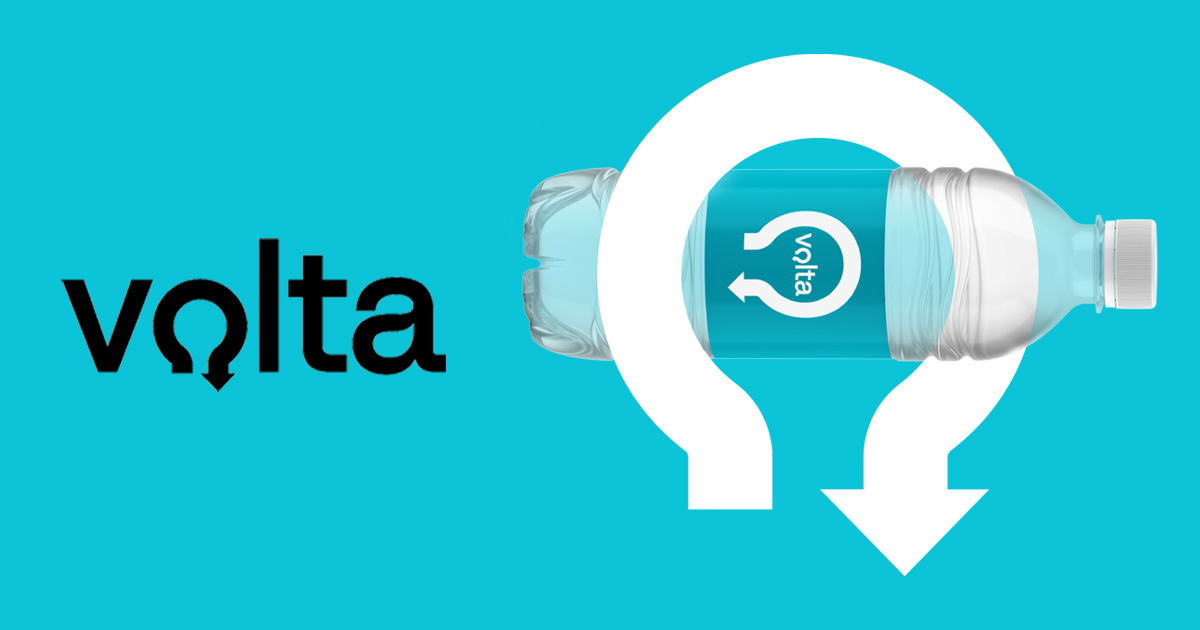
The ones that do carry the symbol work the other way round. You pay an extra 10 cents at the till and get those 10 cents back when you return the empty container at a Volta point, either as a receipt convertible into cash or a discount, digitally, or donated to a charity. The scheme’s own FAQ page walks through the mechanics.
Scope, for now, is single-use plastic and metal beverage packaging up to three litres, and drinks with more than 25 per cent dairy content are excluded. The water bottle and the beer can are in. The chocolate milk carton is not.
So for the next few weeks the same shelf will hold two near-identical bottles, one with the symbol and one without, ringing up at different prices. Worth reading the label before arguing at the counter.
It is not the only EU waste rule reshaping retail this year. Since July, destroying unsold clothes and footwear has been illegal across the EU, with consequences that land mostly on Portuguese factories.
By Beatriz Mota
Image: Volta / Sistema de Depósito e Reembolso