
The EU's new car-scrapping rules start today. The parts that reach your driveway come later
Regulation (EU) 2026/1738 entered into force on 13 August. It requires 15% recycled plastic in new cars from 2032, extends the framework to lorries, buses and motorcycles, and from mid-2031 lets only roadworthy vehicles be exported out of the EU.
The regulation that decides how cars are designed, dismantled and recycled at the end of their lives came into force across the European Union today. It replaces two directives old enough to vote: one from 2000, the other from 2005.
None of this will be visible in a showroom tomorrow. Almost every figure in the text is dated to the next decade, and that is where the story sits.
What changes now
From today, manufacturers have to publish clear instructions for removing and replacing components, both during a vehicle’s life and at the end of it. That reads like a technical footnote. It is the difference between a garage salvaging a working part and the whole car going to the shredder.
The regulation also tightens traceability for vehicles leaving the road, and draws sharper criteria separating a used car from an end-of-life one. That boundary is where a great many vehicles used to disappear from the statistics.
The scope widens, too. The new rules now reach lorries, buses and motorcycles, none of which the old framework captured.
The dates that matter
2032: new cars sold in the EU must contain 15% recycled plastic. 2036: 25%. For steel and aluminium the Commission will set separate targets, expected to apply from 2033.
Mid-2031 carries the change with the sharpest edge for Portugal’s second-hand trade. From then, only roadworthy vehicles may be exported outside the EU, a measure aimed squarely at the practice of shipping scrap to non-EU countries under a used-car label.
Extended producer responsibility is strengthened as well. Whoever puts a car on the market now helps pay for collecting and treating it once it stops moving.
Why Brussels cares this much about scrap
Less for the environment than you might assume. The argument running through the announcement is raw materials — the aluminium, copper and rare earths already sitting in Europe’s parked cars, currently leaving the continent. Recovering them is cheaper and safer than importing them.
It is the same reasoning that has pushed the EU to legislate where it once left well alone, from making AI-generated content declare itself to the industrial strategy visible in the race to supply CP’s high-speed trains.
If you have an old car sitting in a garage, the honest summary is this: the full text is Regulation (EU) 2026/1738, and what it changes reaches carmakers long before it reaches you.
By Beatriz Mota
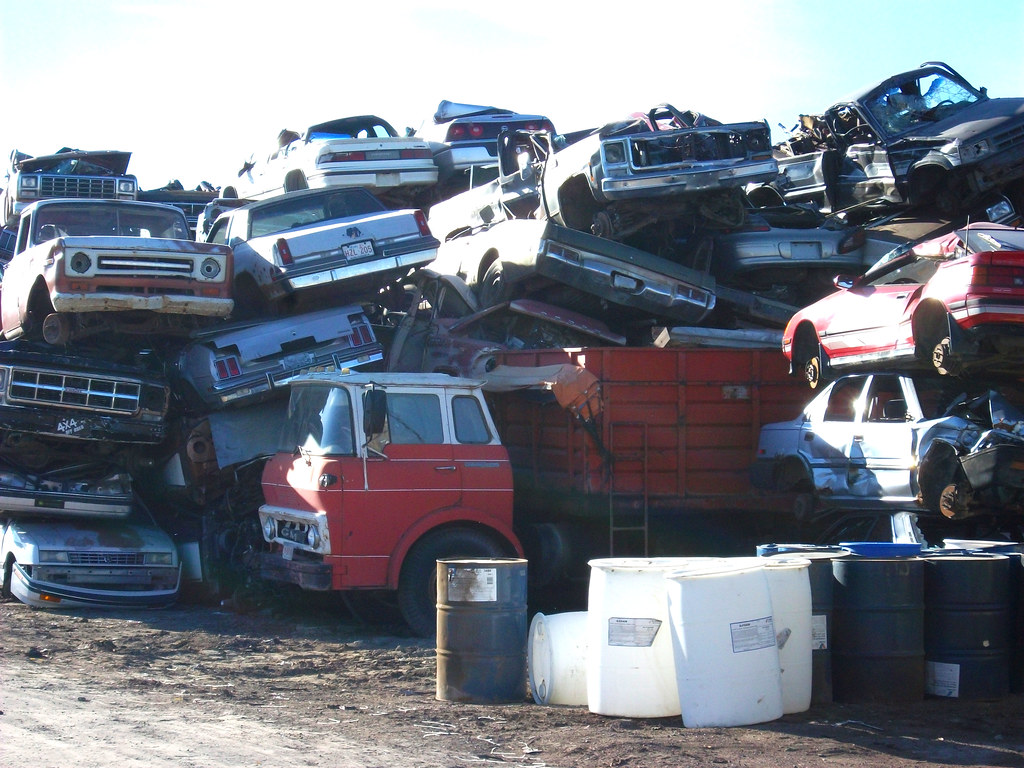
Image: dave_7 / Flickr (CC BY 2.0)