
Faro has overtaken Lisbon as Portugal's priciest district to rent in
Faro hit €22.5 per square metre in July, edging past Lisbon district on €21.4 for the first time in the series. Nationally, rents rose 0.9%, ending six straight months of falls.
For years this question had one automatic answer. In July it stopped having one. Faro district now carries the highest median rent in the country at €22.5 per square metre, ahead of Lisbon district on €21.4. It is the first time that has happened in the series.
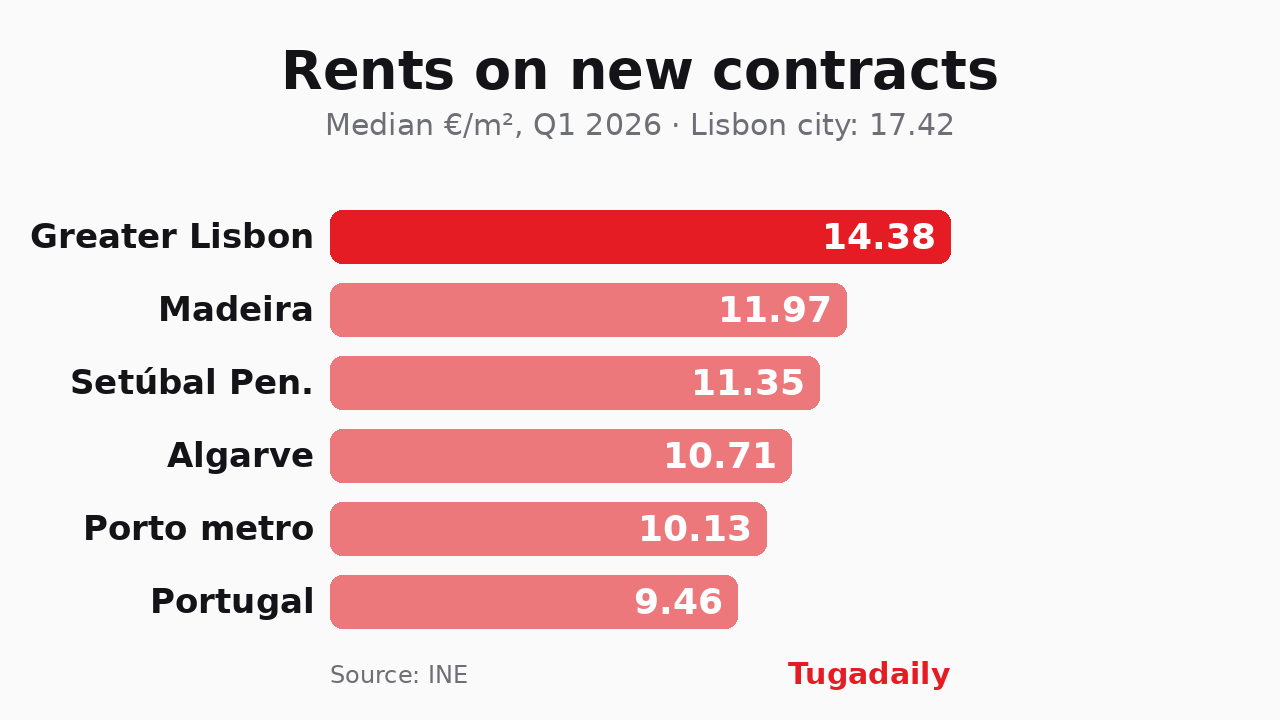
The figures come from idealista’s July rental price index, and they arrive with a second number that reframes the picture. Rents across Portugal rose 0.9% against July last year, to a national median of €17.7 per square metre. That sounds small, and it is, but it ends six consecutive months of decline, several of them considerably steeper than this rise: 1.9% in January, 2.7% in April, 2.9% in May, 2.4% in June.
An Algarve pulling away
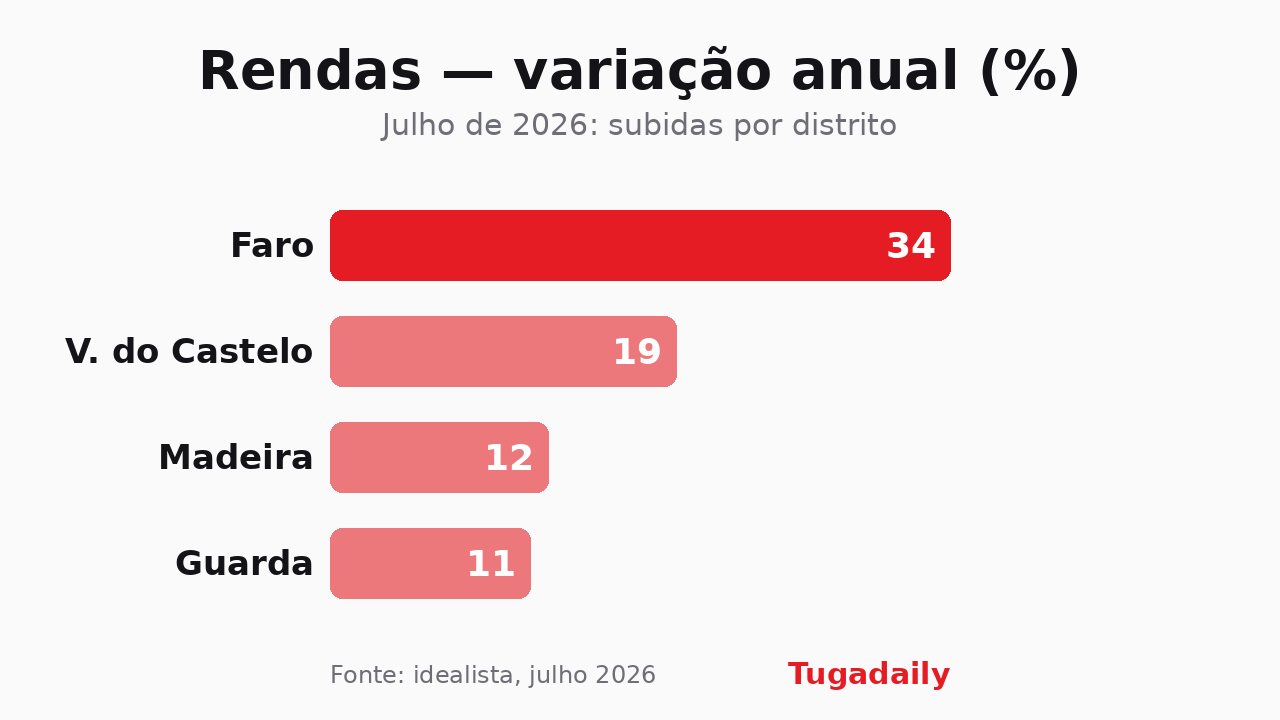
Faro’s annual increase was 34.3%, a figure no other district comes close to. Behind it sit Viana do Castelo at 19%, Porto Santo and Madeira at 12.3% each, Guarda at 11.1% and Aveiro at 9.8%.
By region the shape repeats. The Algarve rose 34.3% and became the most expensive region in the country at €22.5 per square metre, ahead of the Lisbon metropolitan area on €20.7. The North was the only one of seven regions to fall, and it fell 11.3%.
The cities tell a calmer story
Among district capitals the picture is less dramatic. Lisbon is still the most expensive city at €23.5 per square metre, followed by Porto at €18.1 and Funchal at €17.3. The cheapest remain Castelo Branco at €7.2, Viseu at €8.1 and Leiria at €9.2.
Prices rose in ten of the fourteen capitals analysed, led by Viana do Castelo at 28.7%, then Aveiro at 15.4%, Funchal at 13.8% and Santarém at 12.2%. Four fell, and the deepest was Porto’s 11.5% drop — a contrast worth remembering whenever the market gets discussed as though it were one thing.
Two diverging lines sit behind the move. Demand for rental homes grew 36% year on year in the second quarter while available stock fell 22% over the same period, according to the same source. The government’s rental reform promises changes to evictions and contracts, but it is still in parliament and has yet to register in the market.
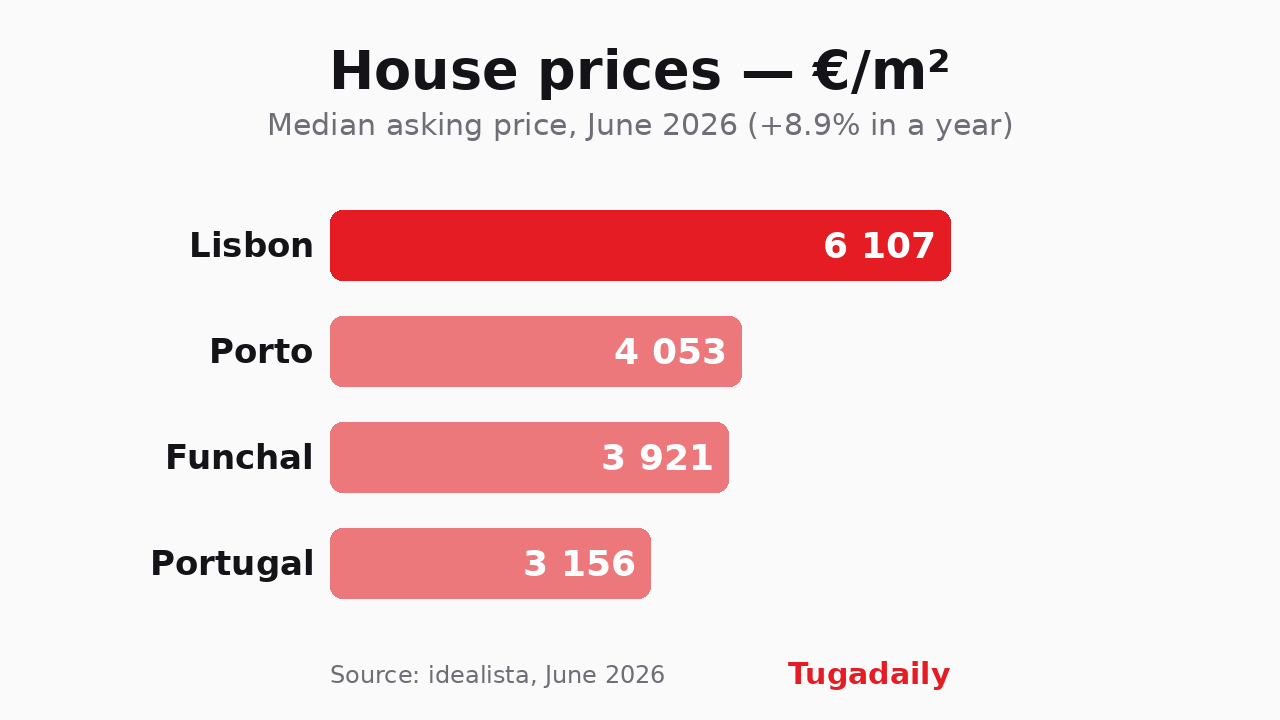
On the buying side the trajectory is a different story, which we covered when asking prices set a ninth consecutive record. The full rental report is on idealista’s reports portal.
Chart: Tugadaily · data from idealista