
236 of the 412 women in Portugal's top league now get paid to play
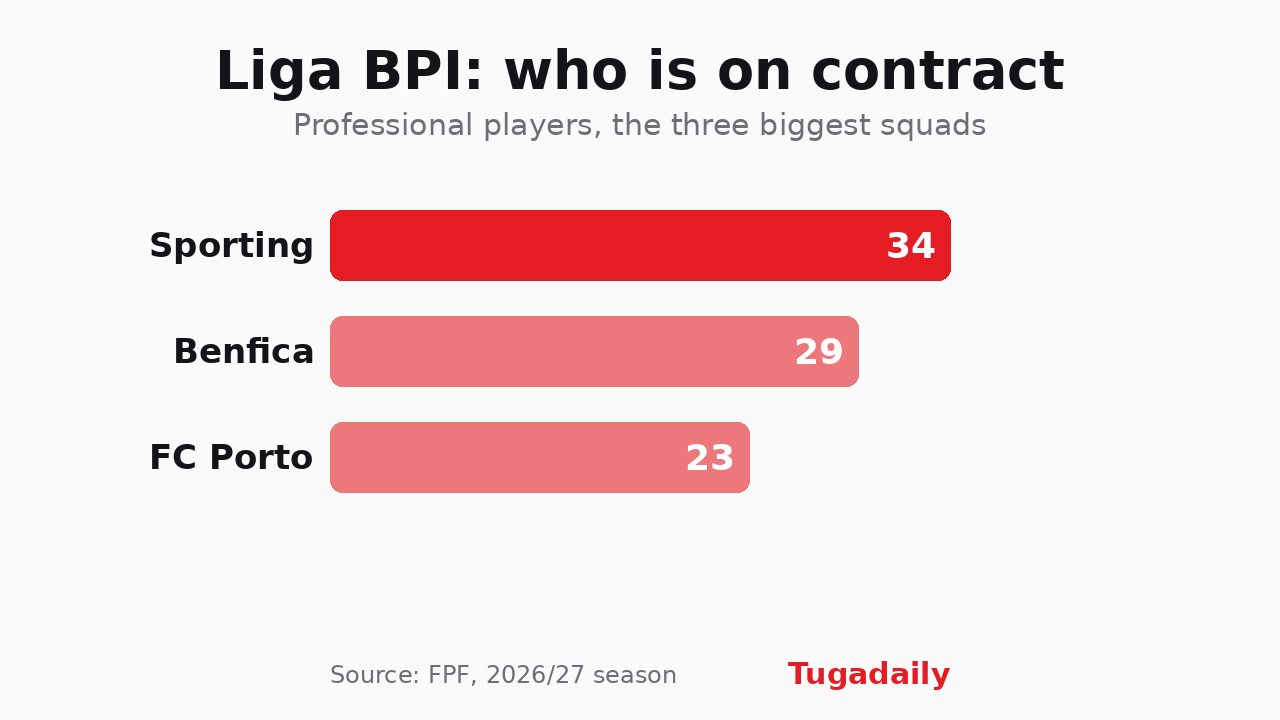
The Liga BPI returns with ten clubs, FC Porto among them for the first time, and Benfica chasing a seventh straight title. Sporting carries the largest professional squad.
Portugal’s top women’s football league is back, with ten clubs and one new name on the list: FC Porto, entering the Liga BPI for the first time. Benfica start as champions and are going for a seventh title in a row. The number that says most about where the game stands, though, is not in the table.
236 contracts out of 412 registrations
Of the 412 players registered for this season, 236 hold a professional sports contract. The other 176 are still amateurs. That puts 57.2% of first-division footballers in Portugal on a wage from the game, while the rest fit training around a job, or a degree, or both.
The Portuguese Football Federation has been pushing money into the women’s game, some EUR 23 million of it, and the contracts are the most visible result. More players, more clubs, and above all a bigger share of them for whom football pays the bills.
Where the professionals are
Sporting carry the most contracted players at 34, alongside 22 amateurs. Benfica have the cleanest squad in employment terms: 29 professionals and just 3 amateurs. FC Porto arrived for their debut season with 23 under contract and 22 without.
The pattern is easy to read. The clubs spending on wages are not necessarily the ones with the biggest registration lists, but they are the ones where nearly everyone in the squad is a professional. Across the other seven clubs the balance tips the other way, and that is where most of those 176 amateurs sit.
What it changes on the pitch
More contracts mean more training hours, more medical support and fewer players turning up tired from a shift. It guarantees nothing, but it moves the starting line — and the Liga BPI has spent recent seasons exporting that effect, with Torreense taking a leg off Juventus in Champions League qualifying and the youth sides picking up points at World Cup finals.
What is missing is the hardest part: crowds in the stands and a television schedule that does not make people hunt for the game. Everything else has moved faster than anyone expected.
By Vasco Almada
Chart: Tugadaily · data from the Portuguese Football Federation