

Fill the tank this weekend if you can. Diesel in Portugal hits an all-time high on Monday
Standard diesel is expected to rise by around 15 cents a litre and 95 petrol by around 12 from Monday 7 September. At 2.169 and 2.142 euros, both clear the records set in April and May.
If the tank is half full and the car is sitting outside, this is one of those weekends when a trip to the pump pays for itself. From the early hours of Monday 7 September, standard diesel is expected to go up by roughly 15 cents a litre and 95 petrol by roughly 12, according to the weekly forecast published by the Automóvel Club de Portugal.
That puts diesel at about 2.169 euros a litre and 95 petrol at about 2.142. Both are the highest prices ever charged in Portugal. Diesel’s previous record was 2.145 euros, set in April, and petrol’s was 2.024, set in May.
What it costs to fill up
On a 50-litre tank, the diesel increase works out at 7.50 euros and the petrol one at 6. Filling that tank with diesel on Monday will cost close to 108 euros, against roughly 101 on Saturday.
Drive 15,000 kilometres a year in a diesel car doing six litres per hundred and the annual difference is around 135 euros, assuming prices stay where they land. On its own that is manageable. What makes it sting is that it is one more step on a staircase that has only gone up since the spring.
Why now
The pressure is coming from outside. Brent moved back towards 90 dollars at the end of August on the tension between the United States and Iran, and last week was crude’s strongest week since July. Forecourt prices follow that within a few days.
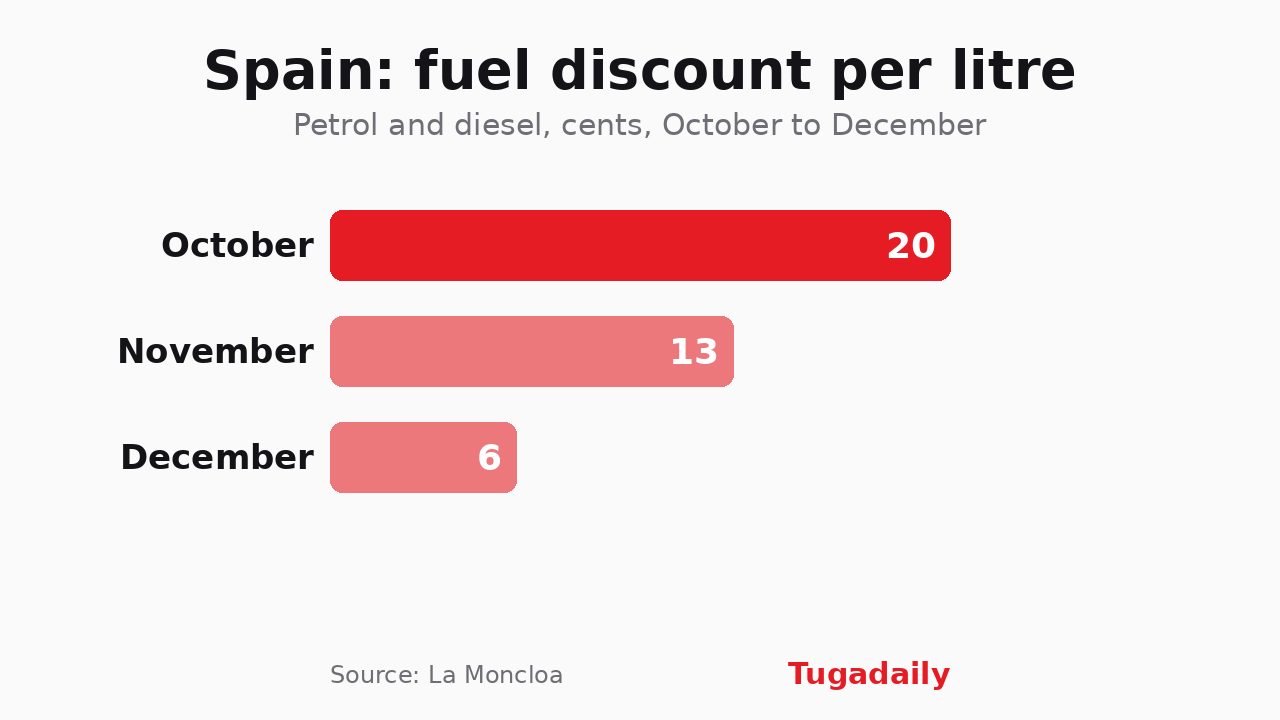
What softens the blow here is the discount on fuel duty, which the government has been adjusting week by week and which it has also used to claw back part of a fall, as happened when pump prices dropped in August and the state kept two cents of it. Monday’s final figure is only settled once Friday’s order is published.
Still unanswered is the question the government raised in July, when it floated capping the oil companies’ margins and asked the energy regulator to study how fast prices climb compared with how fast they fall. Weeks like this one are exactly the raw material for that study.
By Beatriz Mota
Image: Joehawkins / Wikimedia Commons (CC BY-SA 4.0)