
PT
A glass of Port wine
Business 9 July 2026

Portuguese wine: AEP brings buyers from six European markets to Porto

The third edition of Portugal Premium Wines brought importers from the UK, Germany, the Netherlands, Belgium, Ireland and Scandinavia to Porto to do business with 20 national producers.

While half the country was watching thermometers, Porto was talking exports by the glass. The Portuguese Business Association (AEP) ran the third edition of Portugal Premium Wines through Thursday — a reverse trade mission that brought importers from six strategic European markets to negotiate directly with national producers.

What is Portugal Premium Wines?

It’s an AEP initiative that flips the usual logic: instead of flying producers out, it flies the buyers in. Importers from the United Kingdom, the Netherlands, Belgium, Ireland, Germany and Scandinavia spent three days in direct contact with 20 Portuguese producers, between B2B meetings, tastings and vineyard visits. The goal is to generate new export opportunities and strengthen Portuguese wine’s presence on European shelves — programme details are on the AEP’s website.

The bet makes sense right now: wine is one of the few categories where Portugal competes on quality rather than price, and northern European markets — with high per-capita consumption and a growing curiosity for less obvious grape varieties — are exactly where the margins live.

Why do these missions matter?

Because they shorten the road from cellar to contract. For a mid-sized producer, reaching a German or Scandinavian importer alone costs trade fairs, flights and months of emails; here, the buyer arrived already willing to listen. And the backdrop helps: Portuguese companies are more profitable than a year ago, and there’s appetite to invest in going international.

If the tastings went well, the results will show up in export statistics over the coming quarters. Until then, the image that sums up the week: six markets at the table, twenty producers pouring — and no glass empty for long.

By Beatriz Mota

Image: Jon Sullivan / Wikimedia Commons (public domain)

Meta Platforms headquarters in Menlo Park, California
Business 12 July 2026

Meta plans to double computing capacity to 14 gigawatts by 2027

An internal memo reveals Meta plans to double its AI computing power by 2027, with record spending and a new gigawatt-scale data centre in Canada.

Meta is preparing the biggest infrastructure expansion in its history: according to an internal memo that surfaced this week, the company plans to double its total computing capacity to 14 gigawatts by 2027, with 7 gigawatts coming online this year alone. For perspective, one gigawatt is roughly the output of a nuclear power plant — and Meta wants fourteen of them just to train and serve AI models.

How much is Meta spending in 2026?

This year’s outlay is running at the very top of the range flagged to markets: up to 145 billion dollars. The most visible piece is the new data centre in Sturgeon County, in the Canadian province of Alberta — the company’s first in Canada, a C$13 billion (about US$9.2 billion) investment with an initial one gigawatt of capacity and room to scale to 1.8. The memo also reveals long-term contracts for memory with Samsung, flash storage with Sandisk and fibre optics with Sumitomo — locked in mid-memory-shortage, which says plenty about the urgency.

Who makes the chips?

Increasingly, Meta itself. Iris, its in-house AI accelerator, enters production at TSMC in September, with Broadcom as design partner under an agreement extended through 2029 — and the company wants to ship a new chip every six months. It is the same silicon race that has animated the whole sector, from SK Hynix’s blockbuster Nasdaq debut to rivals’ giant orders, and it lands in a year when the company is also facing regulatory pressure in Brussels. The company’s official infrastructure announcements are published in Meta’s newsroom.

For investors, the question is the one that haunts this whole cycle: how much of this colossal capital comes back as revenue — and when. At the current pace, the answer costs 14 gigawatts to find out.

By Beatriz Mota

Image: Wikimedia Commons

Headquarters of Caixa Geral de Depósitos in Lisbon at dusk
Business 12 July 2026

Banking jobs in Portugal hit highest level since BES collapse: 782 new posts in a year

Employment in Portuguese banking reached its highest level since the 2014 BES collapse, with 782 net jobs added in a year — even as branches keep closing.

After a decade of shrinking, Portuguese banking is hiring again in earnest: over the past year the sector added 782 jobs in net terms, lifting employment to its highest level since the collapse of BES in 2014. It is a remarkable turn of the cycle for an industry that spent years as a byword for restructuring and redundancy packages.

Why are Portuguese banks hiring?

Not for the counters — for the technology. Banks are beefing up digital, data and cybersecurity teams, and responding to the growth of the banking business itself, fattened by the high interest rates of recent years. The proof is in the contrast: while employment rose, the branch network kept thinning — 126 agencies closed over the past year, leaving 3,339 at the end of 2025, according to Bank of Portugal data. Fewer doors open, more people behind screens.

How does Portugal compare with Europe?

Surprisingly well. In 2025 Portugal was the fifth euro-zone country where banking employment grew the most — only Germany, Spain, Poland and Finland created more posts. And that in a year when the sector shed more than 13,000 jobs across the euro zone as a whole, largely down to French banks, which alone eliminated close to 20,000 positions.

For the labour market it is another sign of the unusual moment Portugal’s economy is enjoying — unemployment below the European average and stronger-than-expected growth at the start of the year. If you are hunting for a qualified tech job, an unlikely heavyweight recruiter has entered the chat: the bank on the corner — or what is left of it. See also which sectors pay best in Portugal.

By Beatriz Mota

Image: Wikimedia Commons

Nasdaq Tower in Times Square, New York
Business 11 July 2026

SK Hynix jumps 13% in Nasdaq debut after biggest foreign IPO in US history

SK Hynix closed up 13% on its Nasdaq debut after raising $26.5 billion — the largest US listing ever by a foreign company, beating Alibaba's 2014 record.

Investor appetite for anything touching artificial intelligence has a new record to show for itself. South Korea’s SK Hynix, maker of the memory that feeds Nvidia’s AI chips, debuted on the Nasdaq with a 13% jump to $168.01, after an offering that raised $26.5 billion.

Why is this debut historic?

Because it is the largest-ever US IPO by a foreign company, beating the record Alibaba had held since 2014 ($25 billion). Demand ran seven times above supply, the depositary receipts were priced at $149, and the stock will trade under the ticker SKHY. Deal details are on SK Hynix’s investor relations pages.

What does SK Hynix make, and why is it worth so much?

It is the world leader in high-bandwidth memory (HBM), the component AI accelerators consume in industrial quantities. Group chairman Chey Tae-won summed up the moment without false modesty: demand is “enormous” and shows no sign of shrinking. The money raised goes to new plants and equipment — the race for production capacity is now the sector’s real battleground.

For anyone following markets from Portugal, the signal is clear: the AI cycle keeps pulling semiconductors and US indices along, one of the running threads in our daily markets tracker.

By Beatriz Mota

Image: Nielsoncaetanosalmeron / Wikimedia Commons (CC BY 4.0)

Ship and cranes at the Port of Leixões, Matosinhos
Business 11 July 2026

Portugal exports up 5.1% in May, but the year's trade deficit keeps widening

Portuguese goods exports rose 5.1% in May, says the INE, while imports fell 1.6%. Year to date, though, the trade deficit widened by 1.732 billion euros to 14.383 billion.

Portuguese goods exports grew 5.1% in May compared with the same month of 2025 — the best reading in almost two years — while imports fell 1.6%, according to international trade data released by the INE statistics office. A month to frame on the wall, then. The trouble is the full-year picture, which tells a less cheerful story.

What do the INE trade figures show?

In the January-to-May period, exports slipped 0.2% while imports rose 3.5% year on year. The result: the goods trade deficit widened by 1.732 billion euros to 14.383 billion. Stripping out energy products and special transport equipment, May looks more balanced — exports up 4.2% and imports up 5.1% — a sign that domestic demand keeps pulling in purchases from abroad. The full tables are on the INE website.

Why is the trade deficit growing if May was strong?

Because one strong month does not erase four weak ones. The start of the year was hit by slowing world trade and a demanding 2025 comparison base, while imports — energy, consumer goods, equipment — never stopped climbing. May offers hope that the tide is turning; for now, the hole in the trade balance keeps getting wider.

The good news is that companies seem to have the muscle for the crossing: Bank of Portugal data show Portuguese firms started 2026 more profitable and under less financial pressure. If foreign orders confirm May’s signal, the second half of the year could tell a different story.

By Beatriz Mota

Image: JotaCartas / Wikimedia Commons (CC BY-SA 3.0)

Gold bullion bars
Business 11 July 2026

Markets tracker: gold, the Fed, oil and stocks

Our running tracker of the markets that move savings in Portugal — gold, Fed and ECB decisions, oil and stocks. Updated whenever there is news.

This is our running tracker of the markets that move savings in Portugal. Instead of a fresh article for every swing, we update this page whenever something matters: gold, Federal Reserve and European Central Bank decisions, oil and the main stock indices. For the background on the Portuguese economy, see our mid-year review. Official data is at the Bank of Portugal.

Updates

11 July 2026

Gold slipped 0.6% on Friday to $4,115 an ounce, while oil edged higher on Strait of Hormuz tensions — WTI closed near $72 and Brent at $76. On Wall Street the week ended positive despite a mixed Friday, marked by South Korea’s SK Hynix debuting on the Nasdaq, the largest-ever US listing by a foreign company.

10 July 2026

The week brought two market debuts shaking up the chip sector: South Korea’s SK Hynix, the AI-memory giant, debuted on US markets, while AirPods-maker Luxshare had a tepid start in Hong Kong, closing below its listing price. A sign of the times: appetite for AI-linked semiconductors persists, but it is no longer a blank cheque.

8 July 2026

Oil surged more than 6% after Donald Trump declared the ceasefire with Iran over, following attacks on three tankers near the Strait of Hormuz: WTI neared 75 dollars and Brent 79, the biggest daily jump since early June. US stocks fell, with Dow futures losing more than 500 points, and the US Treasury revoked the waiver allowing Iranian oil onto the global market. Fuel prices in Portugal should reflect the rise as early as next week.

8 July 2026

The PSI traded near 9,217 points (+0.35% at the last close), gold held high around 4,143 dollars an ounce, and the euro was worth about 1.14 dollars. Steady European stocks and still-expensive bullion.

7 July 2026

Gold steadied near 4,150 dollars an ounce as investors awaited the minutes of the Fed’s June meeting, now pricing roughly a 50% chance of a September rate hike after US job growth cooled. On Wall Street the Dow holds above 53,000 points, while oil eased as traffic through the Strait of Hormuz kept recovering and OPEC+ agreed to lift production quotas for next month.

6 July 2026

OPEC+ confirmed another production increase and oil opened the week lower. Gold slipped from around 4,200 to near 4,143 dollars an ounce in a technical pullback, and Asian markets closed mostly in the red. On Wall Street, futures returned from the July 4th holiday with no clear direction as investors reassess the payoff of AI spending.

5 July 2026

Gold shone again at the start of July: it climbed close to $4,122 an ounce on 2 July, a jump of about 2.25% in a single day. Central banks, led by China, keep buying to diversify reserves and cut their dollar dependence, and the World Gold Council sees room for further gains by year-end. For savers, the metal remains a safe haven in a half-year marked by geopolitical tension.

4 July 2026

Wall Street closed the first half at record highs and pulled European savings along with it. Gold trades near a multi-week low as the market adjusts its bets on the Fed’s next move.

2 July 2026

Gold slipped to a recent low on expectations of higher rates for longer. Oil steady after the easing in the Strait of Hormuz.

30 June 2026

Month-end: gold posted a fourth straight monthly fall; European stocks swung on earnings and central-bank cues.

By Beatriz Mota

Image: Stevebidmead / Wikimedia Commons (CC0)

Delta Cafés logo, Nabeiro group
Business 10 July 2026

Delta rescues Mocoffee: 3 million euros to save Azambuja capsule factory

The Nabeiro group injects 3 million euros into Mocoffee, becomes sole shareholder and pays creditors 6 million. The plan writes off 64% of 23.4 million in debt.

Delta is taking over Mocoffee — and with it a factory in Azambuja capable of turning out 350 million coffee capsules a year. The recovery plan for the manufacturer, which reached 2026 on the edge of insolvency with 23.4 million euros in debt, rests on a 3-million-euro injection from the Nabeiro group, which becomes sole shareholder.

How much do Mocoffee’s creditors get back?

About 36% of what they are owed: the plan negotiated under Portugal’s special revitalisation process (PER) writes off 64.4% of the debt, with the Campo Maior group committing to pay common creditors six million euros in a single instalment. The banks take the biggest haircut — BCP and Caixa Geral de Depósitos top the list with 2.7 million each — and the State is in the queue too, between the tax authority and social security.

What happens to the factory’s workers?

The least bitter part of the deal: the plan foresees no layoffs, no reduced hours, no suspended contracts. For Azambuja’s industrial zone, keeping a plant with that installed capacity running is the difference between bad news and a scare with a decent ending — in a year when, curiously, construction keeps booming while company creation falls.

For Delta, the maths is simple: for 3 million plus the 6 paid to creditors, Portugal’s coffee giant locks in its own capsule production capacity in a market that keeps growing. Corporate details are on the official Delta Cafés site. In coffee, as in business, you only see the grounds when you reach the bottom of the cup.

By Beatriz Mota

Image: Delta Cafés/Grupo Nabeiro / Wikimedia Commons (public domain)

European Investment Bank headquarters in Luxembourg
Business 10 July 2026

European Tech Champions Initiative: Portugal joins EIB fund aiming to mobilise 80 billion euros

Portugal has joined the EIB's European Tech Champions Initiative, which aims to raise 15 billion euros and mobilise up to 80 billion for 1,500 European scale-ups.

Portugal will put its own money into the new phase of the European Tech Champions Initiative, the investment alliance led by the European Investment Bank that aims to mobilise up to 80 billion euros for 1,500 European tech companies in their scale-up phase. The announcement came this Friday from finance minister Joaquim Miranda Sarmento, on the sidelines of the Ecofin meeting in Brussels.

How much will Portugal invest in the initiative?

Nobody knows yet — and that is the honest answer. All 27 member states have agreed to take part, but most have not settled on amounts. In Portugal’s case, a technical meeting between the finance ministry and the EIB is scheduled for next week, and the final figure will be, in the minister’s words, proportional to Portugal’s size and to the fund’s opportunities.

What is the European Tech Champions Initiative?

It is Europe’s answer to an old problem: the continent’s tech companies grow up to a point and then go looking for capital in the United States — often relocating altogether. The new phase wants to raise up to 15 billion euros, roughly four times the first edition launched in 2023, and use it as leverage to reach that 80 billion in total investment. The EIB Group is committing up to 1.25 billion, and the novelty is that beyond mega-funds, the initiative will now also invest in mid-sized growth funds above 300 million and create a pan-European platform to ease private investors into the European tech market. The final size will be settled in the second half of 2026.

The first phase backed 15 mega-funds and helped create 12 European unicorns. For the Portuguese ecosystem, which keeps drawing capital — the national space sector is already worth 1.2 billion euros — having the state at this table means more direct access to a financing machine designed precisely for the stage at which our scale-ups tend to emigrate.

By Beatriz Mota

Image: Caroline Martin / Wikimedia Commons (CC BY-SA 3.0 igo)

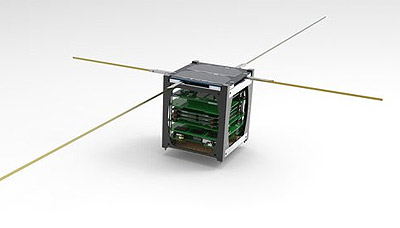
ISTSat-1, Portugal's first university satellite
Business 10 July 2026

Portugal's space sector is worth €1.2 billion — and every euro generates another €1.17

Portugal's space sector added €1.2 billion to GDP between 2019 and 2024, according to the Novaspace study for the Portuguese Space Agency.

Space is now serious business in Portugal: between 2019 and 2024, space activities contributed €1.2 billion directly to the country’s GDP. The figure comes from the socioeconomic study Novaspace produced for the Portuguese Space Agency — the most complete portrait of the sector to date — and it arrives with a multiplier that explains the excitement: for every euro space adds directly to the economy, another €1.17 is generated through supply chains and household spending.

Who makes up Portugal’s space sector?

More than 150 space-related entities, over 80 of them active companies, clustered mainly around Lisbon, Coimbra and the Porto region. The fabric is almost entirely small and medium-sized firms — none has more than 200 workers dedicated to space — and revenue remains concentrated: 76% comes from just 14 companies. It’s a young, growing sector, and the study names financing as its main challenge. The full document is available on the Portuguese Space Agency’s website.

Why does this study matter now?

Because the sector is visibly accelerating. In recent weeks Portugal put new satellites from the Lusíada constellation, named after Portuguese poets, into orbit, and the country has been stepping up its contribution to the European Space Agency. The study puts numbers on an intuition: each launch isn’t just prestige — it’s skilled jobs, exports and a ripple effect felt far beyond the clean rooms.

For a country that spent decades treating space as other people’s business, €1.2 billion in six years is a persuasive way to change the conversation.

By Beatriz Mota

Image: Instituto Superior Técnico (IST), Portugal. / Wikimedia Commons (public domain)

Economic growth chart with an upward line
Business 9 July 2026

Portugal's GDP grows 2.2% in the second quarter as Católica lifts 2026 forecast

Portugal's economy is estimated to have grown 2.2% year-on-year in Q2 2026, according to Católica's NECEP lab, which raised its full-year forecast from 1.5% to 1.8%.

Portugal’s economy is estimated to have grown 2.2% year-on-year in the second quarter of 2026, and the Católica University has raised its full-year forecast — from 1.5% to 1.8%. It confirms that the recovery has gained traction after a first half marked by expensive energy and disrupted supply chains.

How much did the economy grow in the second quarter?

According to the NECEP – Católica Lisbon Forecasting Lab, GDP is estimated to have grown 0.6% quarter-on-quarter and 2.2% year-on-year (against the same period in 2025). That’s a solid pace by European standards and stronger than most forecasters expected at the start of the year.

Why did Católica raise its 2026 forecast?

The upgrade — from 1.5% to 1.8% — reflects a broad improvement across high-frequency indicators, from consumption to economic sentiment. NECEP notes that the most critical phase of rising energy prices and supply-chain disruption, tied to tension in the Middle East, is now behind us, which has given households and firms some breathing room.

It’s worth looking past the headline: not everyone measures the same thing. The CIP/ISEG barometer pointed to a more modest quarter-on-quarter figure for the same period, a sign that the 2.2% year-on-year estimate sits at the optimistic end of the range. The official INE numbers are the final word — and they land in the following weeks.

What to expect in the coming years?

The projections beyond 2026 held steady: Católica still points to 1.5% in 2027 and 1.9% in 2028. In short, stable growth around 1.5% to 2%, without the post-pandemic jolt but also without a slide. For context on the country’s trajectory, see our outlook on the Portuguese economy in 2026; the benchmark data, when released, will be on the INE portal.

By Beatriz Mota

Illustrative · Photo: Aurelijus U. / Pexels

Cranes on a construction site
Business 8 July 2026

New company creation in Portugal falls 4.1% — but construction is booming

Portugal saw 27,831 new companies in the first half of 2026, down 4.1% year on year. Construction grew 11% and is now the second-biggest sector for new businesses for the first time.

Portugal created 27,831 new companies in the first half of 2026 — 4.1% fewer than in the same period last year. At first glance that is bad news; up close, the picture has more nuance: fewer companies are closing than before, and one sector is clearly rowing against the tide.

Which sector is creating the most companies in Portugal?

Construction. The sector grew 11% in new company registrations over the half-year and reached, for the first time, second place among all economic activities. It is not hard to guess why: with the housing crisis at the top of the political agenda and tax incentives for construction and renovation in force, there is work to be done — and people are setting up companies to do it.

The other side of the ledger also improved: 5,690 companies closed by the end of June, an 18% drop compared with 2025. Fewer births, yes, but considerably fewer corporate funerals too — which fits a start of the year in which Portugal’s economy found momentum in the first quarter, with companies more profitable and financing cheaper.

Should the 4.1% drop worry anyone?

It depends where you look. A dip in company creation usually reflects caution — interest rates still normalising, uncertain external demand, elections and a trade war on the radar. But the net balance (births minus closures) remains clearly positive, and composition matters: more construction firms means a response to the Portuguese economy’s biggest bottleneck, the shortage of homes. If the country needed a sign that the market has read the priorities, this is it. Official business-demography data is available on the Informa D&B portal.

By Beatriz Mota

Image: Whiteghost.ink / Wikimedia Commons (CC BY-SA 4.0)

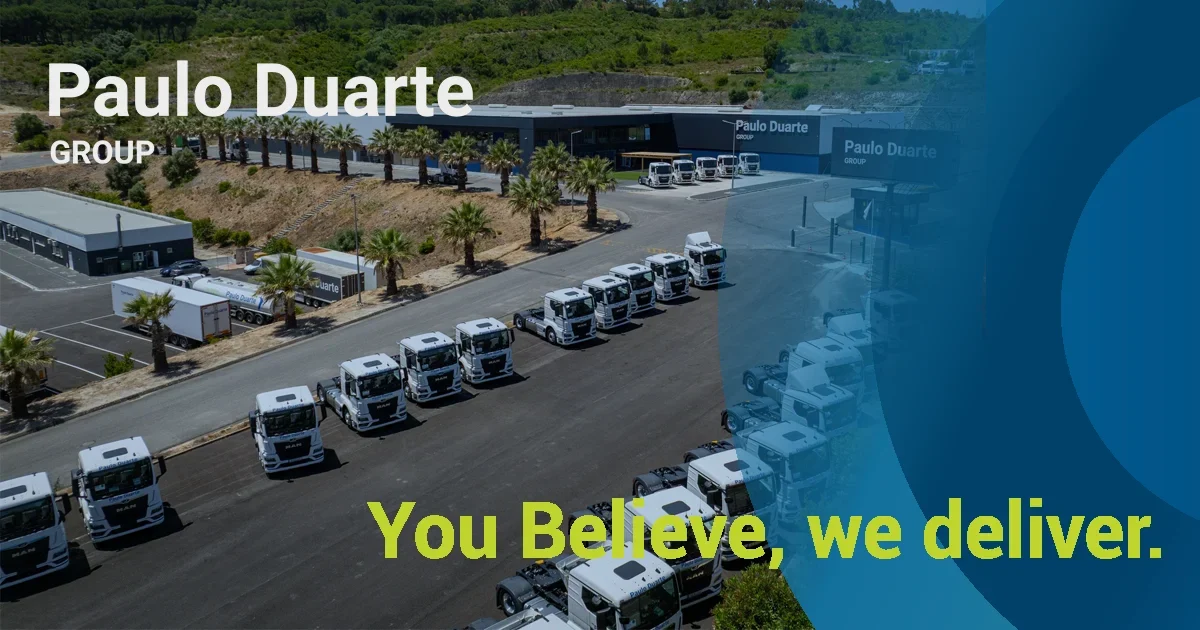
Grupo Paulo Duarte truck fleet
Business 8 July 2026

Grupo Paulo Duarte: UK's ICG buys 33.5% stake and commits up to 200 million euros to build an Iberian freight giant

Portuguese haulier Grupo Paulo Duarte sold a 33.5% stake to London-listed ICG, which will invest up to 200 million euros to build one of Iberia's biggest road freight operators.

One of Portugal’s oldest hauliers has just taken on a heavyweight partner. British asset manager ICG, listed in London, has bought 33.5% of Grupo Paulo Duarte and committed to investing up to 200 million euros to accelerate the Torres Vedras company’s growth — with a stated goal: turning it into one of the biggest road freight operators on the Iberian Peninsula.

What changes at Grupo Paulo Duarte?

Day to day, little — and that’s deliberate. ICG comes in as a minority shareholder and management stays with the family’s two co-CEOs, Gustavo and António Paulo Duarte. What changes is the scale of ambition: founded in 1946, the group turns over around 140 million euros a year and already held a leading position in fuel, chemicals and liquid food logistics; with the fresh capital, revenue is expected to approach 200 million in the short term. The buyer’s profile is on ICG’s official site.

Why does this matter for Portugal’s economy?

Because it’s another sign that foreign capital is shopping in Portugal’s corporate fabric — and this time outside the usual banking-energy-property trio. An eighty-year-old family firm from the Oeste region attracting a London asset manager fits a start of year in which Portuguese companies are more profitable and under less financial pressure. For Torres Vedras, hosting a would-be Iberian champion isn’t a bad way to open the summer.

By Beatriz Mota

Image: Grupo Paulo Duarte

The Rua Augusta Arch at Praça do Comércio in Lisbon, home of Portugal's Ministry of Finance
Business 7 July 2026

Portugal's tax authority set a decade record: 641,000 garnishment orders and 1.55 billion euros recovered in 2025

Portugal's Fisco filed 641,678 garnishment requests in 2025 (+3%) and clawed back 1.55 billion euros in unpaid tax, a ten-year high. VAT led the way; pension garnishments jumped 9%.

Portugal’s tax collection machine has never been busier. In 2025 the Autoridade Tributária filed 641,678 garnishment requests over unpaid tax, up 3% on the year before — and recovered 1.55 billion euros through enforced collection, the highest figure of the past decade.

How many garnishment orders did Portugal’s tax authority issue in 2025?

More than 641,000 across the year, most of them targeting “other assets and income” — bank accounts, credits and the like. Inside those numbers, two trends pull in opposite directions: wage garnishments fell 12% to 75,620, while pension garnishments jumped 9% to 13,221. Fewer workers are seeing their salary docked, but more retirees are being caught in the net.

Which tax brings in the most enforced revenue?

VAT, by a distance: 523.6 million euros recovered coercively in 2025, a 19% rise on the previous year. It paints a picture of squeezed businesses leaving VAT at the back of the payment queue — and the state going to fetch it later, with interest. All the more striking given that Portuguese companies actually got more profitable at the start of this year.

What should you do if you receive a garnishment notice?

Enforcement doesn’t arrive out of nowhere: summonses and response deadlines come first, and debts can be paid in instalments or contested. The first step is checking your situation on the Portal das Finanças, the tax authority’s official portal, and requesting a payment plan before the execution advances — stopping the process early is always cheaper than letting it reach your salary or bank account.

For the state, 2025 was a bumper year. For taxpayers in arrears, it was a reminder that the Fisco’s patience comes with an expiry date — and interest.

By Beatriz Mota

Image: Diego Delso / Wikimedia Commons (CC BY-SA 3.0)

Modern industrial production line
Business 6 July 2026

COTEC Innovative Status 2026: 1,171 Portuguese companies recognised

COTEC Portugal awarded its Innovative Status 2026 to 1,171 companies, with 202 first-timers and manufacturing once again leading the distinctions.

Portugal’s club of innovative companies just got bigger. COTEC Portugal has awarded its Estatuto Inovadora COTEC 2026 — the country’s innovation status seal — to 1,171 companies, 174 of them under the Evolution programme, in a year that saw 202 newcomers join the list.

What is the COTEC Innovative Status?

It’s an annual seal from COTEC Portugal, the country’s business association for innovation, recognising companies with a strong record in innovation and sustainability. In practice it works like a calling card: it opens doors to partners, clients and financing, because it signals that a company genuinely invests in doing things differently — and better. Details are on the COTEC Portugal site.

Which sectors lead innovation in Portugal?

Manufacturing stood out once again as the most represented sector, both in applications and in awarded distinctions. No coincidence: it’s where international competition forces companies to innovate or fade. The growing weight of innovation fits an early 2026 in which Portuguese companies are more profitable and under less financial strain.

For anyone hunting for a job or a partnership, the list of awardees is a decent map of where things are happening. Innovation, it turns out, still pays — and in 2026 another 202 companies are betting on it.

By Beatriz Mota

Illustrative · Photo: Pexels

The Bank of Portugal library and archive building in Lisbon
Business 6 July 2026

Portuguese companies more profitable in early 2026, Bank of Portugal data show

Corporate profitability in Portugal rose in Q1 2026, nearing record highs, as the cost of financing fell from 4.8% to 4.3% and unemployment dropped to 5.8%.

Portuguese companies opened 2026 with their books in better shape. Profitability rose over the first three months of the year, moving back towards record highs for the indicator, according to Bank of Portugal data — and, for once, the interest bill eased too.

Why are Portuguese companies more profitable?

Two engines drive the improvement: earnings that keep growing and cheaper money. The cost of financing fell from 4.8% in the first quarter of 2025 to 4.3% in the same period this year, taking pressure off corporate balance sheets. Financial autonomy also strengthened, mostly because companies have been ploughing profits back into equity rather than paying them out.

Is the labour market keeping pace?

It is: the unemployment rate stood at 5.8% in early 2026, down from 6.2% a year earlier. The overall picture fits the trend already visible in Portugal’s first-quarter economy — moderate growth, but on firmer foundations.

The full statistics are available from the Bank of Portugal. Stronger balance sheets today mean more room to invest tomorrow — the question is whether companies will spend that headroom or keep the cushion plumped for the next bump in the road.

By Beatriz Mota

Image: GualdimG / Wikimedia Commons (CC BY-SA 4.0)