
ETIAS: Europe's new travel authorisation starts in late 2026
ETIAS is a €20 electronic travel authorisation for visa-exempt travellers, starting in late 2026. Here's when it begins, how much it costs, and what changes at the border.
ETIAS is a new €20 electronic travel authorisation that visa-exempt travellers will need to enter the Schengen area — and it starts in late 2026, becoming mandatory from October 2027. It is not a visa and does not grant the right to live in Europe: it is a pre-travel step, much like the United States’ ESTA.
What is ETIAS and when does it start?
It is a digital pre-screening system for people travelling from countries that do not need a visa to enter Europe. You fill it in online before your trip, it is linked to your passport, and it lets authorities screen arrivals for security reasons. The launch is planned for late 2026, with a transition period before it becomes fully mandatory in October 2027.
How much does ETIAS cost and who needs it?
It costs €20 per application, for people aged 18 to 69. Minors, older travellers and some family members of EU citizens are exempt from the fee. Note: ETIAS is for those travelling on a visa-exempt passport — anyone who already holds a residence permit in a European country does not need it to come home.
And the EES — what changes at the border?
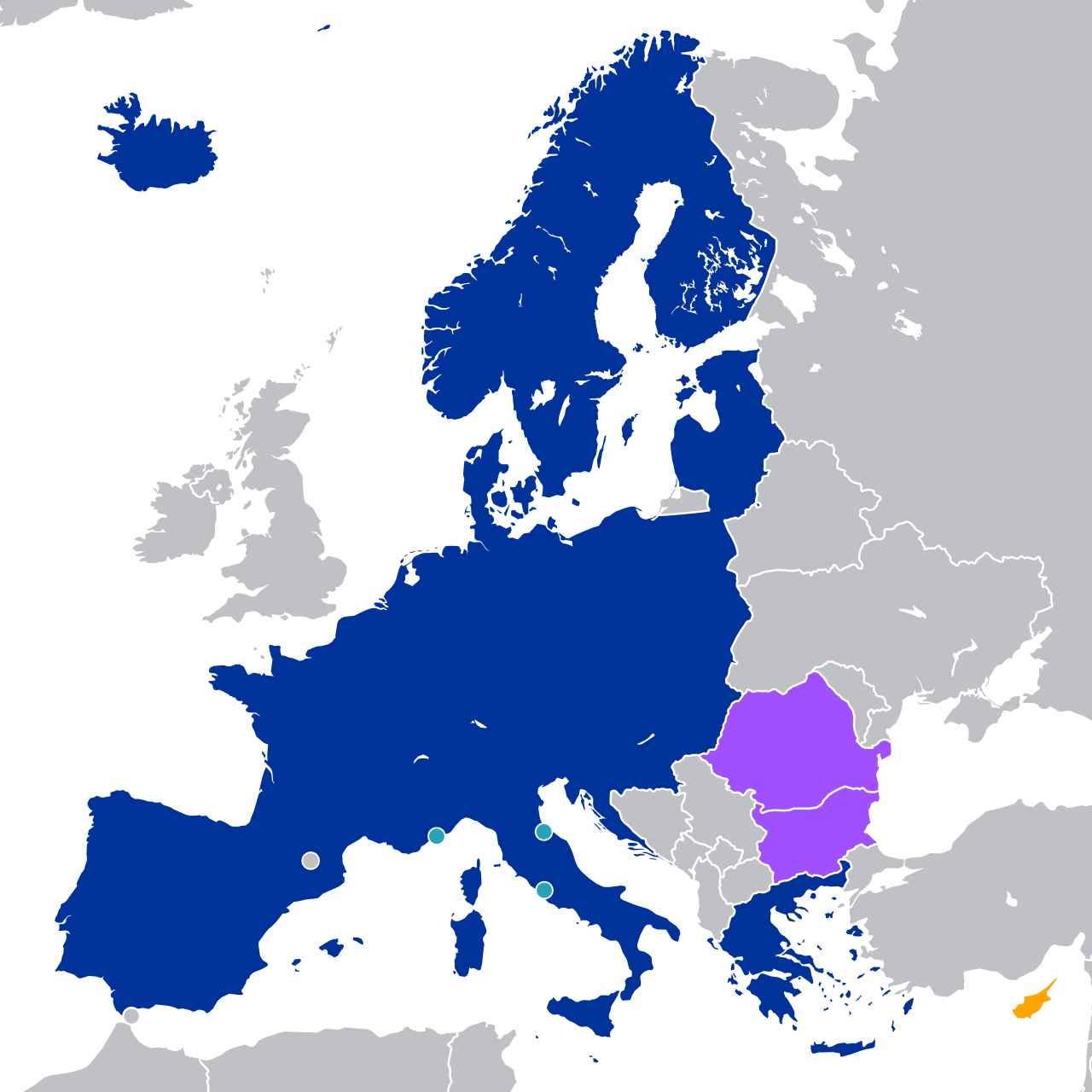
Alongside ETIAS, the EES (Entry/Exit System) has come into force, fully operational since 10 April 2026. The EES automatically records every entry and exit by non-EU nationals across the 29 participating European countries, replacing the old passport stamp. In practice, Europe’s borders have gone digital — worth keeping in mind for anyone who travels in and out of the EU often.
See also: AIMA’s deadlines for a first residence permit. Official information at the European Union’s ETIAS portal.
Image: Rob984 / Wikimedia Commons (CC BY-SA 4.0)