

Portugal's new affordable rent regime starts 1 September and wipes out the landlord's income tax entirely — here's the small print
The Simplified Affordable Rent Regime starts on 1 September 2026: rent at up to 80% of the municipal median, a 3-year contract, and full exemption from income tax on the rent.
From 1 September 2026, a landlord who rents a home at up to 80% of their municipality’s median rent, on a contract of at least three years, pays no income tax at all on that rent. Not a reduced rate — a full exemption. This is the Simplified Affordable Rent Regime, known in Portugal as the RSAA, and it is the sharpest tool in this year’s housing tax package.
Worth saying what it replaces. The RSAA takes over from the old Rental Support Programme, and the change in philosophy is significant: instead of shaving the rate, the state gives up the tax entirely. In exchange, it sets the price.
How does the RSAA rent cap work?
The ceiling is calculated from the median rent per square metre that the national statistics institute publishes for the municipality where the property sits. The landlord has to land at 80% of that median or below.
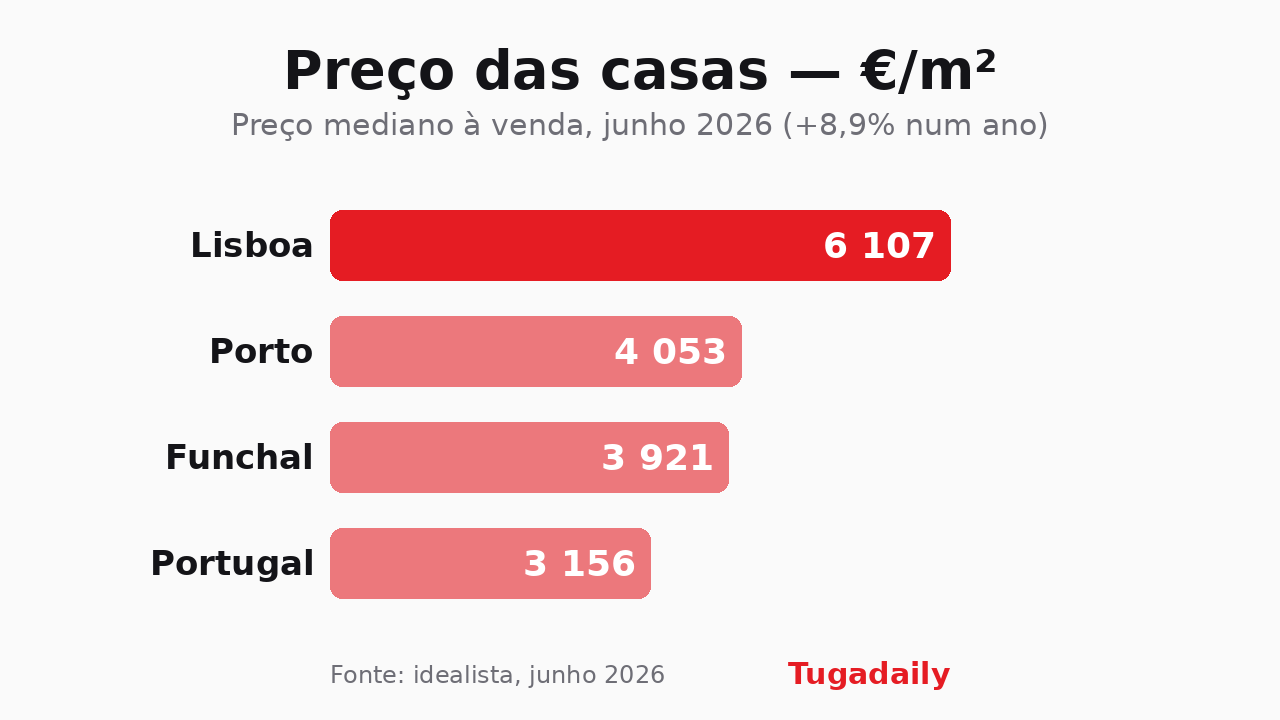
Notice the detail that changes everything: it is per municipality, not one national number. An 80% ceiling in Lisbon and an 80% ceiling in an inland municipality are entirely different animals, because they start from entirely different medians. In the first three months of 2026 the national median rent was 9.46 euros per square metre, while the median on new contracts in Lisbon was 17.42 euros. The regime does not flatten the country — it indexes it.
Which raises the question nobody answers well: in municipalities where the median has already run away, 80% of a high number is still a high number. The regime cuts rent against the local market, not against the salary of the person paying it.
What are the conditions for the exemption?
Four of them, and none is negotiable.
The contract must run at least three years. There is one exception: for temporary residence, the minimum drops to three months.
The rent must respect the 80% ceiling of the municipal median, under the rules the Government sets.
The property must be let for housing — not offices, and not short-term letting wearing a disguise.
And registration is mandatory. The landlord must file a copy of the tenancy agreement and proof of its communication on the tax portal with the IHRU housing institute, by 15 January of the year after the contract is signed. Miss that deadline and the exemption goes with it. It is not a polite formality — it is the condition.
When does each piece start?
The housing tax package, approved by Decree-Law 97/2026 of 20 May, does not all switch on at once, and the dates are easy to mix up.
The income tax measures apply retroactively from 1 January 2026. The reduced 6% VAT rate on construction and renovation work for permanent own housing or residential letting came into force on 1 July 2026. And the RSAA, along with the Investment Contracts for Rental, only starts on 1 September 2026.
If you are thinking of signing in August, do the maths first: a contract signed before September is not born inside the regime.
Is it worth it for a landlord?
Arithmetically, almost always. Full exemption on the rent is worth more than the money given up by cutting the price to the 80% ceiling — especially for anyone who would otherwise land in the general regime. For moderate rents outside the RSAA there is still the 10% income tax rate for contracts of at least three years with rent up to 2,300 euros a month, which is the step below this one.
The catch is the commitment. Three years with the rent pegged in a market that has run six straight quarters of double-digit valuation growth is a bet: the landlord is swapping potential rent rises for tax certainty. If you think the market cools, you win. If you think it keeps climbing, you hesitate.
That hesitation is what decides whether the regime works at all. Portugal’s association of property developers and investors has already warned that the tax measures only bite as fast as urban licensing moves — because no exemption ever created a house that was never licensed. And it sits alongside the demand side, where the Government has decided to keep the public guarantee for young buyers despite IMF warnings. Stimulating supply and demand simultaneously in a market with no stock is, at best, a balancing act.
Quick questions
Can I put my property in the RSAA if I already have a tenant?
The regime applies to contracts meeting its conditions, including the IHRU registration inside the deadline. An existing contract would have to be brought into line with the rules — rent inside the ceiling, minimum duration — to fit.
Is the exemption really 100%?
Yes, on property income earned under the regime. It is not a reduced rate: contracts that meet the conditions are exempt from personal or corporate income tax on that rent.
What if I go above the 80% ceiling mid-contract?
The ceiling is the condition of access. Leaving it means leaving the regime, and the exemption leaves with you.
Where do I check my municipality’s median?
In the median rent per square metre published by the statistics institute for the municipality where the property is. That is the basis for the cap. The full decree sits on the official gazette.
Image: Pedro S Bello / Wikimedia Commons (CC BY-SA 4.0)