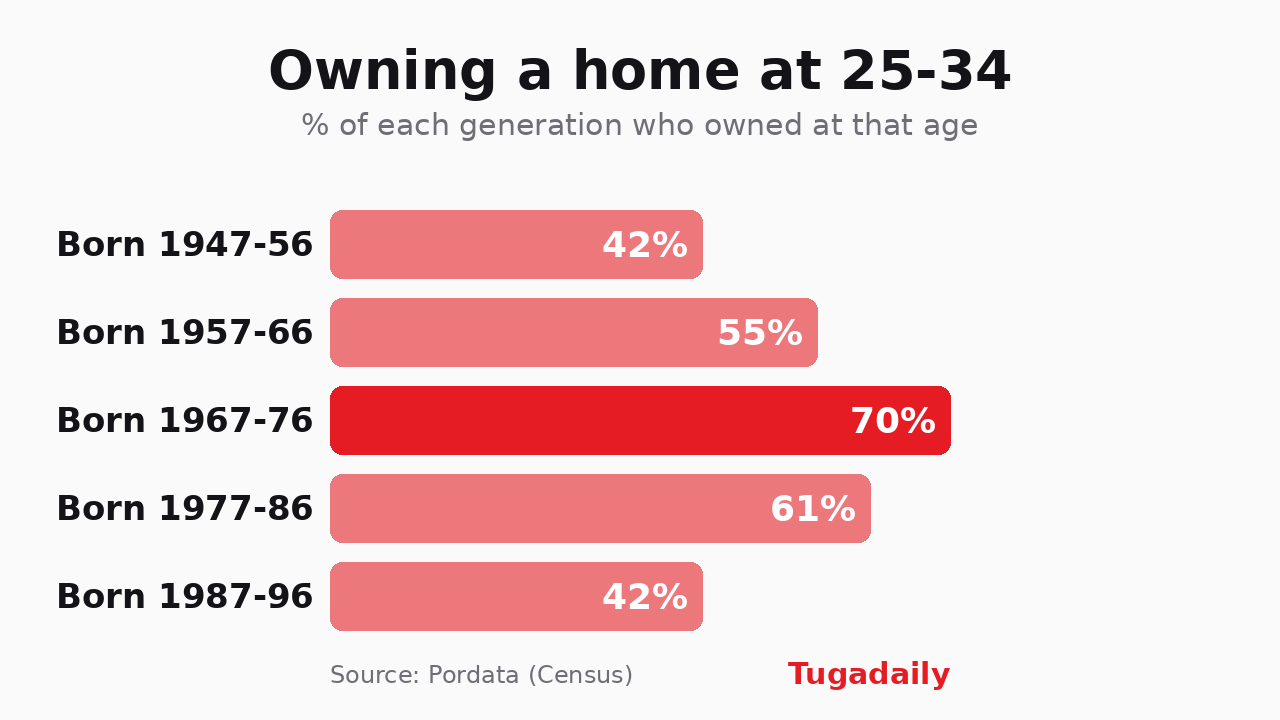
Portugal's 25-to-34-year-olds own their homes at the same rate as in 1981: 42%
Pordata's census figures show that 70% of Portuguese born in 1967-76 owned their home by 25-34, against 42% for those born in 1987-96, the same share as the 1947-56 generation. Prices rose 41.5% between 2020 and 2025, the steepest climb among the EU countries where they rose.
Owning your home by your early thirties used to be normal in Portugal. Among people born between 1967 and 1976, 70% owned the place they lived in when they were 25 to 34. For those born between 1987 and 1996, that age arrived with 42%.
The figure comes from the first issue of “Factualmente”, a new format from Pordata, the statistics database run by the Francisco Manuel dos Santos Foundation. Its debut, published on 23 October, is about housing, and it lines up five decades of census data.
Up, then all the way back down
Portuguese born in 1947-56 were 42% home owners at 25-34, which means the 1981 census. The next generation reached 55%. Those born in 1967-76 hit 70%, riding the cheap credit of the early 2000s. Then the slide began: 61% for the 1977-86 cohort, and 42% again for today’s thirty-somethings.
So the young adults counted in 2021 are back where the generation born around 1950 stood in 1981. The difference is what a home now costs.
What happened to prices
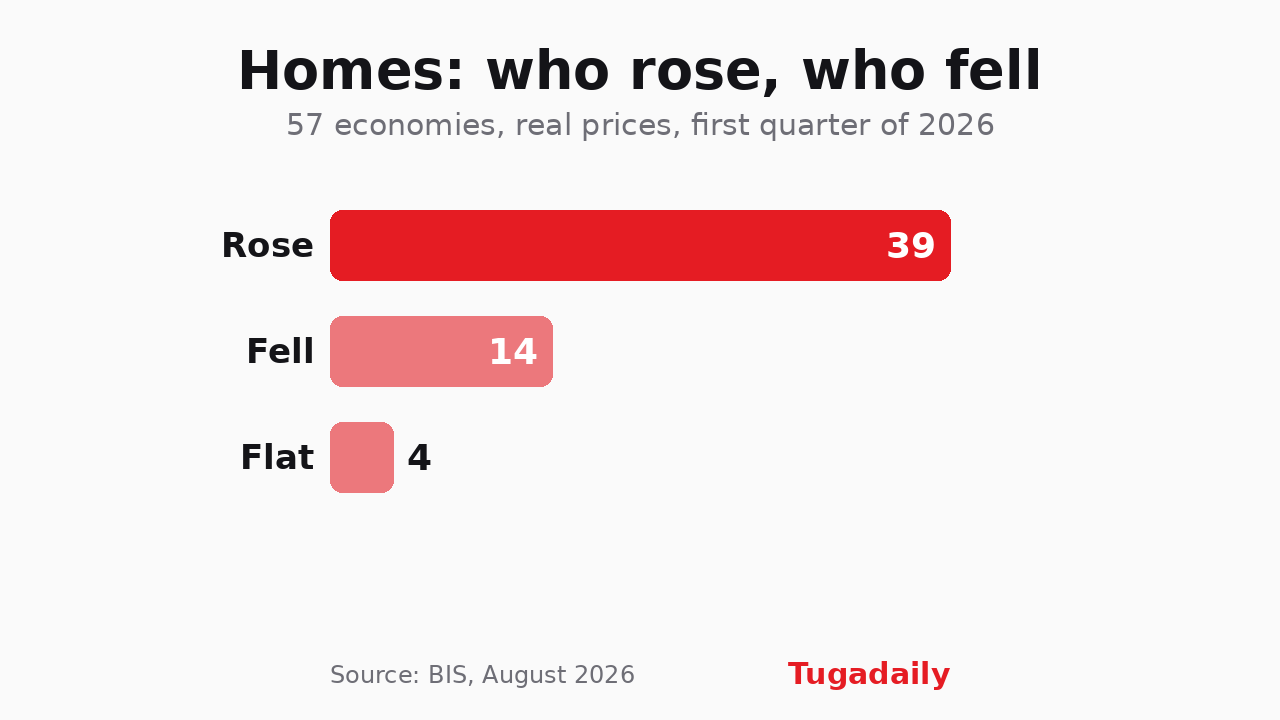
According to the same publication, house prices in Portugal rose 41.5% between 2020 and 2025, the largest increase among the 18 EU countries where prices went up. Since 2010 the cumulative rise is 81.9%, the third highest of 23 countries.
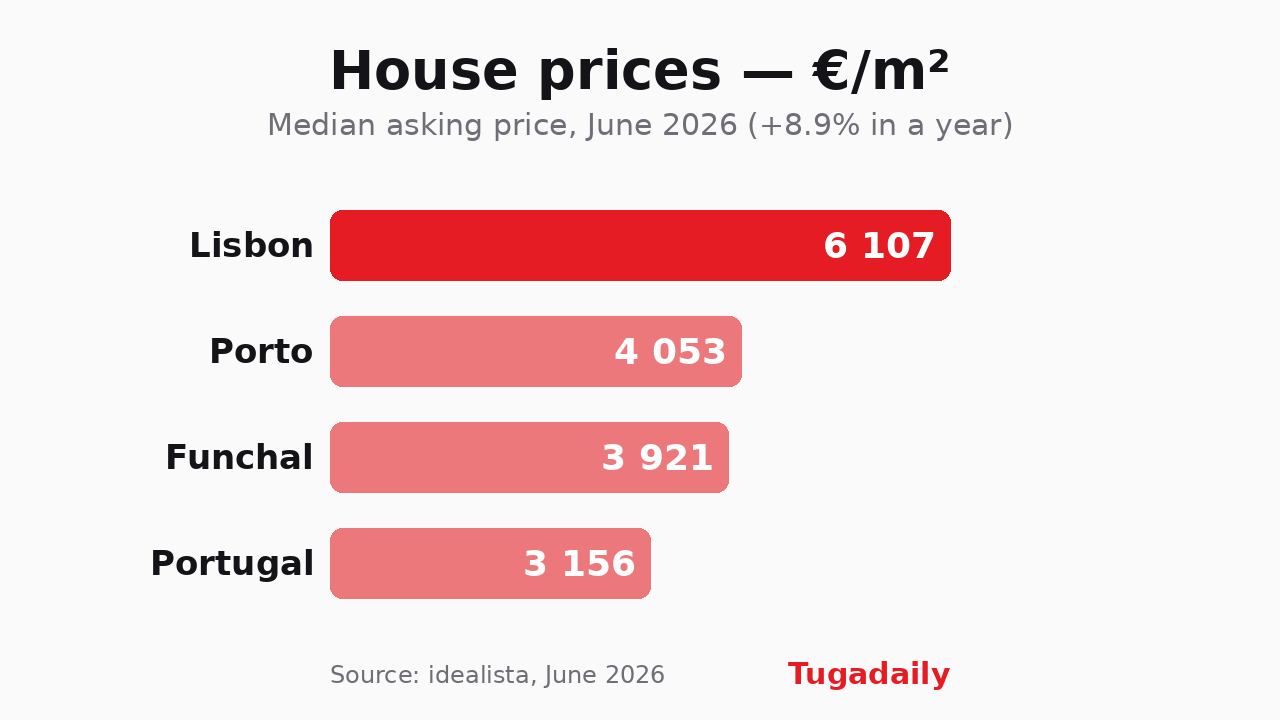
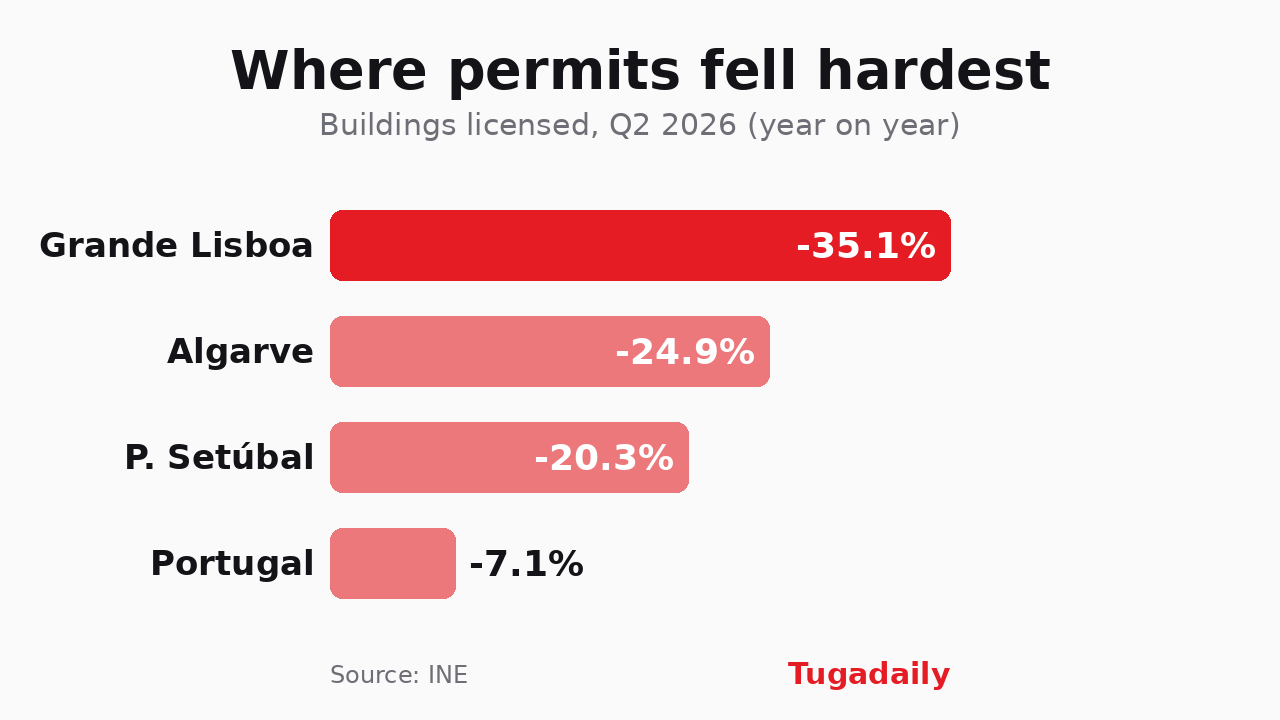
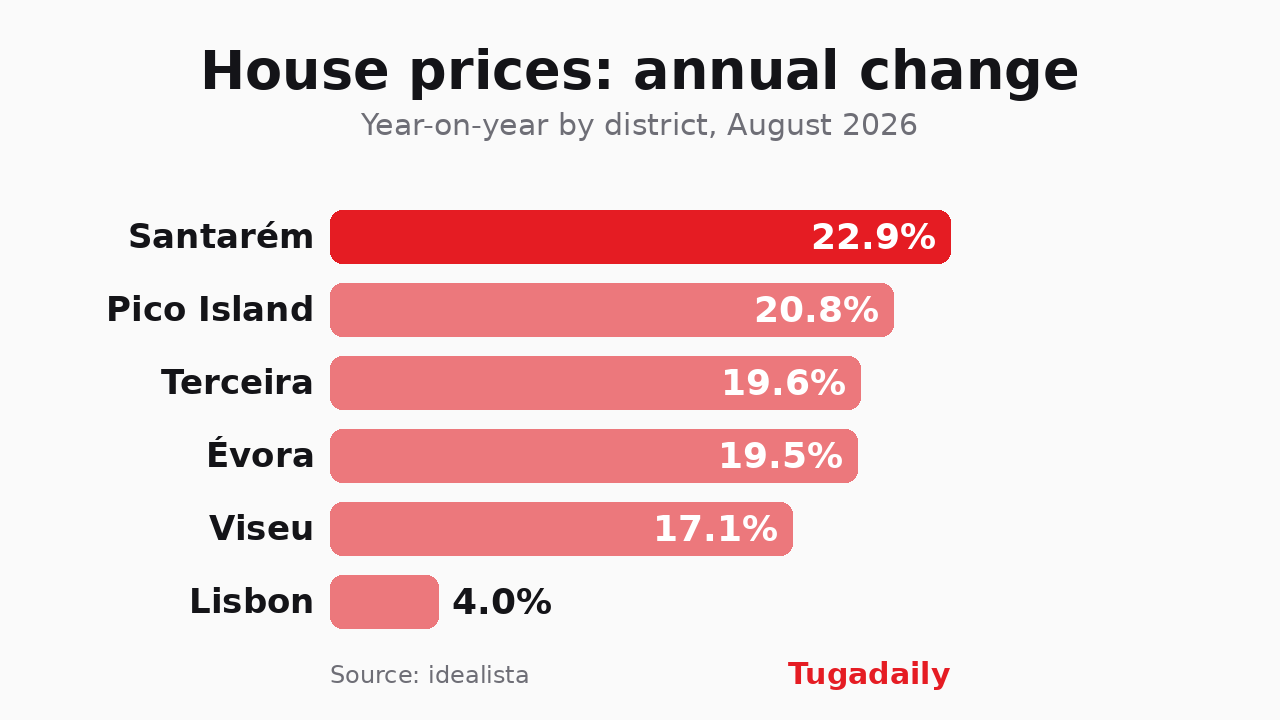
Building never caught up. Around 27,000 new homes were completed in 2025, 11% more than the year before but less than a quarter of what Portugal built in the early 2000s. Anyone following the market month by month will have seen the gap in our house-price tracker, where INE’s latest figures put the median price up 18.4% in a year.
Still a nation of owners
This isn’t only a story of people locked out. In 2024, 73% of Portuguese households lived in a home they owned, against a eurozone average of 65%, putting Portugal ninth of 20. Social housing, on the other hand, was just 1% of the stock in 2021 according to the OECD, ahead only of Lithuania.
And buying was rarely about sentiment. Of families who bought between 2011 and 2020, 39% said the mortgage payment was lower than rent, 36% saw it as a good investment, and only 24% bought simply because they wanted to own.
That first calculation, mortgage versus rent, is the one that stopped adding up for much of the generation born after 1987.
Chart: Tugadaily · data Pordata (Census)