

Portugal's interior has broken into the top 50 for rental demand
Municipalities in the Alentejo, Tras-os-Montes and the Beiras entered the top 50 for rental searches in the second quarter of 2026, while Coimbra and Porto lost over half their supply.
For years the map of people hunting for a rental in Portugal fitted inside three or four urban blobs. It does not any more. Municipalities in the Alentejo, Tras-os-Montes and the Beiras drew enough search traffic in the second quarter to enter the national top 50, places that were not in the conversation at all a short while ago.
This is not a sudden romance with the countryside. It is arithmetic. When renting in the big cities becomes impossible, demand drains towards wherever the numbers still add up.
Where did rental supply fall the most?
In the places where it was already thin. In the second quarter the long-term rental stock fell 22% year on year, to 40,716 properties nationwide. Coimbra lost 58% and Porto 52%, meaning more than half the listings vanished in twelve months. Lisbon fell 27%, Leiria 9%, Portalegre 8% and Braga 5%.
The supply collapse itself is not new, and it sits alongside a market where inherited homes stuck in family disputes were finally unblocked precisely to get more stock moving. What is new is seeing where tenants went next.
How much did rents rise in Portugal?
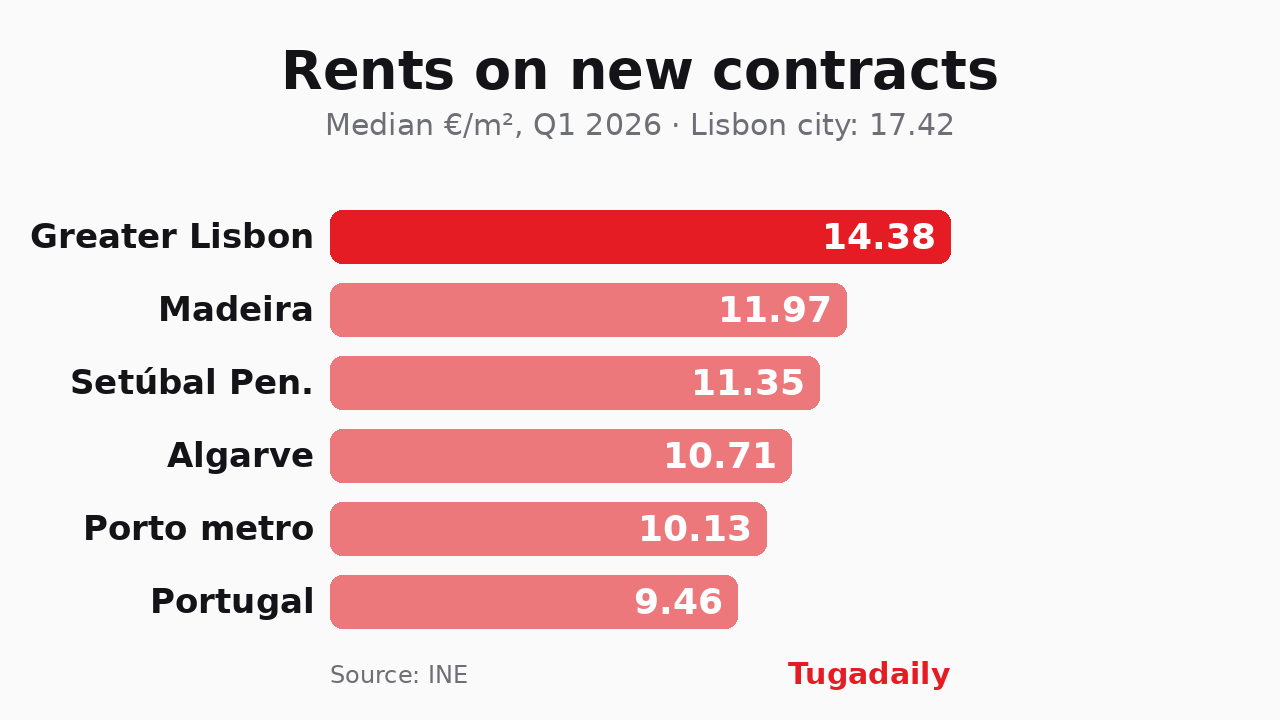
Rents per square metre were up 5.2% year on year in June, virtually the same as the month before, according to Statistics Portugal. Every region rose, with Madeira leading at 7%.
Put the two pieces together and the movement is obvious. Fewer homes on the market, rents climbing faster than inflation, and tenants who now accept extra kilometres in exchange for a rent that fits the payslip. It could be genuinely good for the interior, provided jobs and transport follow. Without those, it is just tiredness spread along a motorway. The official rent indices by municipality are published by Statistics Portugal.
Image: Alexkom000 / Wikimedia Commons (CC BY 4.0)