
How much unpaid rent costs you your home in Portugal? Two months, if this reform passes
The urban lease reform approved in cabinet cuts the arrears threshold from three months to two, gives landlords six months to act, frees the starting rent on new contracts and rewrites the rules for pre-1990 leases.
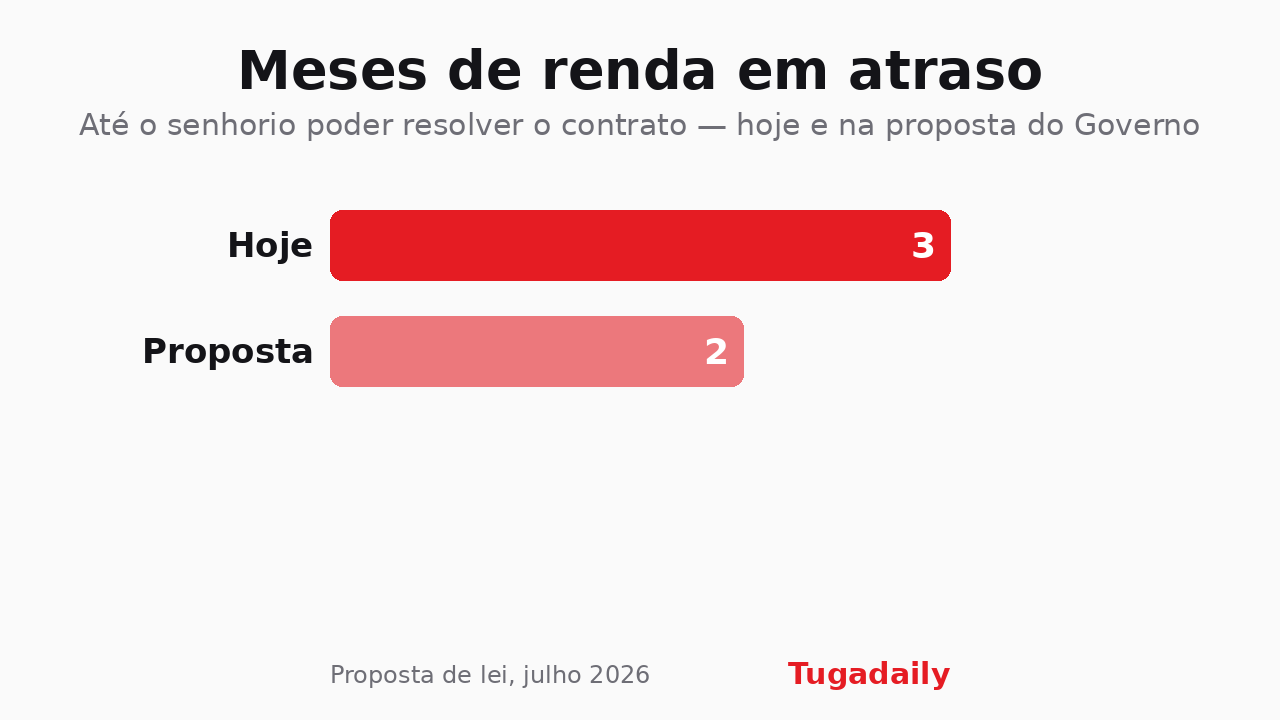
As the law stands, a tenant in Portugal has to fall three months behind on rent before the landlord can terminate the lease. Under the reform approved in cabinet, two will be enough.
That is the bluntest change in a package the government presents as a way of coaxing empty flats back onto the rental market, and which it announced as a reform to increase housing supply. None of it is in force. This is a draft law: parliament has to debate and vote it, the text can change on the way through, and it only takes effect once promulgated and published in the official gazette.
It is still worth reading now, because almost every line shifts the balance between the two sides of a tenancy.
Arrears and repeat lateness
Beyond the two-month threshold, habitual lateness starts to count. Delays of more than eight days could justify terminating the lease if they happen more than three times, consecutively or not, within twelve months, or more than four times within eighteen.
Landlords also get longer to act. The window for exercising that right rises from three months to six. The current deadline is short enough to punish a landlord who trusts a tenant and allows extra time to settle up — wait too long and the right lapses.
What changes when you sign
Three things, all pointing the same way.
The opening rent stops being capped. Today, where a previous lease existed on the same property, the starting rent of the new contract cannot exceed the last one by more than 2%. The proposal scraps that. Note what it does not do: it gives no landlord the power to raise rent mid-contract, where the agreed terms still apply or, failing an agreement, the annual legal coefficient. For 2027 that coefficient is already set at 2.5%. Landlords weighing whether to let at all have a separate carrot to consider, since selling one home to buy another for the rental market can now escape capital gains tax.
Guarantees widen too. Up to three months of rent could be paid in advance instead of the current two, and the security deposit loses its two-month ceiling.
Then there is renewal. At present, a landlord opposing the first automatic renewal only sees that take effect three years after the contract was signed. The proposal removes that asymmetry between the parties, provided the legal notice period is respected.
The pre-1990 leases
Here everything hinges on the tenant’s age, disability and income.
Under 65, with household income below 64,400 euros a year, the lease moves onto the modern NRAU regime but the rent stays protected for five years. Above that income it also transfers, and the rent can rise to an annual ceiling of one fifteenth of the property’s rateable value.
At 65 or over, or with a disability of 60% or more, the lease does not transfer at all. Below 64,400 euros the rent stays protected and the state compensates the landlord; above it, the rent can rise to that same one-fifteenth ceiling while the contract stays outside NRAU.
A separate decree-law creates a Housing Emergency Fund, offering non-repayable support to people who lose their home through financial hardship or are otherwise especially vulnerable.
Who comes out ahead
Read whole, the package strengthens the landlord on default and on negotiation while keeping a safety net under the most exposed tenants. The stated bet is that owners sitting on closed flats, afraid of never getting them back, will finally let them.
Whether it works shows up in supply, not in the statute. And supply is the side that has been failing: sector confidence in the rental market fell to its lowest reading on record this quarter.
Quick answers
Can I be evicted after two months of unpaid rent right now?
No. Until parliament votes the bill through and it is signed and published in the Diário da República, the three-month rule still stands. None of this is law yet.
Can my landlord raise my rent because of this?
Not on an existing lease. Scrapping the 2% cap affects the opening rent on a new contract. A running lease keeps whatever the parties agreed or, failing that, the annual statutory coefficient.
My lease predates 1990. Where does that leave me?
It depends on age, disability and household income. From 65, or with a disability of 60% or more, the lease does not move onto NRAU at all, and below 64,400 euros a year the rent stays protected.
How much can a landlord ask for up front?
The bill allows up to three months’ rent paid in advance rather than the current two, and removes the two-month ceiling on the deposit.
Chart: Tugadaily · data from the government's draft law, July 2026