
Portugal's debt pile grew by 5.2 billion euros in a single month
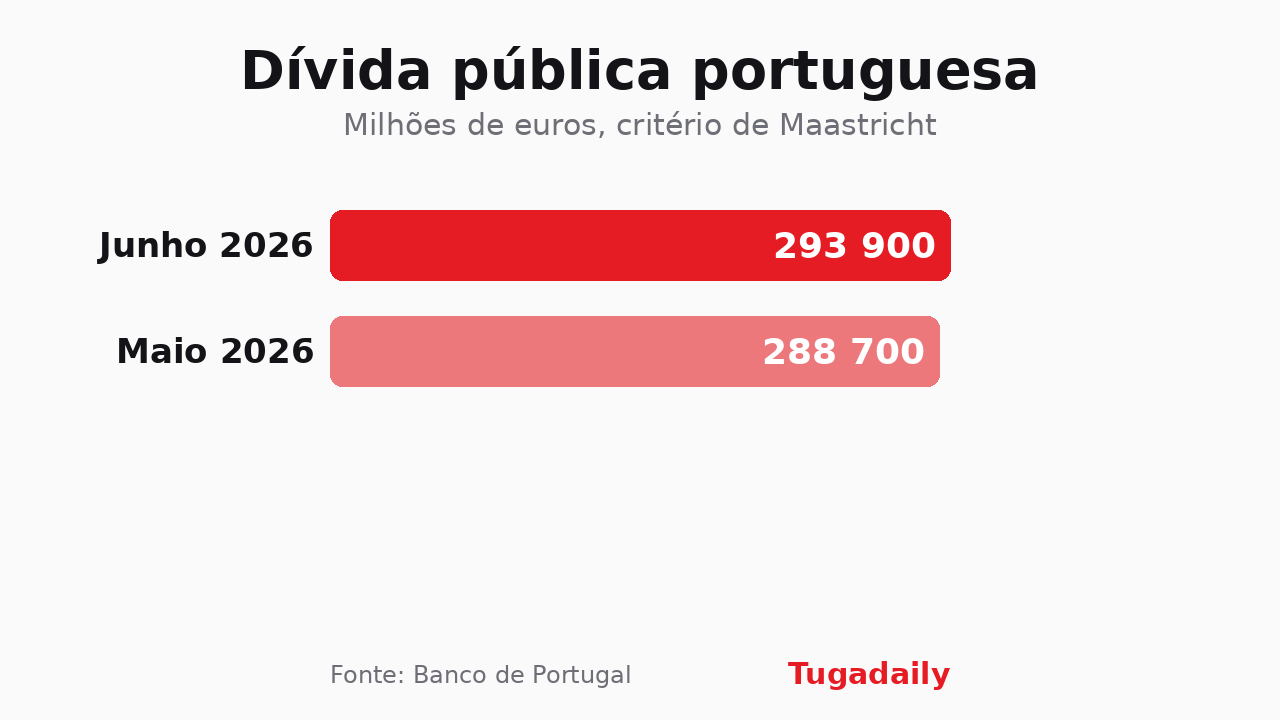
Bank of Portugal figures put Maastricht-basis public debt at 293.9 billion euros in June, up from 288.7 billion in May and worth 92.9% of GDP. The government blames temporary deposits and is sticking to its 87.5% year-end target.
Portuguese public debt rose to 92.9% of GDP in the second quarter, 1.9 percentage points above the 91% recorded in the first. In cash terms that is roughly 293.9 billion euros in June against 288.7 billion in May. One month, 5.2 billion euros more.
The increase cuts against the path the government has been promoting, and it arrived in a week when the other numbers were pointing the opposite way, with the economy accelerating in the second quarter and unemployment falling.
Why the ratio went up
The official explanation is technical, and it matters, because it changes how you read the figure. The state has been building up deposits to cover debt repayments scheduled for the months ahead. Under Maastricht rules debt is counted gross, without netting off cash sitting in an account waiting to repay that very debt. So the ratio inflates while the cushion is being assembled, and falls once the repayment goes through.
That is why the Finance Ministry left its forecast alone and still expects to close 2026 at 87.5% of GDP. If the redemptions happen as planned, the cushion drops out of the accounts in the second half of the year.
What is worth watching
Two things. Whether the ratio actually retreats over the next couple of quarters, because a rise that persists stops being a calendar effect and becomes a trend. And the cost of refinancing: on a stock near 294 billion euros, a tenth of a point on yields moves more money than most of the measures argued over at budget time.
It is worth reading next to the rest of the quarter, which delivered the lowest unemployment rate since 2011 and a banking sector where the five largest lenders booked 2,519 million euros of first-half profit. Full debt series are published in the Bank of Portugal statistics.
By Beatriz Mota
Chart: Tugadaily · data from Banco de Portugal