
Portugal ranks fourth in the EU for renewable electricity, and Austria is still miles ahead
Renewables make up 65.6% of Portugal's final electricity consumption, behind Austria, Sweden and Denmark, Eurostat says. What it means for your bill.
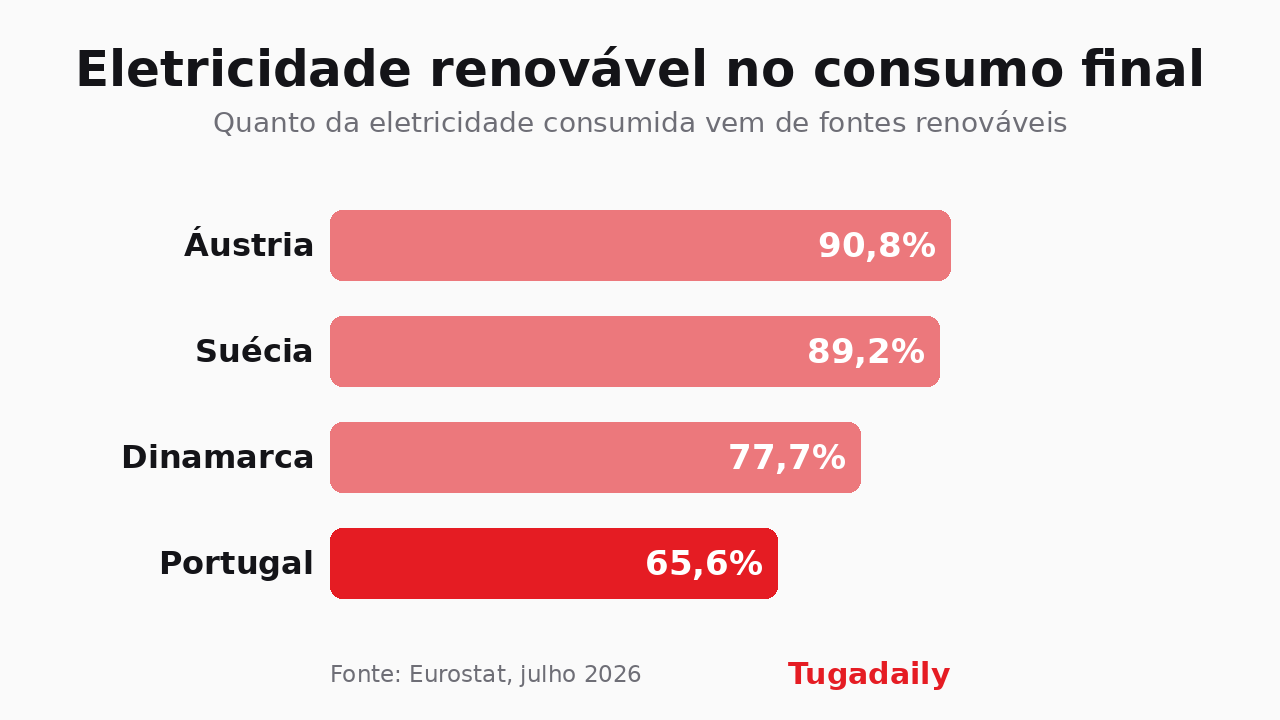
Portugal has the fourth-largest share of renewable electricity in final consumption anywhere in the European Union: 65.6%, according to figures released by Eurostat. Only Austria on 90.8%, Sweden on 89.2% and Denmark on 77.7% sit above it.
What does 65.6% actually measure?
It means that of every ten units of electricity consumed in the country, close to seven came from wind, water, sun or biomass. This is a final-consumption figure, so imports and exports are already baked in — which is not the same as the share of domestic generation, a number that usually runs higher and has topped 75% in several months this year.
That gap is why you see such different percentages flying around about the same subject. Generation is what the dams, wind farms and solar panels produced. Final consumption is what actually reached the socket, mixed in with whatever crossed the border.
Does this make electricity cheaper in Portugal?
Not automatically, and this is where the good news meets the dull news. A large renewable fleet cuts the country’s exposure to gas and oil prices, which shows up most clearly when international markets turn jumpy. But the bill landing at your door is built from far more than the cost of generating power: networks, taxes, levies and access tariffs all sit on top.
Where the effect really shows is in the external accounts. Less imported fuel means fewer euros leaving the country every month, and that is the structurally important part for the economy. It is the same industrial logic behind investments like the renewable chemicals plant Catalyxx is building in Sines: clean energy stopped being purely an environmental story and became a business argument.
The full dataset and methodology are published on the Eurostat portal, and live national generation can be tracked on the REN website.
By Beatriz Mota
Infographic: Tugadaily · data from Eurostat