Israel's election leaves Likud in first place and no bloc at 61
Exit polls and the running count give Benjamin Netanyahu's Likud between 24 and 28 of the Knesset's 120 seats, ahead of Gadi Eisenkot's Yashar. Netanyahu's bloc sits between 50 and 57. Turnout reached 77.7%, and final results are expected on Thursday.
Israelis voted on Tuesday and woke up on Wednesday without a winner. Benjamin Netanyahu’s Likud is once again the biggest party, but neither the prime minister’s bloc nor the opposition reaches the 61 seats needed to control the 120-seat Knesset.
The channel 11, 12 and 13 exit polls put Likud on 24 or 25 seats on election night. As the overnight count came in, updated projections lifted it to 27 or 28. Close behind is Yashar, the party of former army chief Gadi Eisenkot, on roughly 21 to 23.
The blocs swapped places overnight
The first reading of the night had the Jewish-led opposition ahead, 52 or 53 seats against 50 for Netanyahu’s bloc. By Wednesday morning it had flipped. The latest updates put Netanyahu’s camp somewhere between 53 and 57, with the opposition near 47.
Arab-led parties, which sit in neither camp, hold between 16 and 19 seats between them. That is what makes the sums so awkward: without them, nobody gets there.
Three lists look set to miss the 3.25% threshold, according to the projections: People of Israel, the Reservists and the Charedi Public party.
Turnout not seen in decades
The Central Elections Committee recorded 77.7% turnout when polls closed at 10pm local time, up 7.1 points on 2022. By 8pm, 5.45 million of 7.33 million registered voters had already cast a ballot.
More than 650,000 double-envelope votes, cast by soldiers, diplomats and others voting away from their own station, still have to be counted, and they tend to move the last few seats. The committee expects to publish final results on Thursday 29 October at noon Israel time. By law it has until 4 November.
What happens next
Once the official result is in, President Isaac Herzog consults the parties and hands one member of the Knesset the job of forming a government. He did exactly that with Netanyahu in November 2022. This time, with projections swinging by several seats an hour, nobody can say whose name it will be.
It is the second election in a week to shake up the international picture, after Serbia’s Student List won an outright majority. How the count works, and who runs it, is laid out in the Israel Democracy Institute’s guide to the Central Elections Committee.
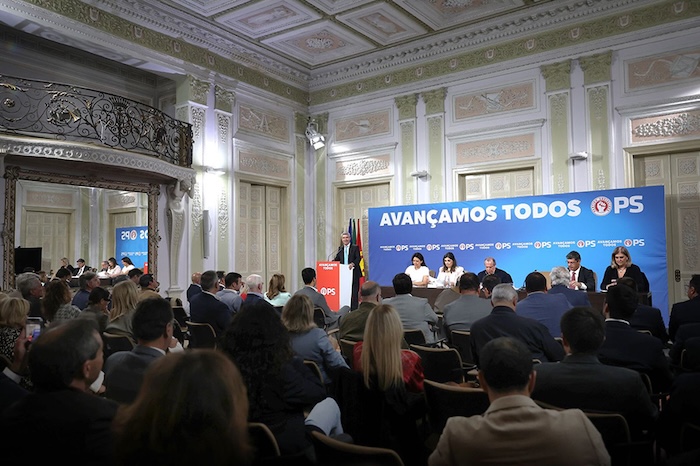
Image: Kobi Gideon / GPO, via Wikimedia Commons (CC BY-SA 3.0)