

Guterres leaves the UN at the end of the year, and seven people already want his chair
António Guterres's term as UN Secretary-General ends on 31 December 2026. Who the candidates are, how the choice is made, and when the name becomes public.
On 31 December, António Guterres’s decade at the head of the United Nations comes to an end, and his successor starts work on 1 January 2027. For Portugal it closes a rare chapter — a Portuguese national does not often hold the most visible job in world diplomacy — and for the UN it is the biggest decision of a year in which the organisation was already taking hits from every direction.
Who are the candidates to succeed Guterres?
The field has grown through the year and now stands at seven. In the running are Michelle Bachelet, former president of Chile; Rafael Grossi, the Argentine who runs the International Atomic Energy Agency; Rebeca Grynspan of Costa Rica, head of the UN’s trade and development conference; María Fernanda Espinosa of Ecuador, a former president of the General Assembly; Macky Sall, former president of Senegal; and, more recently, the Ugandan diplomat Olara Otunnu.
There is an obvious thread. Four of the candidates come from Latin America and the Caribbean, the one major region that has not produced a Secretary-General since 1981, and several of the strongest bids are from women, for a post no woman has held in eighty years. Put those two together and you get political pressure that is hard to wave away.
When will the name be known?
The calendar points to the end of July: this is when the fifteen-member Security Council is expected to signal its choice publicly, in a letter to the General Assembly, which then votes. In practice the decision belongs to the five permanent members — the United States, China, Russia, France and the United Kingdom — because any one of them can sink a name on its own. That is how the world arrived at Guterres in 2016, and how it will arrive at his successor.
The process itself is more open than it used to be: since 2016 there have been public hearings and interactive dialogues where candidates answer member states and civil society, and this year’s round was held in April. It is still a contest settled behind closed doors, but with a well-lit waiting room. The official picture and the job description sit on the UN Secretary-General’s website.
Whoever wins inherits a squeezed budget, deep cuts across the humanitarian agencies and a hard question about how much the institution can still stop — the same question hanging over the debate about sovereignty and power in Venezuela and most multilateral rooms this year. It is a job with a lot of stage and not much leverage. Guterres knows that better than anyone.
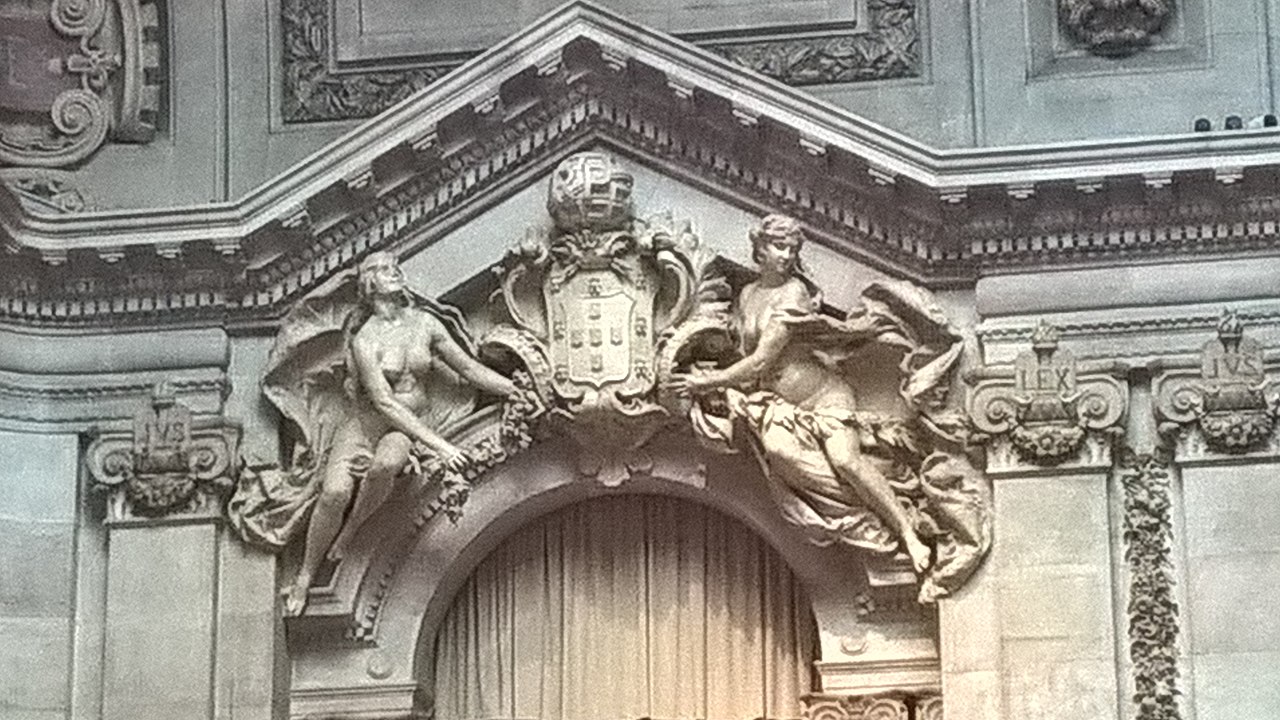
Image: Jdforrester / Wikimedia Commons (CC BY 4.0)