
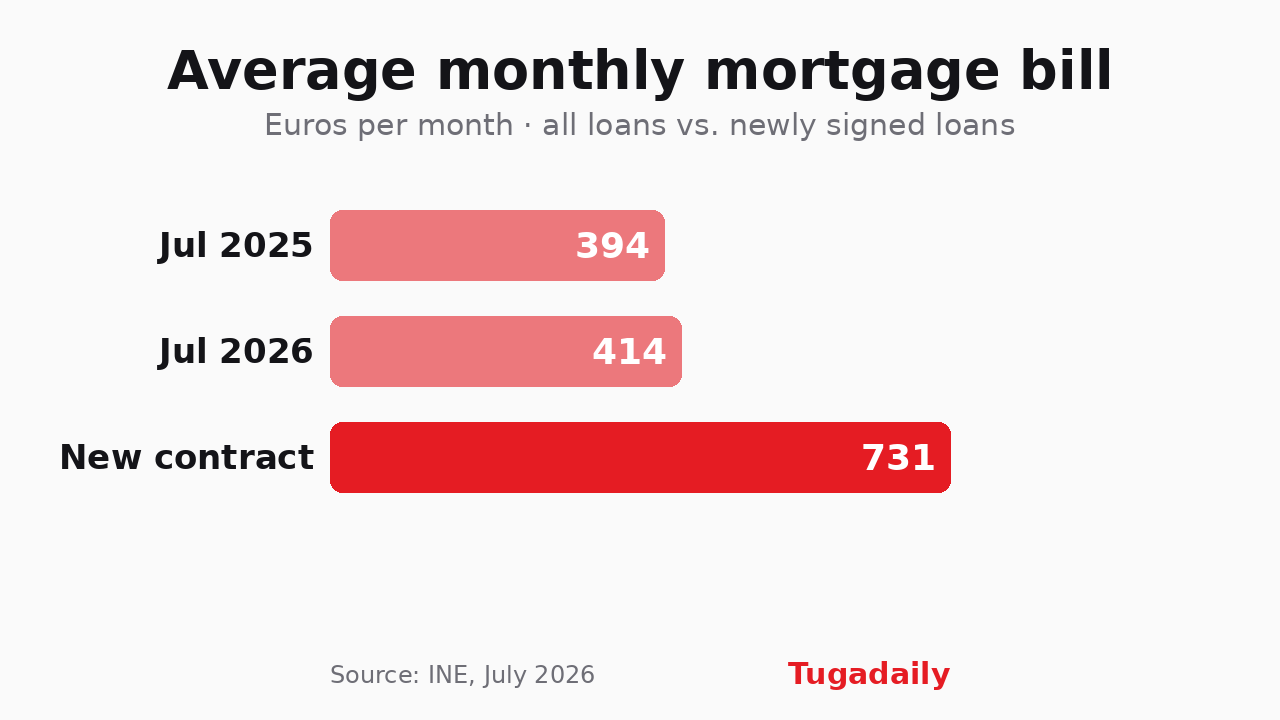
The average mortgage in Portugal costs 414 euros a month. New borrowers pay 731
The implicit interest rate on Portuguese home loans rose to 3.135% in July, a second straight monthly increase. The national average now blends two housing markets that no longer resemble each other.
The monthly housing-credit bulletin INE published on Thursday led with two figures: the implicit interest rate across all outstanding mortgages rose to 3.135% in July, up 3.4 basis points on June, and the average monthly payment settled at 414 euros.
Four hundred and fourteen euros a month sounds almost manageable. Which is exactly why the rest of the bulletin is worth reading.
Why 414 euros is nobody’s actual mortgage
That average pools every loan alive in the country, and the overwhelming majority were signed years ago on houses that cost far less than they do now. Average outstanding capital across the whole stock is 79,463 euros, up 598 euros in a month.
Now look at the other side of the same table. On contracts signed in the last three months, the average payment is 731 euros — 16 euros more than in June and 15.1% more than in July last year. Average outstanding capital on those recent loans is 182,446 euros.
That is not a difference of degree. It is roughly double the payment and two and a half times the debt, in the same country, in the same month.
The quietly ironic part: recent buyers are paying a lower rate, 2.910% against 3.135% across the stock. Interest is not what separates the two groups. The purchase price is — the same mechanism behind the record pace at which Portuguese household debt grew in the first half of the year.
Half the payment never touches the debt
There is a third number that almost always goes unmentioned. Of the 414-euro average payment, 205 euros are interest and 209 euros are capital repaid. Put plainly, 49.5% of what a household hands the bank each month reduces the debt by nothing at all.
This year’s Euribor climb is also still filtering through. Most Portuguese mortgages reset every six or twelve months, so July’s 3.135% is not the end of the story — it is the middle of it.
What changed on 1 August
While all this was happening, borrowing rules tightened. Since the start of the month, the Bank of Portugal’s recommendation has cut the maximum debt-service ratio from 50% to 45%, capped terms at 40 years for borrowers up to 35 and 35 years for anyone older, and ended 100% financing on properties the banks own themselves.
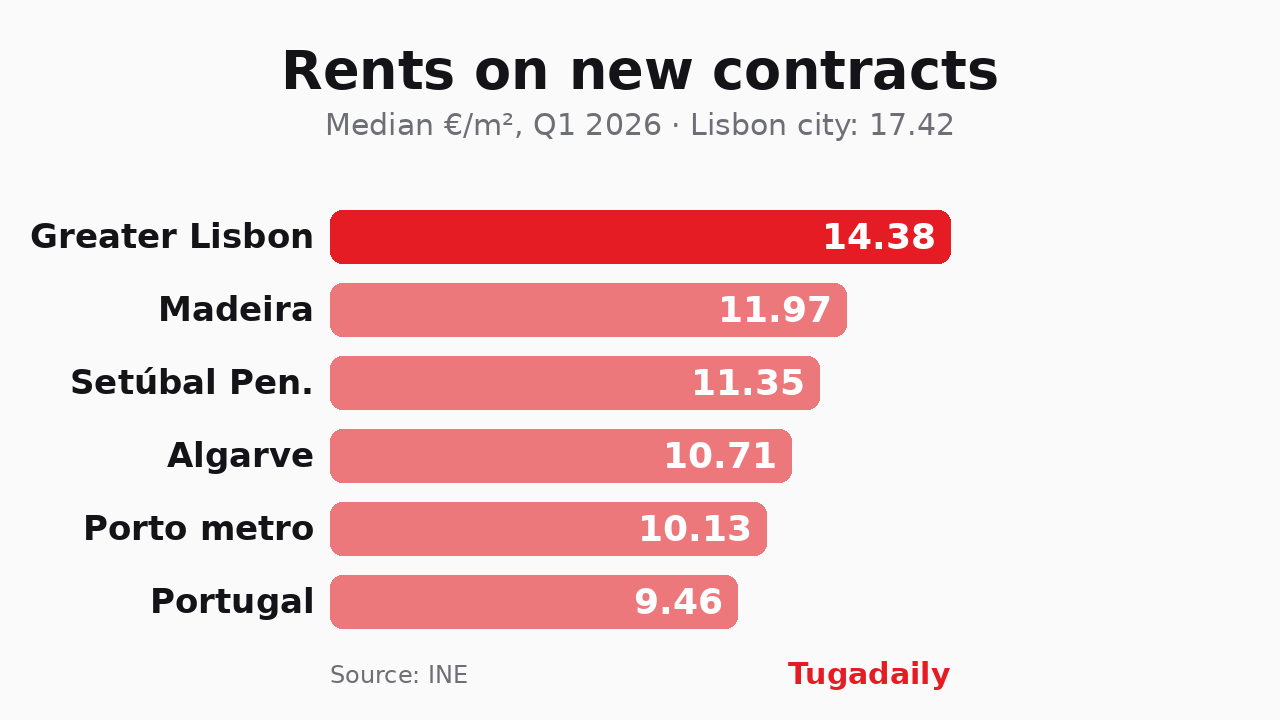
Put the two together: new-contract payments sit at 731 euros, and the income needed to qualify for one has just gone up. Renting instead offers no relief either — in Évora, 43% of rental listings leave the market in under a week.
INE’s next release, covering August, lands in September.
Chart: Tugadaily, with data from INE (implicit interest rates on housing credit, July 2026)