
Selling a home in Portugal — the real costs, from agency fees to capital gains tax, explained for 2026
Selling a home in Portugal means an agency commission (typically 3-6% plus VAT), an energy certificate, a possible early-repayment fee on your mortgage and income tax on half the capital gain. Full 2026 guide.
Straight answer: selling a home in Portugal comes with three blocks of costs — the estate agency commission (typically 3-6% plus VAT), the mandatory paperwork (energy certificate first), and, the following year, income tax on the capital gain, where as a rule only half the gain is taxed. Forgetting the third block is the expensive mistake.
How much does an estate agent charge in Portugal?
There is no legal price list: the commission is negotiated in the brokerage contract and usually runs 3% to 6% of the sale price, plus 23% VAT. On a 300,000-euro home that is 9,000 to 18,000 euros before tax — reason enough to negotiate both the percentage and any exclusivity clause before signing. Selling without an agency saves the fee, but leaves listings, viewings and bureaucracy on your plate.
On top comes the energy certificate, required before you even advertise — costs and steps in our guide — plus documents like the caderneta predial, the use licence and the mortgage discharge when there is a loan. Still paying off the house? Budget for the early-repayment fee: 0.5% of the outstanding capital on variable-rate contracts and 2% on fixed-rate ones.
How does capital gains tax work when you sell a home?
The gain is the difference between the sale and purchase values (adjusted for inflation and for documented costs — works from the last 12 years, the agency fee, the certificate itself). As a rule, only 50% of that gain is added to your other income for IRS — the final rate depends on your bracket. Full rules on the tax authority’s portal.
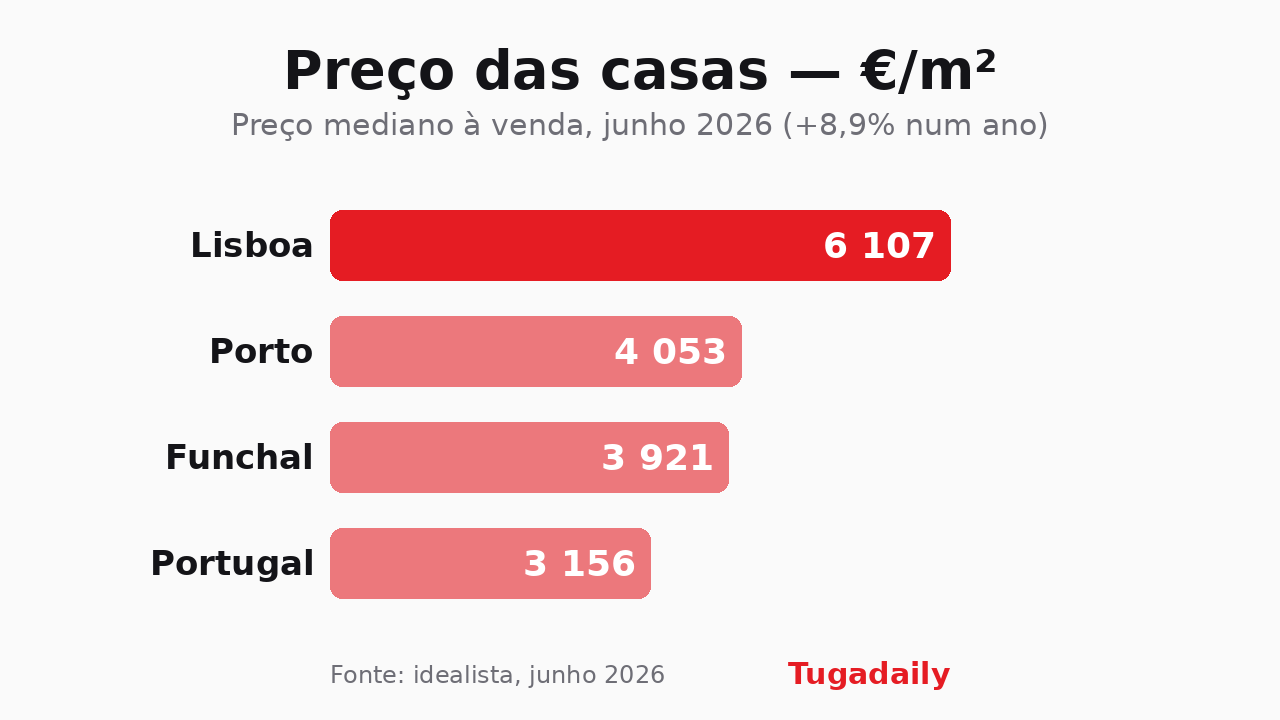
Two legal exits matter. The reinvestment exemption: sell your primary residence and reinvest the proceeds in another primary residence (in the EU/EEA) and the reinvested share escapes tax. And the over-65 regime: reinvest in approved retirement savings products within set deadlines and you can also be exempt. With prices climbing the way they have — see our house price tracker — capital gains stopped being a topic just for investors.
Frequently asked questions
I sold a house I inherited — do I pay capital gains?
As a rule yes, on the difference between the value used in the inheritance and the sale price, with the same 50% logic. Inheritances have nuances — worth confirming with an accountant.
Does the promissory contract (CPCV) cost anything?
The contract itself may not, but in-person signature recognition and any notarisation carry modest fees. The deposit you receive is not taxed separately — it folds into the final sale maths.
What if I sell at a loss?
No gain, no tax — and a loss on your own home is, as a rule, not deductible against other income.
Illustrative · Photo: RDNE Stock project / Pexels