
Solar covered 19% of Portugal's electricity in July, more than any other source
Grid operator REN's monthly data puts photovoltaic output ahead of hydro and wind for the first time. Renewables together supplied 53% of national consumption.
It happened in July, and it had never happened before. Solar was Portugal’s largest single source of electricity generation, covering 19% of the month’s consumption, according to figures published on Monday by grid operator Redes Energéticas Nacionais.
Hydro came in at 16% and wind at 13%, with biomass adding 5%. Renewables together supplied 53% of the electricity consumed nationally. Non-renewable generation met 13%, and the remaining 34% was imported.
The detail behind the month
The productivity indices tell part of the story. In July the solar index was 0.89, hydro 1.26 and wind 0.71. Wind, in other words, ran below normal and water above it. The sun itself came in slightly below its historical average and still took first place, which says a great deal about how much photovoltaic capacity has gone up in recent years.
Zoom out to the first seven months of the year and the picture changes. Renewables covered 68% of consumption, split between hydro at 27%, wind at 24%, photovoltaic at 12% and biomass at 5%. July’s lead is one month so far, not a settled trend.
Demand keeps climbing
Electricity consumption in July rose 3% year on year, or 1.8% once temperature and working-day effects are stripped out. Across the first seven months, the increase was 3.5%, or 3.1% on the same adjusted basis.
Natural gas moved the other way. Consumption fell 7.3% in July, driven by a 20% drop in the power generation segment, while conventional demand edged up 0.1%. Through the month, the Sines LNG terminal supplied the entire national system, with around two thirds of imported gas arriving from Nigeria and the rest from the United States.
July’s figure fits a longer arc, the one that already made Portugal the fourth EU country by share of renewable electricity. The month-by-month split sits in REN’s monthly electricity balance.
By Beatriz Mota
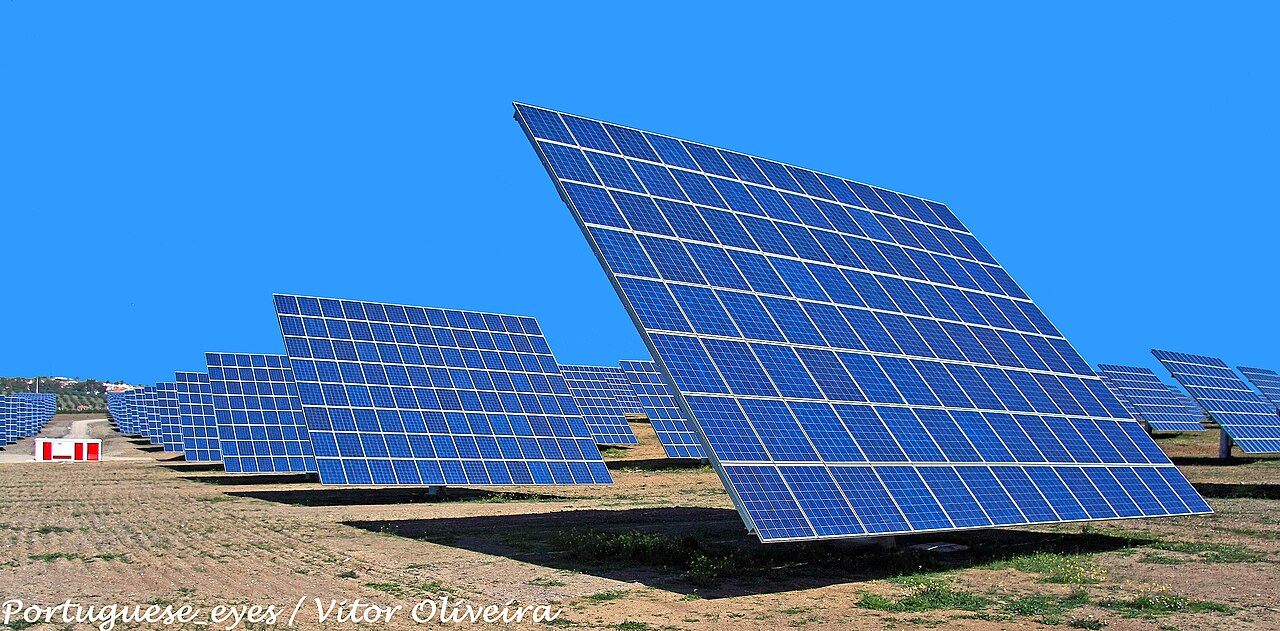
Image: Vitor Oliveira / Wikimedia Commons (CC BY-SA 2.0)