
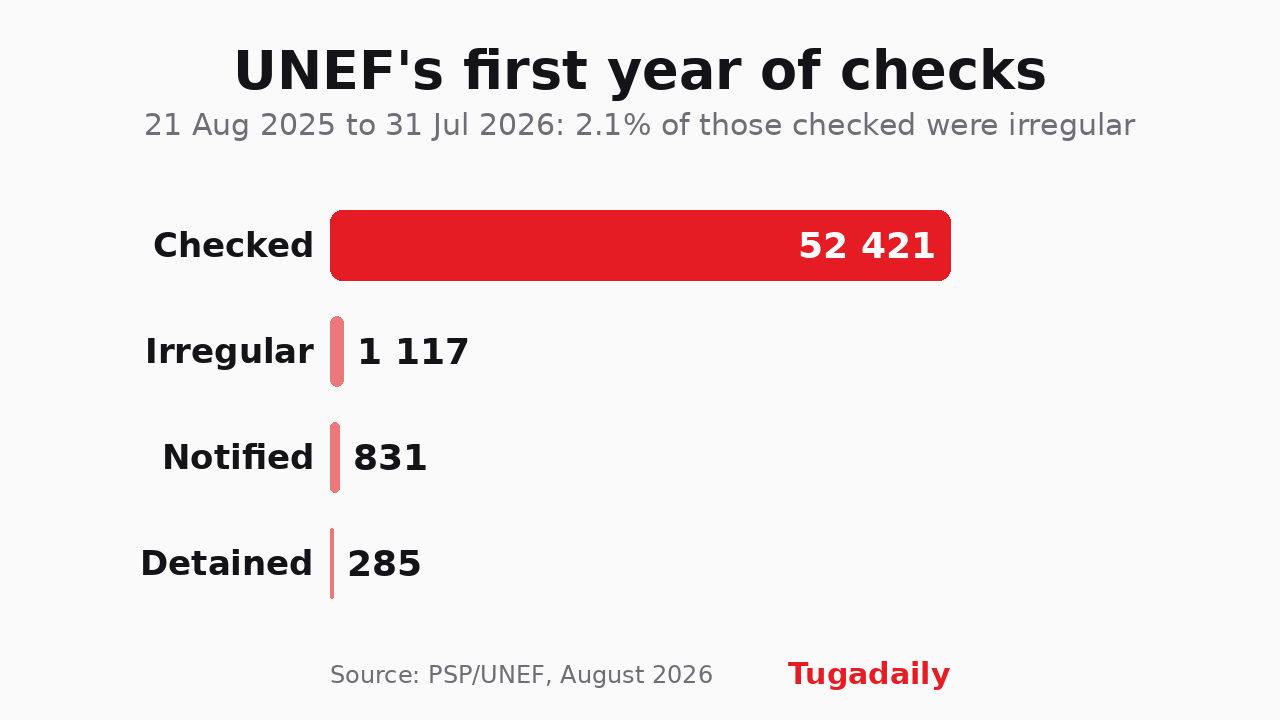
Portugal's new border unit checked 52,421 foreigners. Just 2.1% were irregular
The PSP has released first-year figures for the UNEF: 5,397 operations between 21 August 2025 and 31 July 2026, 831 notices to leave the country and 285 arrests. Here is what that 2.1% can and cannot tell you.
Portugal’s police have totted up the first year of the National Unit for Foreigners and Borders. The figure worth pausing on is not the arrests. It is the ratio.
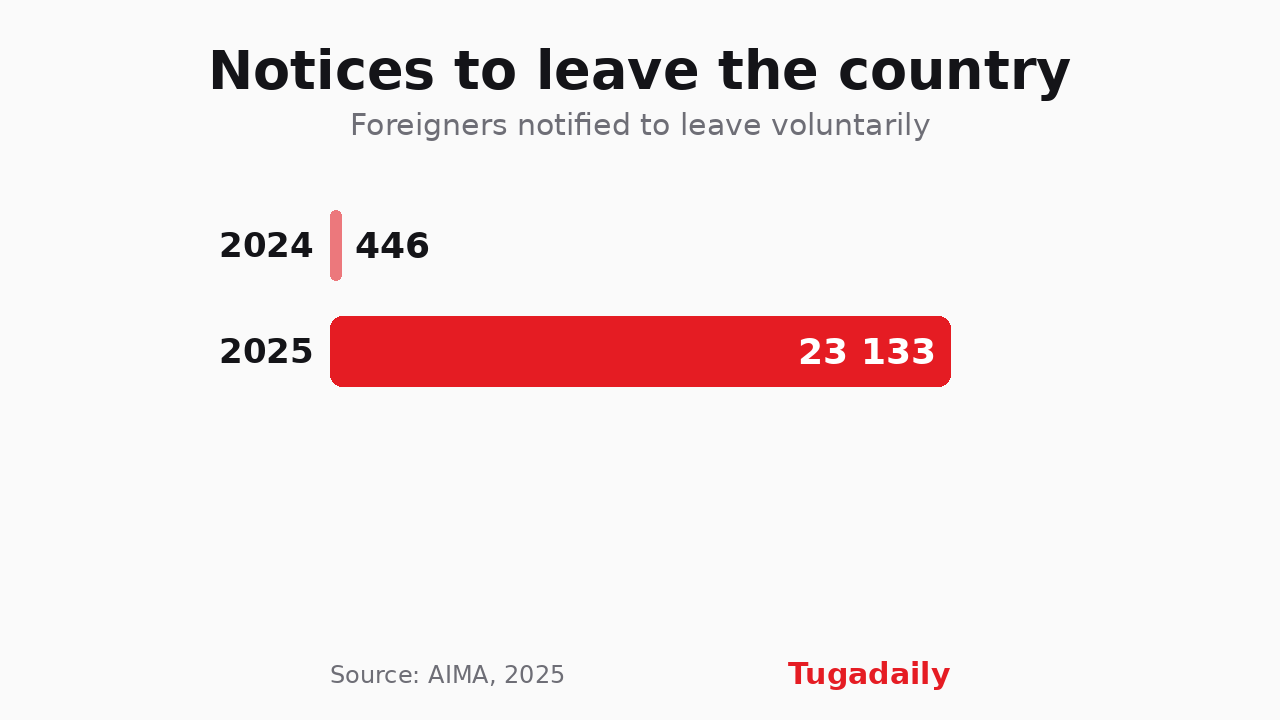
Between 21 August 2025 and 31 July 2026, the unit’s foreigners and border control teams ran 5,397 inspection operations and checked 52,421 foreign citizens. Of those, 1,117 turned out to be irregular. That is 2.1%. The same operations produced 831 notices to leave the country voluntarily, 285 arrests for irregular residence, and one arrest for defying an entry ban.
What the 2.1% shows, and what it does not
The number deserves reading carefully. It is not a portrait of the foreign population in Portugal, because these checks are not random. Operations are targeted — they pick the places, sectors and hours where irregularity is likeliest to begin with. Which is exactly what makes the result interesting. In a sample deliberately chosen to maximise detections, 97.9% of the people stopped were in order. It is a statistic about enforcement rather than a census, and it serves neither side of the usual argument especially well. That may be why it so rarely appears with its denominator attached.
The unit is one year old and was created by statute
The UNEF began operating on 21 August 2025, inheriting the border control and residence-check powers of the abolished SEF. It was set up under Law 55-C/2025 of 22 July, which defines it as a special PSP unit covering borders, residence checks and returns. Almost everybody calls it the mini-SEF.
Returns are the other half of the job
The unit’s returns and readmissions arm handled 221 forced returns in that first year, 83 of them escorted to the final destination, alongside 1,732 voluntary returns — 995 of those in the first seven months of 2026 alone. It opened 720 coercive removal cases, of which 262 have been decided, and booked more than 800 flights. The temporary holding centre in Porto and the equivalent facilities at Lisbon, Porto and Faro airports held more than 700 third-country nationals.
Much of the backlog predates the unit
One detail in the figures explains a good deal of the slowness residents complain about. The PSP says it is still working through removal cases handed over by AIMA and by the defunct SEF, and that a significant share of them date from before 2020. The unit was born last August. Much of the queue it is clearing was not.
The bigger variable is still unresolved: the Constitutional Court is holding the new foreigners law and has already struck down five provisions before the eleven now in front of it. Until it rules, most residents’ encounter with the UNEF will remain the mundane one — the border queue at the airport, where the usual question is which document to use at the e-gates.
Chart: Tugadaily, with PSP/UNEF data