
Portugal's burnt area is a quarter of last year's. The number of fires went up
SGIFR figures to 18 August count 6,572 rural fires and 60,572 hectares burnt — 185,000 hectares less than 2025, but 748 more fires, and more than half of them started on low or moderate risk days.
Between 1 January and last Tuesday, 60,572 hectares of scrub and forest burned in Portugal across 6,572 rural fires. The figures come from the rural fire management portal run by AGIF, and they pull in opposite directions.
Start with the good half. Over the same stretch of 2025, Portugal lost 245,760 hectares. This year’s total is 185,000 hectares lower, and a shade over a quarter of last summer’s damage.
Now the other half. There were 5,824 fires by this point last year and there are 6,572 now — 748 more, a 13% rise, and the highest count in four years. Ignitions had been falling since 2022. That has stopped.
Almost six in ten hectares burned in the north
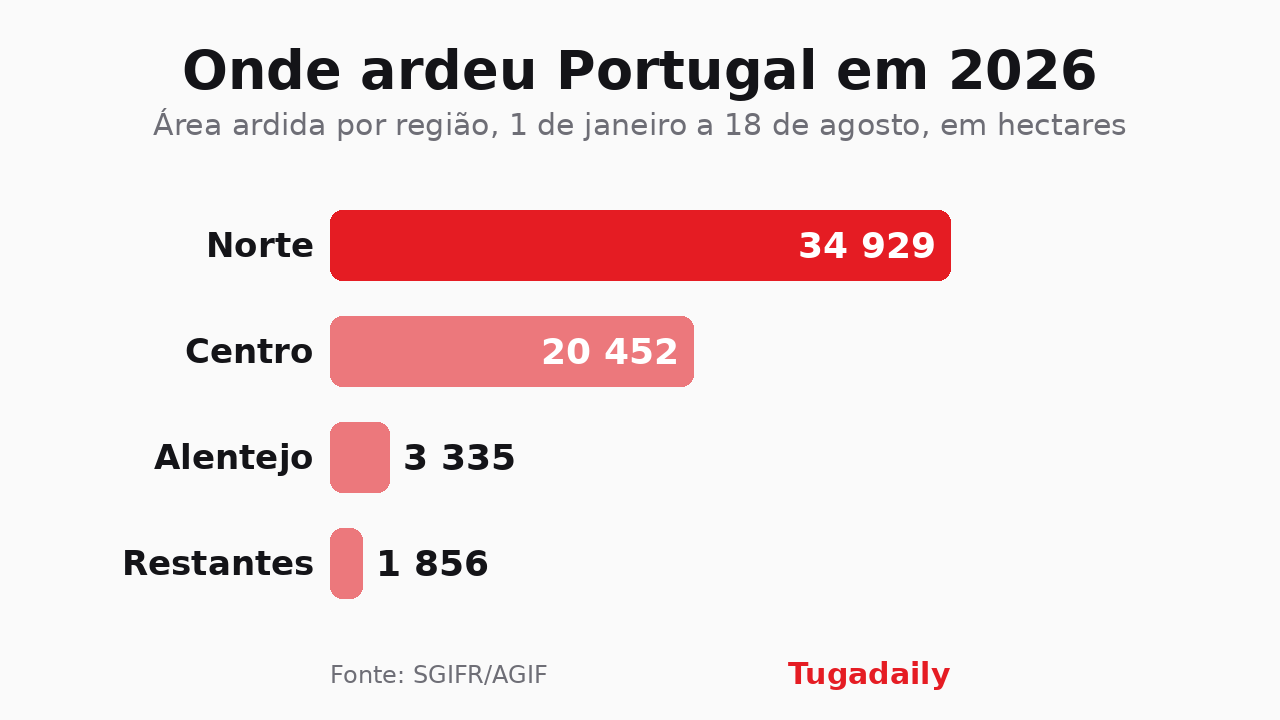
The map is lopsided. The North accounts for 34,929 hectares, the Centre for 20,452 and the Alentejo for 3,335, which between them explain 97% of everything lost. The North alone is 58% of the national total, and it is also where most fires started, 3,422 of them, ahead of the Centre on 1,177 and Lisbon and the Tagus Valley on 1,006.
The gap between those two rankings is the interesting bit. Lisbon and the Tagus Valley makes the top three for ignitions and does not register on area at all, which means fires start there often and get put out early. In the north they do not.
The uncomfortable finding
More than half of the fires, and more than half of the burnt area, happened on days rated low or moderate risk. Not on red-flag days with the mountains crackling. On ordinary ones.
That undercuts the easy reading. A summer of heat records invites the conclusion that the weather is the whole story, and these numbers suggest a large share of it is still what people do on days when nobody is especially on guard. Among the fires investigated so far, the leading causes are the use of fire, accidents and arson.
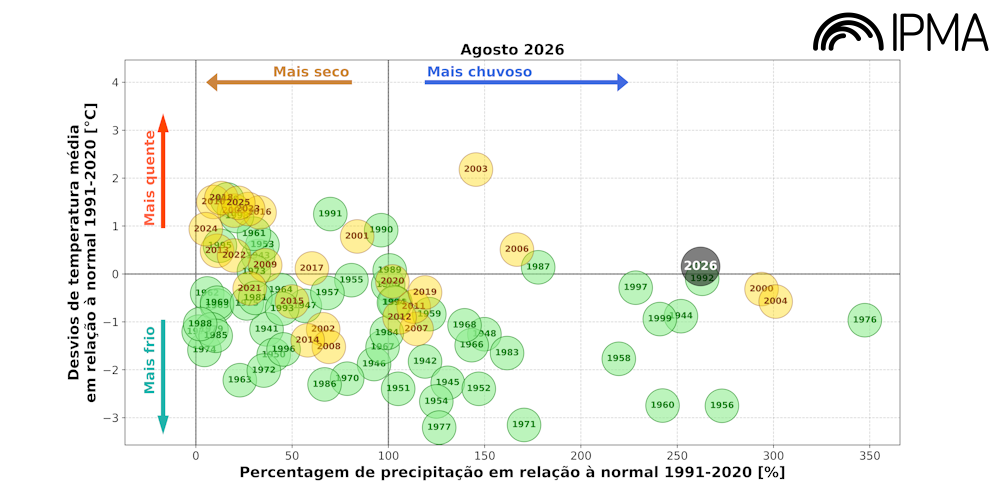
Set against the decade, 2026 is the fifth worst year for burnt area, behind 2017, 2025, 2016 and 2022. It is not a catastrophic year. It is an average one, in a period whose average has already moved.
Crews spent the past few days in the north and centre, with three fires at Moncorvo, Arouca and Santo Tirso drawing nearly a thousand personnel, a week after the Vinhais fire that injured five firefighters.
Chart: Tugadaily · data SGIFR/AGIF