

What does it take to bring down a Portuguese government? 116 votes
Chega filed its censure motion on Wednesday and party leaders decide on Thursday whether the debate lands on 10 or 17 September. It is the 37th since 1976, and the arithmetic explains the pattern.
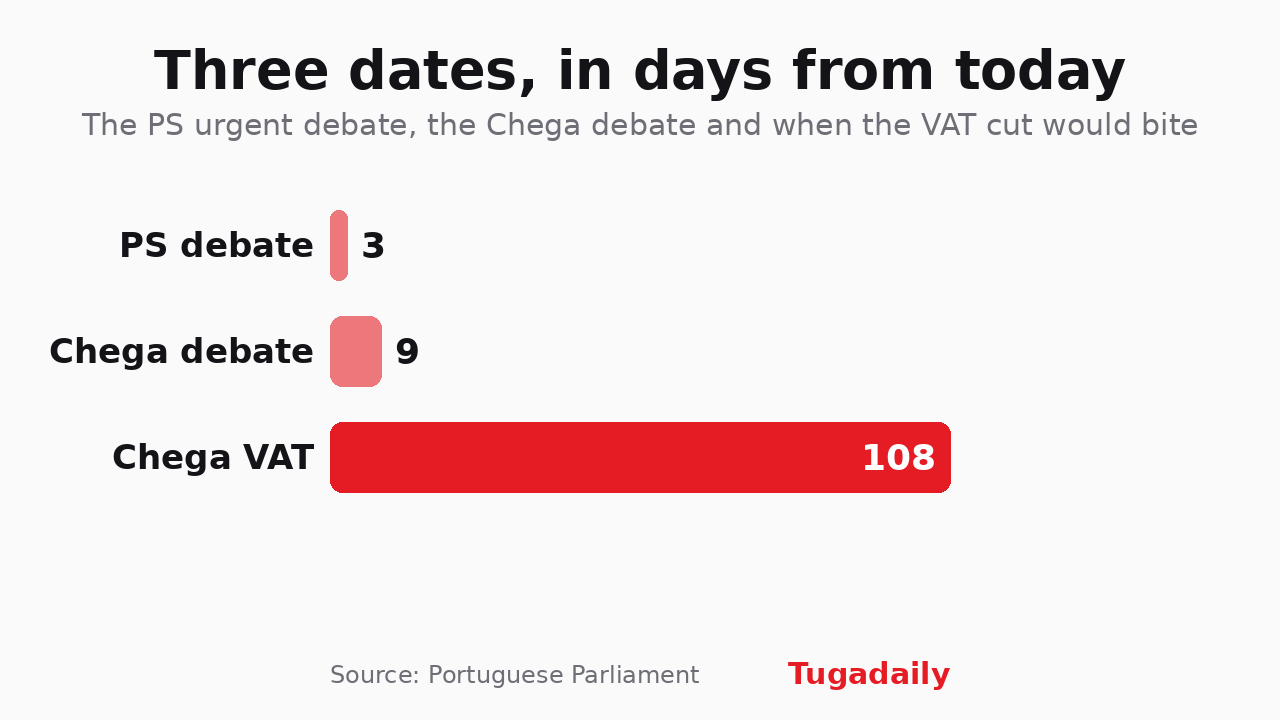
Chega filed its censure motion against the government on Wednesday. André Ventura announced it at the party’s Lisbon headquarters, flanked by MPs Cristina Rodrigues, Pedro Frazão and Nuno Gabriel. Parliament’s president, José Pedro Aguiar-Branco, passed the scheduling to the conference of parliamentary leaders, which decides on Thursday whether the debate happens on 10 or 17 September.
Before the dates, the arithmetic. That is usually where these stories end.
What the Constitution requires
Any parliamentary group, or a quarter of sitting MPs, can table a censure motion. It cannot be debated until 48 hours after it is filed, and the debate runs no longer than three days. Bringing the government down, though, takes more than winning the vote by one: the Constitution requires an absolute majority of sitting members. In a 230-seat chamber, that is 116 votes.
That threshold forces parties with incompatible programmes to vote together, which is why censure motions work as a platform far more often than as an axe. There is a built-in penalty too. If the motion fails, its signatories cannot table another in the same legislative session.
Thirty-seven, since 1976
This is the first censure motion against the XXV Constitutional Government, the third against PSD/CDS-PP executives led by Luís Montenegro, and the 37th of Portuguese democracy. The parliamentary archive keeps the full list, and the pattern is monotonous: 35 of the previous ones were rejected.
Chega has already said what comes next. If the motion falls, it moves to a parliamentary inquiry into Luís Neves’s running of the Judicial Police, the route the party had warned it would take if the minister stayed in post.
Why the date matters anyway
A debate on 10 September falls before parliament formally reopens on the 15th, which means recalling MPs outside the calendar. A debate on the 17th lands in the first working week and competes for attention with the new session and the run-up to the budget. Neither changes the likely outcome. Both change the stage, and in a censure motion the stage is half the point.
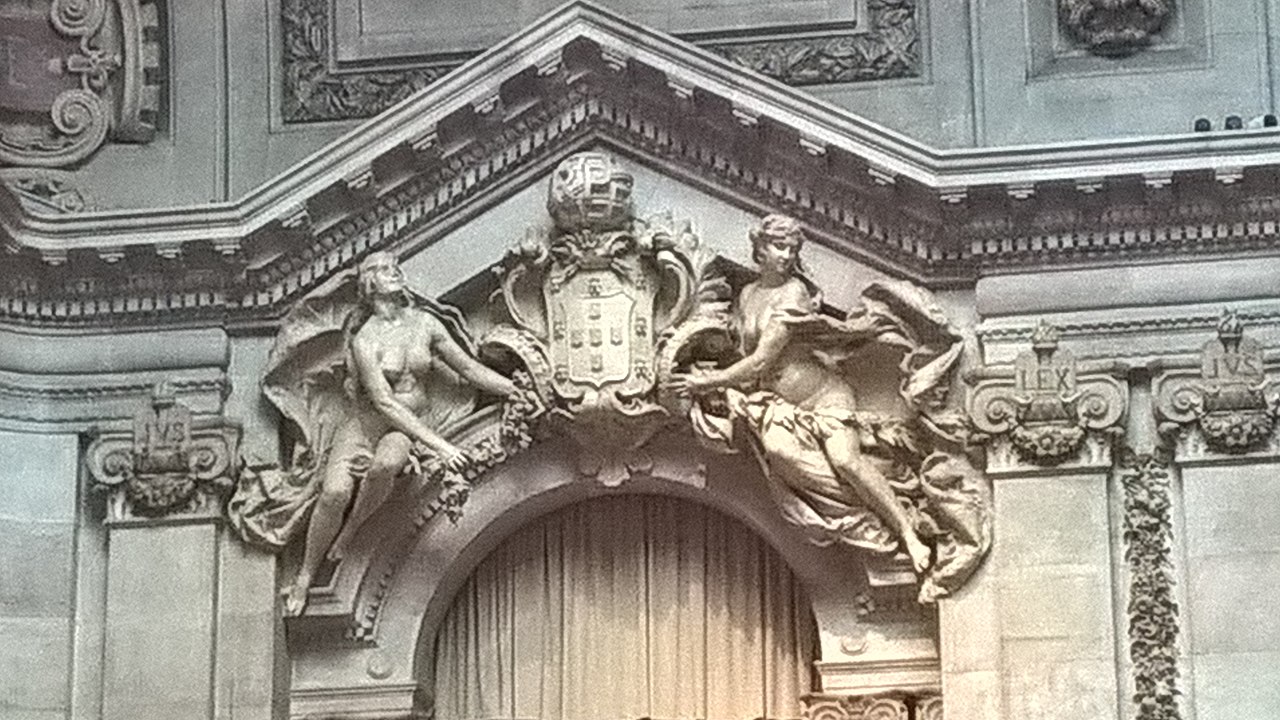
Image: Carlos Luis M C da Cruz / Wikimedia Commons (CC BY-SA 3.0)