

This pension report says Portugal's social security runs a deficit, not a surplus
The working group led by economist Jorge Bravo presented its final report on Tuesday, arguing the widely announced surplus disappears once the civil service pension fund is added in. The combined 2025 balance turns into a €1.94 billion deficit. The labour ministry ruled out reform the same afternoon.
The government commissioned the study. The government then spent the afternoon of its publication explaining that it will not do what it recommends. The final report of the working group on social security reform, chaired by the economist Jorge Bravo, was presented at the NOVA IMS auditorium in Lisbon on Tuesday. Within hours the labour ministry had restated that there will be no structural reform of the system in this parliament.
Back in July we wrote that the report had landed on the minister’s desk and nobody was going to be allowed to read it yet. Now everyone has. It carries a long title — Reformar as Pensões em Portugal: Por um Sistema Sustentável, Adequado e Justo, um Contrato entre Gerações — and one short finding that accounts for all the noise.
The surplus that isn’t one
Portugal has spent years being told its social security system closes the year in the black. The group’s argument is that this reading looks at one of the two public pension systems and quietly leaves out the other. Add the Caixa Geral de Aposentações, which pays civil service pensions and runs a negative balance, and the combined 2025 position turns into a deficit of €1.94 billion. The CGA shortfall on its own runs at around €7 billion a year.
Bravo put it plainly at the presentation: reading the two sets of accounts separately is illusory and incorrect. Same population, same state budget, same taxpayer.
This is not a technical footnote. The claim that the system is comfortable has been the central argument against changing anything — and it is that argument the government’s own report has just contested.
What it actually proposes
The recommendations range well beyond the retirement age. The group wants individual defined-contribution accounts, occupational pension plans with automatic enrolment for employees, and a starter savings account for children called Grão a Grão. It also proposes scrapping the minimum retirement age altogether, letting workers choose their moment with the pension adjusting accordingly, and expanding voluntary top-up schemes.
What happens next
Nothing, for now. The labour ministry called the document one more contribution to the debate and stood by the commitment it made at the start of the parliament. The parties reacted to type: on the right, no surprises in the diagnosis; on the left, the accusation that folding in the civil service fund is an accounting trick.
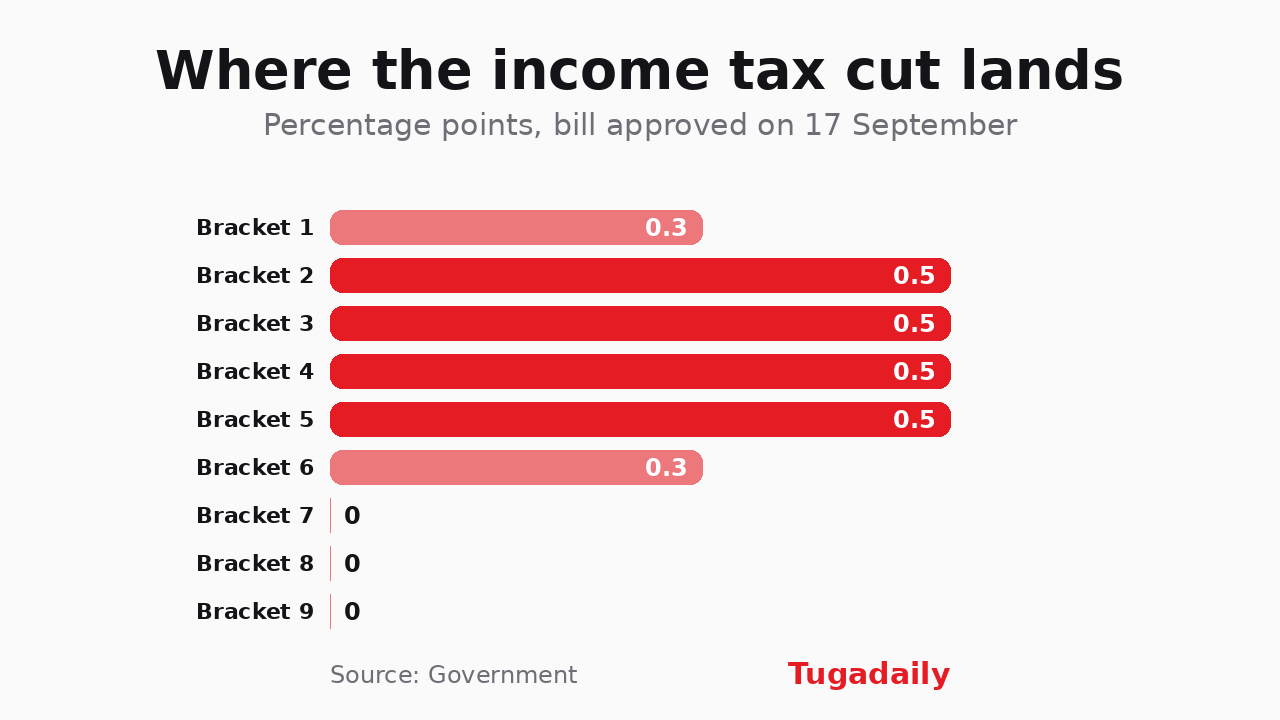
So a government-commissioned report, delivered to the minister in July and presented in August, joins the pile — while the promises keep coming, including a further income tax cut and another pensioner bonus, both drawn on the same accounts. For the contributions side of that equation, see our piece on average pay in the second quarter.
Photo: Belgian Presidency of the Council of the EU / Julien Nizet / Wikimedia Commons (CC BY 2.0)