Euro-area banks see mortgage demand shrinking into winter (Portugal's expect only a dip)
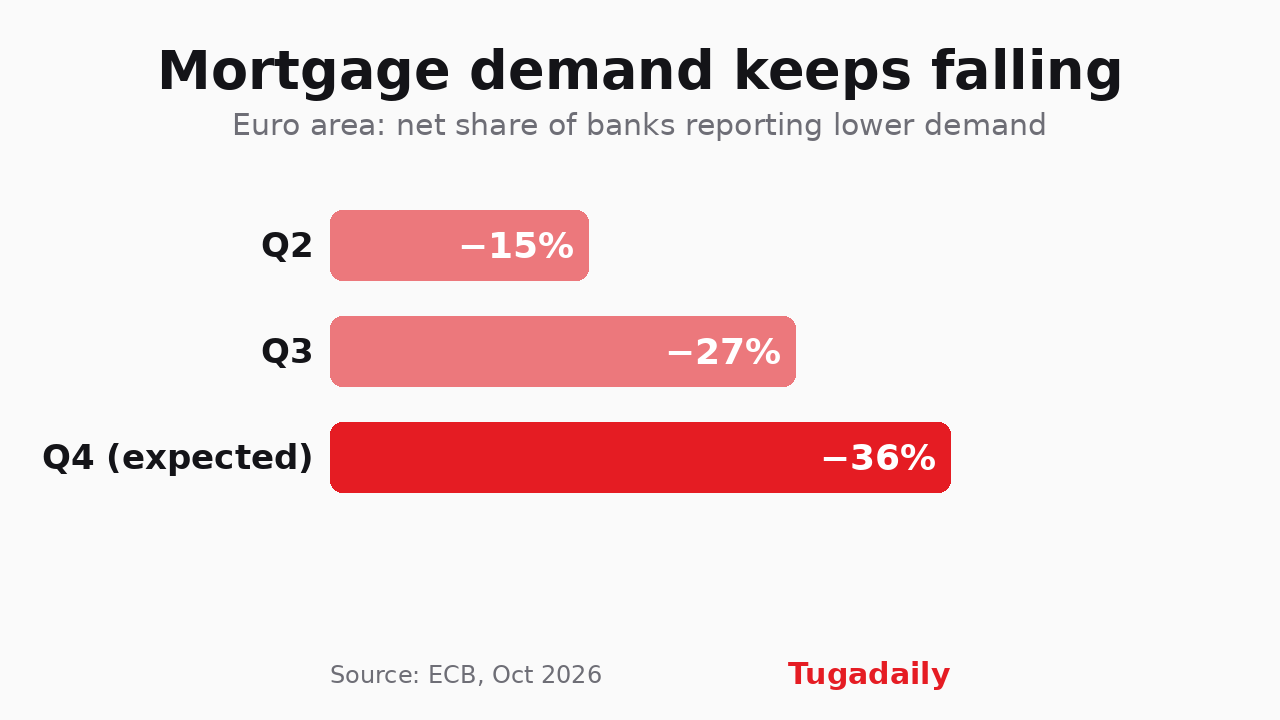
In the ECB bank lending survey published on 27 October, the net share of euro-area banks reporting lower demand for housing loans reached -27% in the third quarter, from -15% in the second, and banks expect -36% for the fourth. Portuguese banks, surveyed by Banco de Portugal, expect only a slight fall and unchanged lending criteria.
Fewer people across the euro area are asking banks for a mortgage, and banks think the slide has further to go. In the ECB’s quarterly survey, published on 27 October, the net share of banks reporting lower demand for housing loans hit -27% in the third quarter. It was -15% in the second, and banks themselves had only expected -12%.
For October to December they are pencilling in -36%.
What is putting buyers off
Interest rates first. Then falling consumer confidence, then gloomier views of the housing market. The ECB is careful to add that, steep as it is, the drop is well short of the peak seen in the last hiking cycle.
On the lending side, standards for home loans held steady over the summer. They will not stay that way. Banks expect to tighten them significantly in the fourth quarter, and the share of rejected applications has already gone up for every kind of borrower.
And in Portugal?
A calmer picture. In Banco de Portugal’s run of the same survey, demand for housing loans fell slightly in the third quarter because of rate levels, without denting household credit overall. Criteria got slightly tighter, partly because of the central bank’s revised macroprudential recommendation and partly because of how banks read the market and house prices.
For the end of the year, Portuguese banks expect only a slight fall in demand for both mortgages and consumer credit, and no change in lending conditions.
The gap between the two is the story. Across the euro area, borrowers are pulling back fast. In Portugal, people are still knocking on the bank’s door, even with repayments climbing at this year’s resets and after the ECB raised rates to 2.5% in September.
Chart: Tugadaily, with ECB data