
A September mortgage reset costs 70 euros a month more than last September
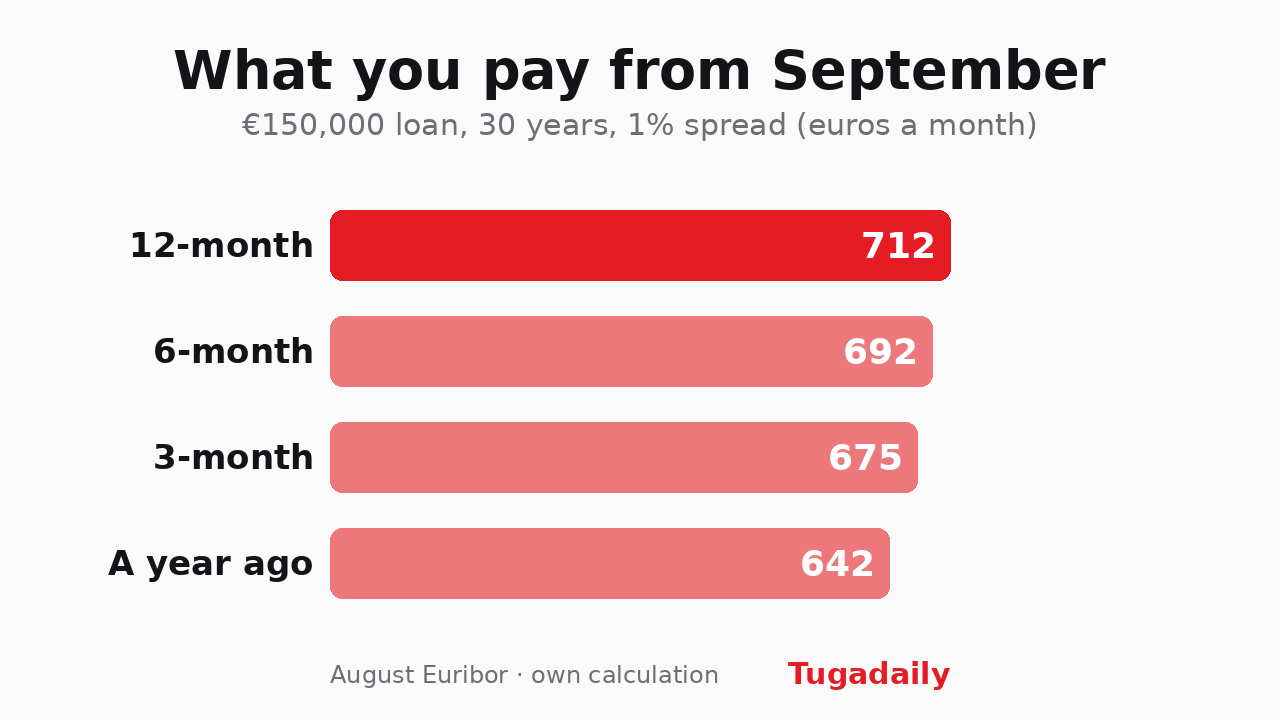
Twelve-month Euribor closed August at 2.954%, a two-year high. On a 150,000-euro loan over 30 years with a 1% spread, a contract resetting this month pays about 712 euros against 642 a year ago.
August is closed, and August is what governs the contracts being reset right now. Twelve-month Euribor finished the month at 2.954%, up 0.099 points on July and the highest reading in two years. The six-month rate, the one most Portuguese contracts follow, rose to 2.713%. Three-month came in at 2.513%.
Put that on a loan. On 150,000 euros over 30 years with a 1% spread, an annual reset lands at roughly 712 euros a month. Last September, with twelve-month Euribor averaging 2.114%, the same contract cost 642. That is 70 euros a month, close to 845 euros over a year, and none of it involves your bank deciding anything. The arithmetic is ours, built from the monthly averages published by Banco de Portugal and the standard amortisation formula.
Six-month contracts land at 692 euros, three-month ones at 675. Thirty-seven euros a month separates the three terms, which is why it pays to know exactly which index your loan follows and which month it resets. Both are written into the contract and neither moves.
Why is 12-month Euribor still climbing in September 2026?
This is expectation, not history. The European Central Bank meets on 10 September and markets are pricing another 25 basis points, taking the deposit rate to 2.5%. Euro-area inflation is running near 3%, pushed along by energy prices, and several members of the governing council have said plainly that they would rather tighten than wait. Euribor prices those decisions weeks ahead, which is how a meeting that has not happened yet is already inside a September payment.
Buyers feel it twice
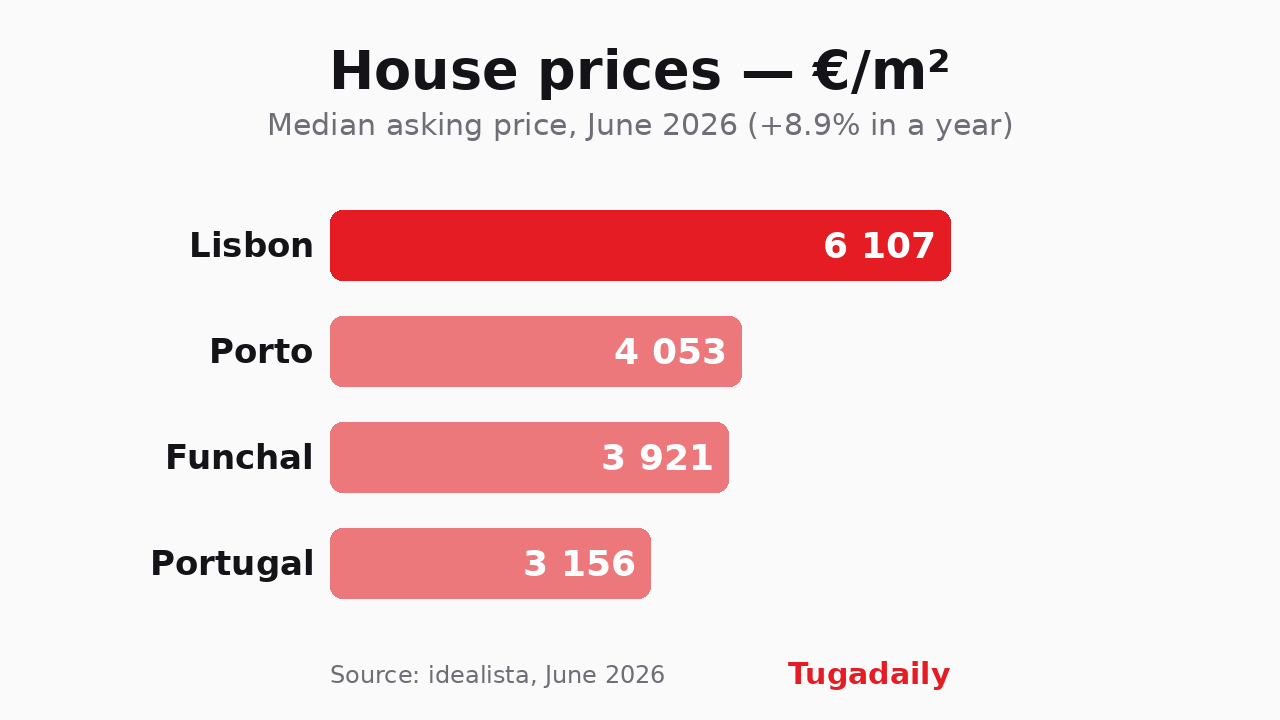
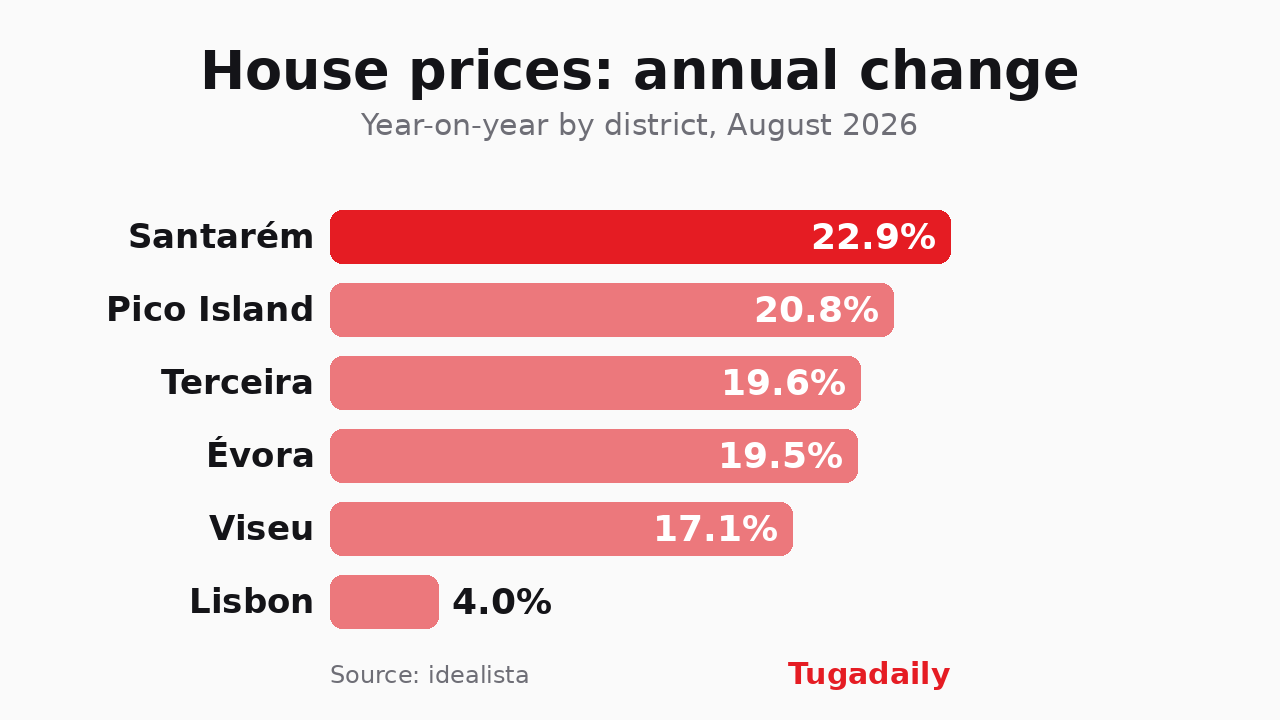
Anyone applying for a loan now runs into a second brake. Since 1 August, the macroprudential recommendation from Banco de Portugal caps the debt-service ratio at 45% of net income, down from 50%. Bigger payments going into a tighter test means some households no longer fit the loan they qualified for six months ago, in a market where house prices keep setting records and where the average new mortgage had already reached 731 euros in July.
Most forecasts put the relief in 2027. Until then the one number still open to negotiation is the spread.
Chart: Tugadaily, using the August monthly Euribor averages