Azores fishing boats can now claim fuel aid worth up to 8.53% of their sales
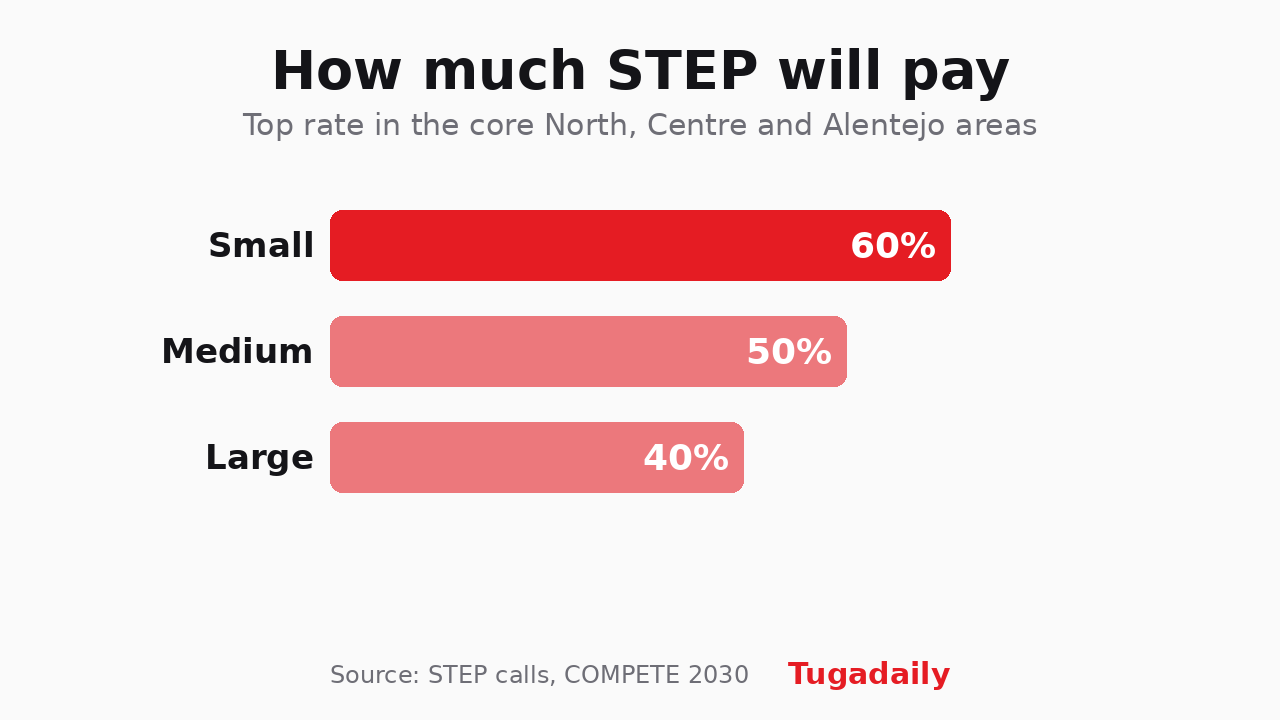
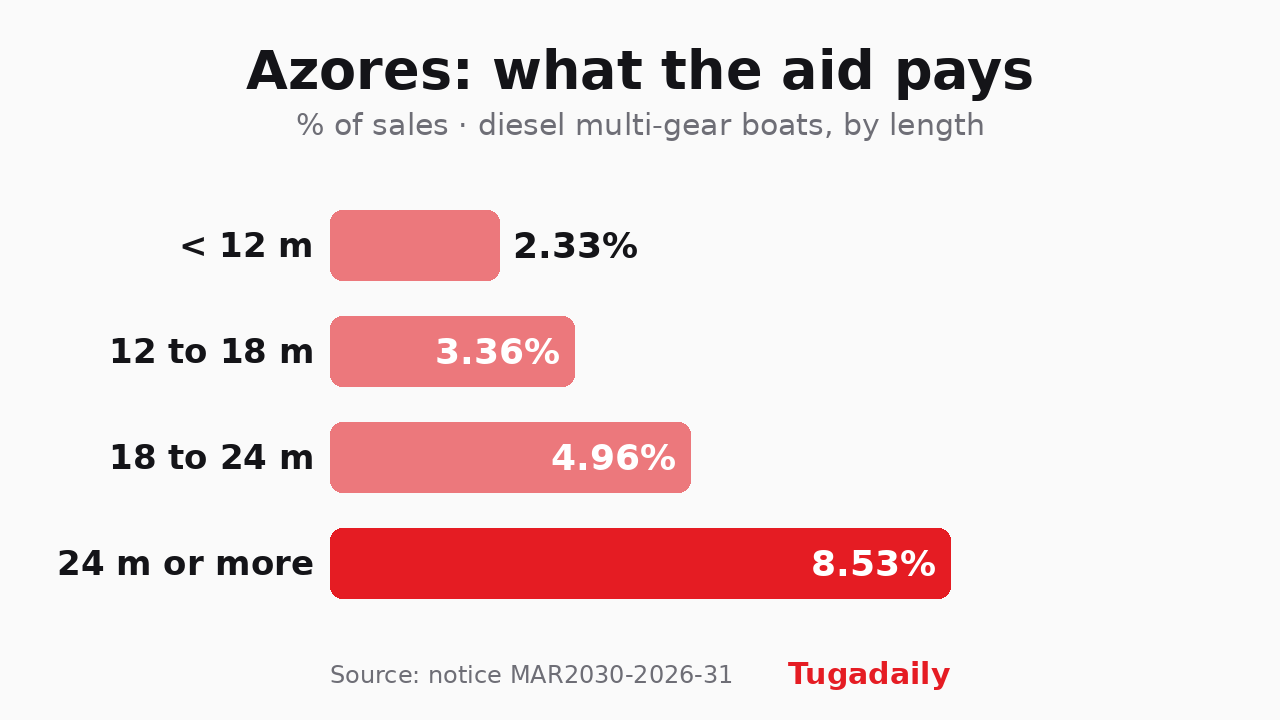
Notice MAR2030-2026-31 puts 3 million euros on the table for fishing, aquaculture and fish processing in the Azores, closing at 18:00 on 30 November. For fishing boats the aid is a fixed share of each vessel's sales, from 2.33% for a multi-gear boat under 12 metres to 8.53% for those of 24 metres or more.
Apply / Learn moreFishing, aquaculture and fish-processing businesses in the Azores have until 18:00 on 30 November to claim compensation for this year’s jump in fuel prices. Notice MAR2030-2026-31 opened on Wednesday with 3 million euros, and applications go in through the Balcão dos Fundos portal.
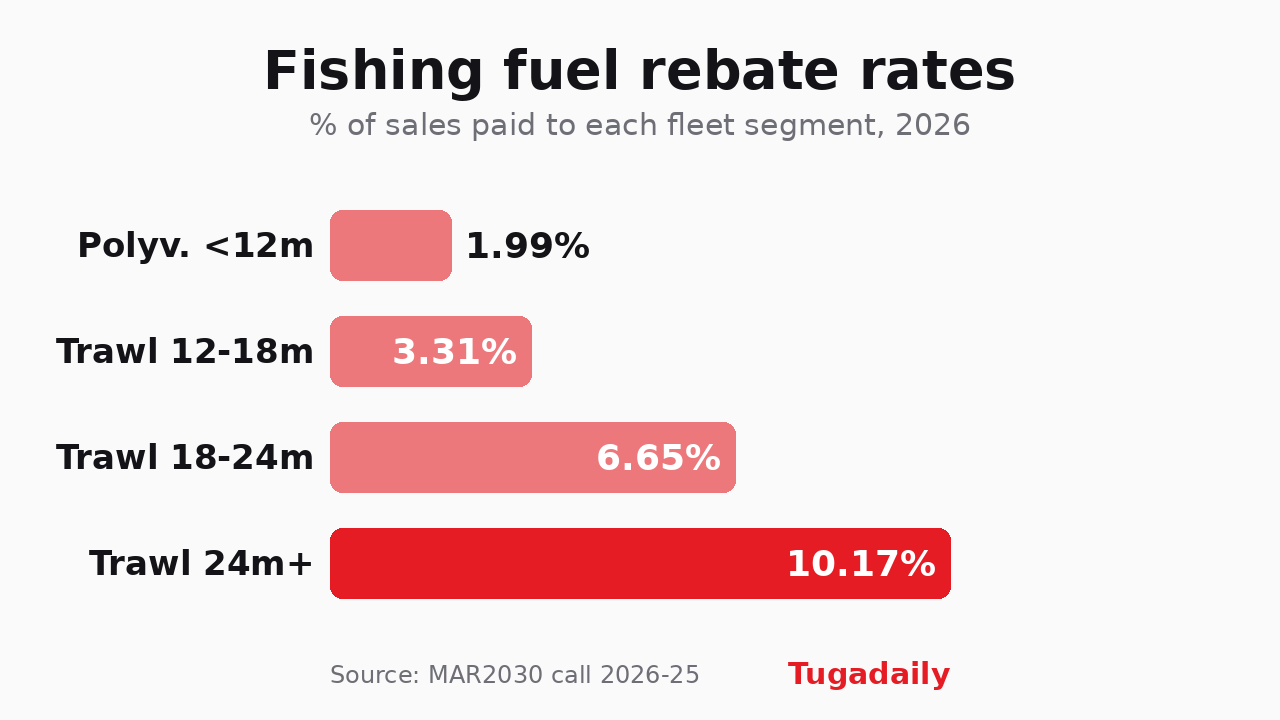
This is the Azores edition of a scheme the mainland has already had. The mainland fishing fuel rebate opened in September and closed on 12 October. The rules are similar. The rates are not.
What each boat gets
For fishing, the aid is not worked out from your fuel bills. A fixed rate is applied to each vessel’s sales, and the rate depends on the gear and the boat’s length.
For a diesel multi-gear (polivalente) boat it runs from 2.33% of sales under 12 metres to 3.36% between 12 and 18 metres, 4.96% between 18 and 24, and 8.53% from 24 metres up. Purse seiners get between 2.88% and 4.27%. Small petrol boats get 1.11% (multi-gear) or 1.26% (seine).
In round numbers, a multi-gear boat under 12 metres that sells 10,000 euros of fish gets 233 euros on those sales.
The rate comes from two figures: the historical weight of fuel in each fleet segment’s sales, from DGRM data for 2022 to 2024, and the rise in fuel prices between March and June compared with the start of the year, as published in the Azores official journal. Coloured fishing diesel went up 32.8% over that period, more than the 27.9% measured on the mainland. That is why the same small boat gets 2.33% in the Azores where it got 1.99% under the mainland notice.
How it is paid
The decision projects each boat’s average monthly sales from March to December. The money then arrives in up to three payments: the first on actual sales from March to June, the second on July to September with the rate updated for the real fuel increase in those months, and a final one. If diesel rises more than expected, or 2026 sales beat the boat’s historical average, the award can be topped up while funds last.
Aquaculture and processing work differently. There the rate is applied to the cost of each fuel, as declared by a certified accountant: 19.1% for regular diesel, 32.8% for coloured diesel, 18% for bulk butane and 9% for industrial fuel oil.
Who can apply
Azores businesses in sea fishing, aquaculture or fish and shellfish processing, with a valid licence, at least one year of activity in the last three closed years, and a clean record with the tax office, social security and EU funds. Fish farms must operate support vessels and keep organised accounts. Processors need their own delivery fleet or must use bulk butane or fuel oil in production.
Of the 3 million, 2 million is ring-fenced for fishing, 100,000 euros for aquaculture and 900,000 for processing, with room to move money between sectors if demand calls for it. The legal basis is the European Commission decision recognising the situation in the Middle East since 28 February as an exceptional event for the markets, and the programme’s summary is on the Portugal 2030 site.
Chart: Tugadaily, data from notice MAR2030-2026-31