

This parliament register holds every Portuguese MP's CV. Filling it in is optional
The Assembleia da República's biographical register is free and voluntary to complete and is not a means of meeting any declaratory obligation, unlike the register of interests. The distinction explains why MPs' stated qualifications have been contested more than once.
If you want to know what a Portuguese MP studied, where they worked and what offices they have held, there is somewhere to look. The parliament’s website publishes a biographical register for each of the 230 members: name, parentage, birthplace, profession, public, political and private posts, honours, publications. All of it open, no login required.
What is not there is any assurance that it is accurate.
Parliament says so itself, on the register’s own page. The biographical register is not an instrument for meeting declaratory obligations. It exists solely to provide a curricular presentation of each member, and completing it is free and optional.
That sentence rewards a slow read, because every word in it is load-bearing. Free means the member writes whatever they choose. Optional means they may write nothing. And not being an instrument of declaratory obligation means none of it is subject to the verification and sanction machinery that parliament applies to other declarations.
So what does get checked?
Something else entirely, and that one is compulsory: the register of interests. That is where members declare outside activities, shareholdings, support and benefits, because the law requires it and because those entries exist to expose conflicts of interest. Transparency International Portugal built its Integrity Watch platform on precisely that data. The gap between the two files is the whole point: one exists to account for something, the other exists to present a CV.
The practical consequence is blunt. An MP’s stated qualifications on the parliament website carry exactly the verification status of the education section of a LinkedIn profile. They are the version the subject chose to give.
It has caused trouble before
This is not a thought experiment. The issue has surfaced more than once, always the same way: somebody checked an entry against what the institution had actually awarded, and the description did not match. In 2007 there was an argument over an entry amended to spell out a bacharelato. In 2012 a comparable case ran for months. Both times it came to light through journalism, not through any internal alarm at parliament, because there is no internal alarm for this.
The useful question, then, is not about any individual member. It is about institutional design. A curricular record published under the seal of the Assembleia da República, which any citizen reads as official information, either is or is not the kind of material that ought to be confirmed before it goes on screen.
Two answers are defensible. One says checking diplomas for 230 people every legislature is disproportionate work for information nobody is obliged to supply. The other says publishing unverified claims on an official domain lends them credibility the institution is not backing, and that the cheap fix already exists: say on the page, beside each profile, that the content is self-declared.
Parliament has been on the side of the first answer. While that holds, the reading rule is the one that applies to any CV anywhere: the document records what the person asserts, not what has been established. A related argument about what gets declared and what gets confirmed ran recently over the oversight powers the state grants its own watchdogs.
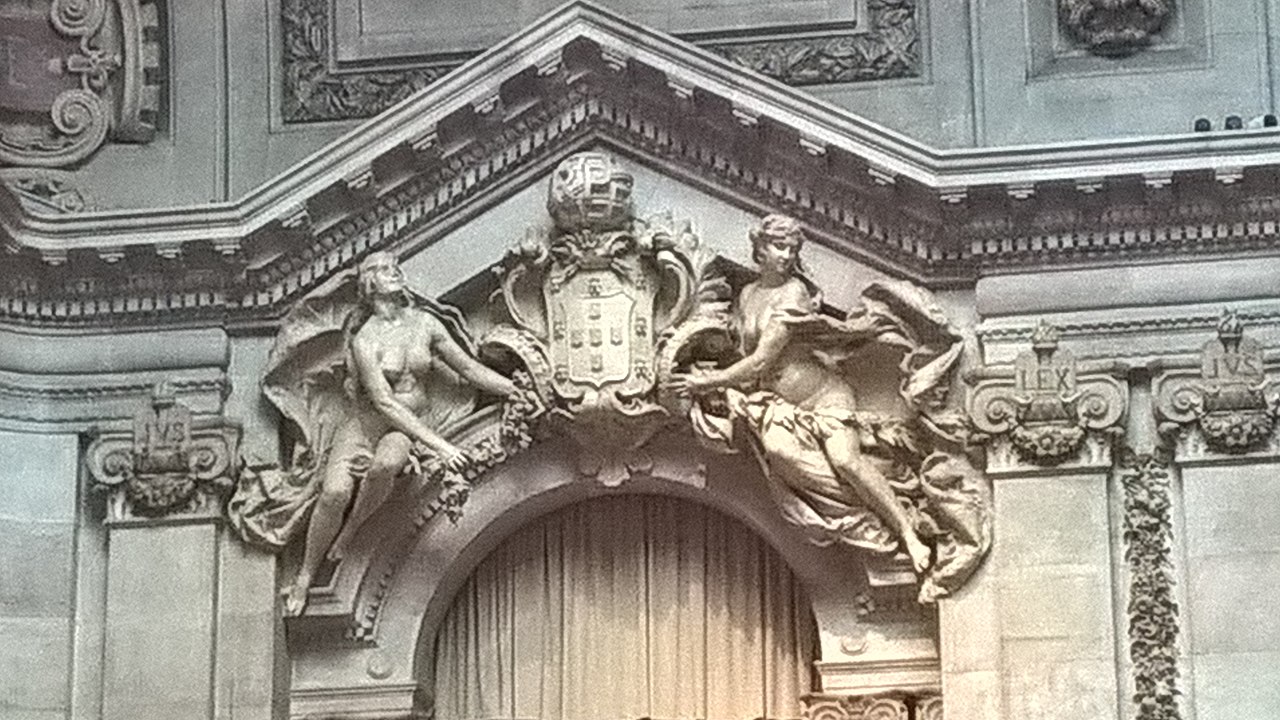
Image: António M.L. Cabral / Wikimedia Commons (CC BY 2.5)