
Sword Health is buying Headspace, five years after a 3-billion-dollar valuation
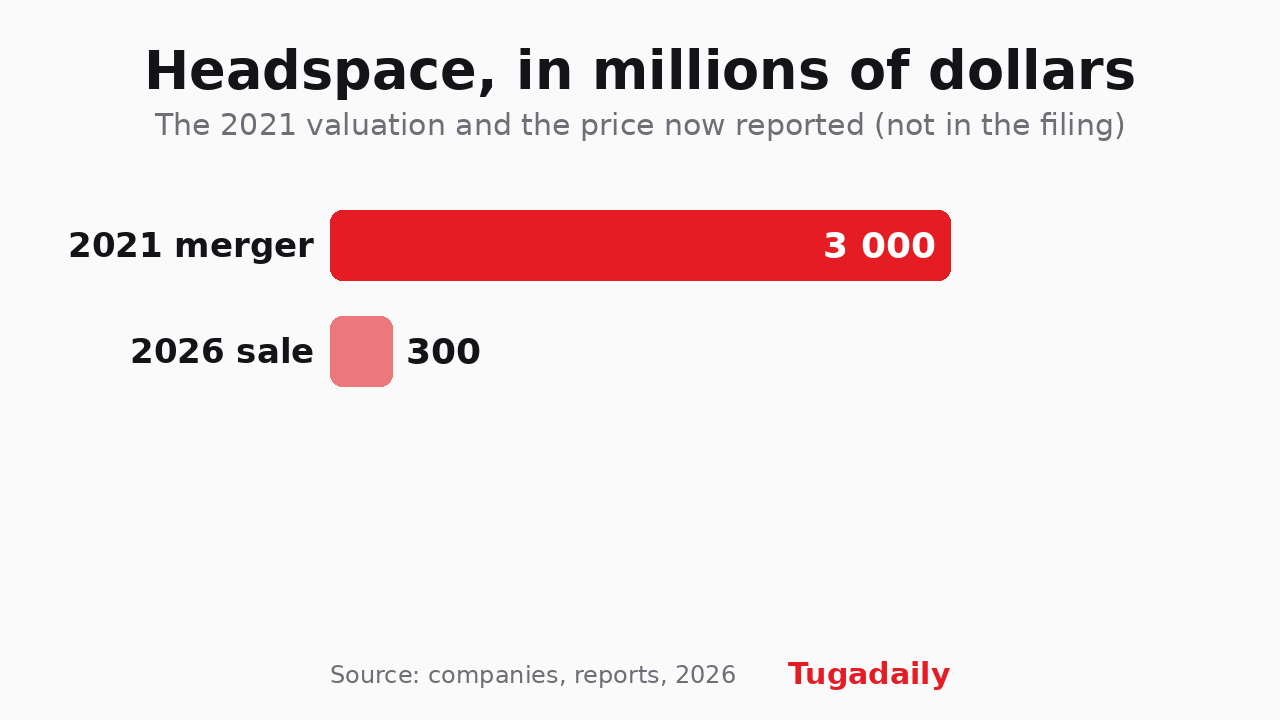
The filing lodged with the Massachusetts regulator names 14 September as the effective date and carries no price at all. Reports put it somewhere between 200 and 300 million dollars.
A company that started in Porto is about to buy one of the best-known meditation apps in the world. Sword Health is taking over Headspace, and the deal surfaced where these things usually surface first: in a form handed to a regulator.
The notice of material change was filed with the Massachusetts Health Policy Commission in July and only spotted afterwards. It says OrangeDot, Headspace’s parent, will merge with an entity created for the purpose and become a wholly owned subsidiary of Sword Health, with 14 September given as the effective date. It gives no price.
How much is Sword Health paying for Headspace?
Published reports put the deal somewhere between 200 and 300 million dollars. It is worth being blunt that this figure is not in the filing, and so nobody who has signed anything has confirmed it.
Even so, the order of magnitude tells a story. In October 2021, when Headspace merged with Ginger, the combined company was valued at around 3 billion dollars. Five years on, the number being discussed is a fraction of that. On the other side of the table, Sword raised 40 million in 2025 in a round that valued it above 4 billion.
Why Sword wants it
Sword began in musculoskeletal care — remote physiotherapy with sensors — and has been adding territory since: women’s health, cardiometabolic care and, lately, mental health. Headspace brings therapy, coaching, the wellness apps and the employee assistance programmes that American employers buy as a bundle. Bought, it stops being a competitor in a field Sword was entering from scratch.
It is also a reminder about scale. While Portugal celebrates rounds in the tens of millions, like Neuraspace’s 15.6 million in Coimbra, a company with Portuguese roots is buying an American one for hundreds of millions. Both are the same ecosystem at different stages.
What could still change
An effective date in a regulatory filing is an intention, not a done deal: notices of material change exist precisely so the regulator has time to look. Between now and September there is room for revisions, conditions, or none of the above.
Keep this one for the end-of-year tally. Portugal’s own M&A market shrank 28% to July, and this deal will not even show up in that figure — it is a purchase made abroad, by a company that started here.
By Oliver Grant
Chart: Tugadaily, with data from company announcements and published reports