What a low-income family would still pay for an EV under Portugal's new 80% subsidy
Portugal plans to cover up to 80% of an electric car for people on the electricity social tariff or earning under €11,572 a year, capped at €15,000 before VAT and 20,000 cars. On the most expensive eligible car, our maths leaves the buyer about €6,450 short.
Portugal now says who will qualify for its new electric-car subsidy. The Environment and Energy Ministry clarified this week that the support of up to 80%, announced during the 2027 budget debate, is meant for people already on the electricity social tariff and for people with an income below €11,572 a year, which is 80% of the reference median income.
Minister Maria da Graça Carvalho unveiled the scheme in parliament on 28 October and says more than a million people meet the criteria. The money, though, only stretches to 20,000 cars.
What we know so far
The subsidy covers up to 80% of the car’s price before VAT, with an eligible-cost ceiling of €15,000. Scrap an old petrol or diesel car and the ceiling rises to €16,000. There is also up to €1,000 (again before VAT) towards a home charging point.
Separately, the government has set aside €50 million to keep the general incentive open to everyone. This year that scheme paid €4,000 per new car and, as we reported in July, it did not last long.
Doing the maths
This is where the headline figure needs a calculator. Take an electric car priced exactly at the ceiling, €15,000 before tax. Add 23% VAT and the invoice reads €18,450. The maximum subsidy is 80% of €15,000, so €12,000. If the final rules keep VAT outside the subsidy, as the announcement says, the family still has to find €6,450.
With a scrappage, the car can cost €16,000 before VAT (€19,680 with it) and the subsidy rises to €12,800. That leaves €6,880 for the buyer.
For someone living alone right at the income limit, €6,450 is more than half a year’s income. That is the point ACAP, the Portuguese car industry association, is making. It called the scheme “a bit of a marketing manoeuvre” and doubts there will be much demand among social-tariff households.
Still unanswered
Almost everything that decides whether it is worth waiting. The regulation has not been published, there are no application dates, nobody has said whether used cars count or only new ones, or whether the €11,572 limit applies per person or per household. The funding source has not been named either.
Not sure whether you are on the social tariff? The conditions are on the DGEG’s page explaining who gets the energy social tariff. It is applied automatically to anyone who qualifies, so your electricity bill will tell you before you start visiting dealerships.
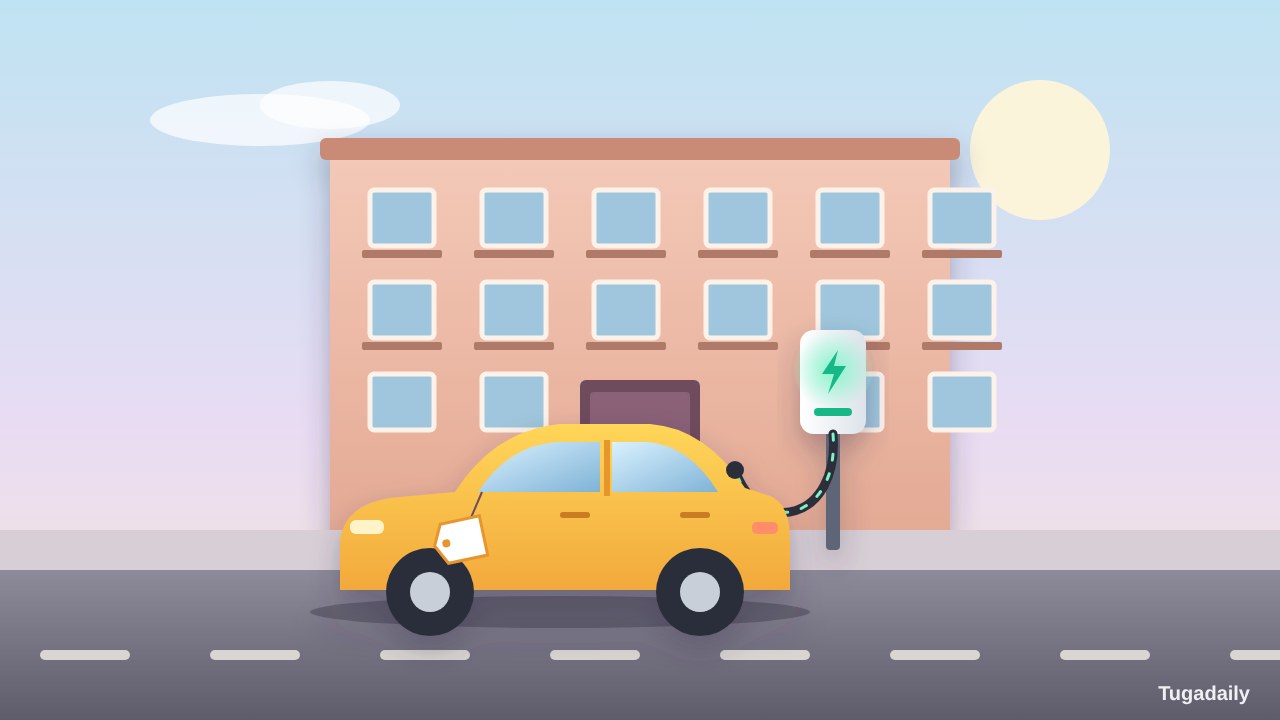
Illustration: Tugadaily