

Guinea-Bissau backed a new constitution with 70%. Its capital was the only region that said no
The electoral commission counted 383,117 votes for and 160,904 against on a 62.6% turnout. The text moves the prime minister's powers to the president, cuts parliament from 102 seats to 65 and sets the legal frame for December's elections.
Guinea-Bissau’s National Electoral Commission released provisional results on Tuesday for Sunday’s referendum, and the yes side took 70%. That is 383,117 ballots for the new constitution against 160,904 opposed. Of 914,428 registered voters, 572,714 turned out, a participation rate of 62.6%.
The regional breakdown says more than the headline percentage does. Gabú gave the yes 90%, Bafatá 85%, Biombo and Quinara 79%, Cacheu and Tombali 70%, Oio 60% and Bolama-Bijagós 58%. Bissau was the exception. In the capital, no won with 52% — the one region that turned the text down, and the one with the most voters, the party headquarters and the newsrooms.
What actually changes
Since 1993 the country has run a semi-presidential system: a president as head of state, and a prime minister drawn from parliament who leads the government and runs the country day to day. The new constitution ends that split and concentrates power in the presidency, in a country that spent three decades trying to move away from exactly that arrangement.
Parliament shrinks too, from 102 seats to 65, and the electoral districts from 29 to 12. Standing for office gets dearer: a presidential candidate must lodge a deposit of 50 million CFA francs, roughly $90,000, and a sponsoring party needs 5,000 registered members, at least 300 of them in each region.
How the country got here
The vote was held on 30 August, a little over nine months after the military coup of 26 November 2025 — the fifth since 1980 — which interrupted the count in the presidential election. The constitution put to voters on Sunday was drafted by a National Transition Council set up after that takeover, and it provides the legal framework for the presidential and parliamentary elections scheduled for 6 December.
The opposition disputes the legitimacy of the whole exercise and reads the 37.4% who stayed home as a rejection. Civil society groups signed an open letter refusing a constitutional rewrite made outside normal political channels, and the commission’s own leadership was replaced in February, with Supreme Court judge Carmen Isaura Lobo taking the chair.
None of this is remote if you are reading from Portugal. The Bissau-Guinean community here is among the oldest and largest, and the CPLP equality statute still shapes daily life in Lisbon, Porto and the Algarve — from the rules on a CPLP residence permit to the Camões scholarships for studying in Portugal. What Bissau decided on Sunday will reach this country soon enough, over the phone.
The commission’s figures are provisional and still need final validation. December’s timetable only starts running for real after that.
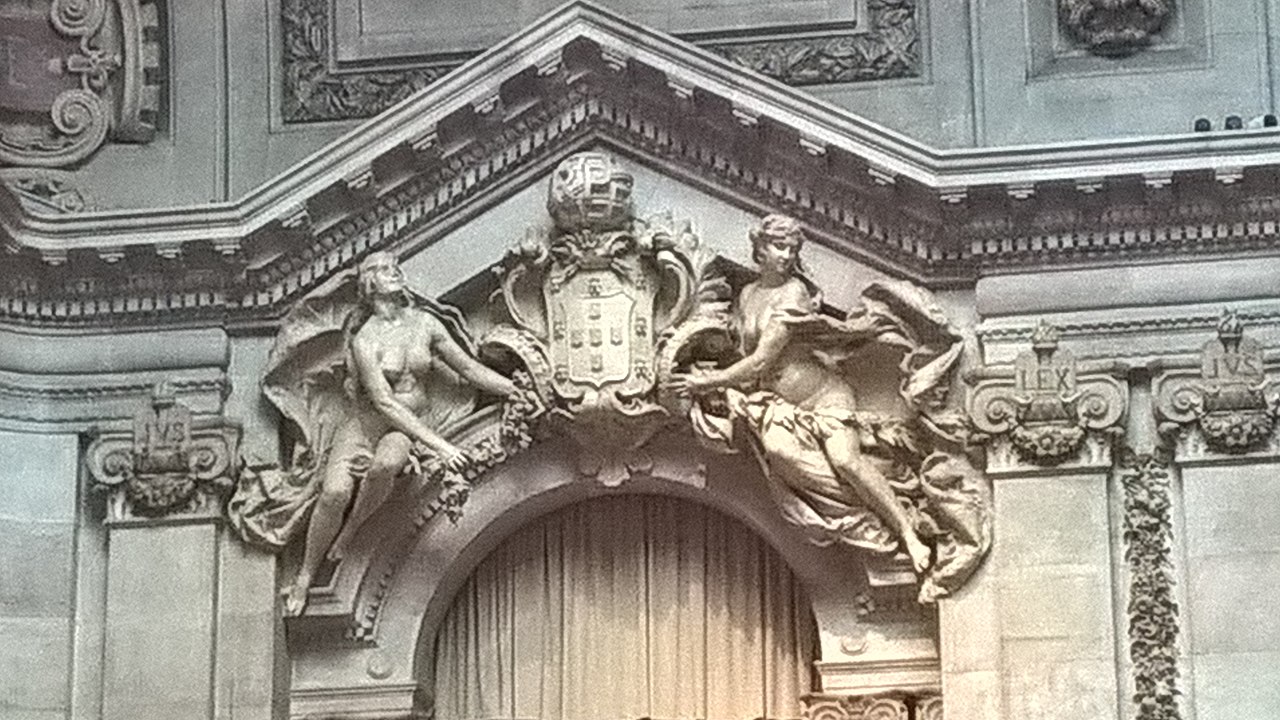
Image: Jcornelius / Wikimedia Commons (CC BY-SA 4.0)