
PT
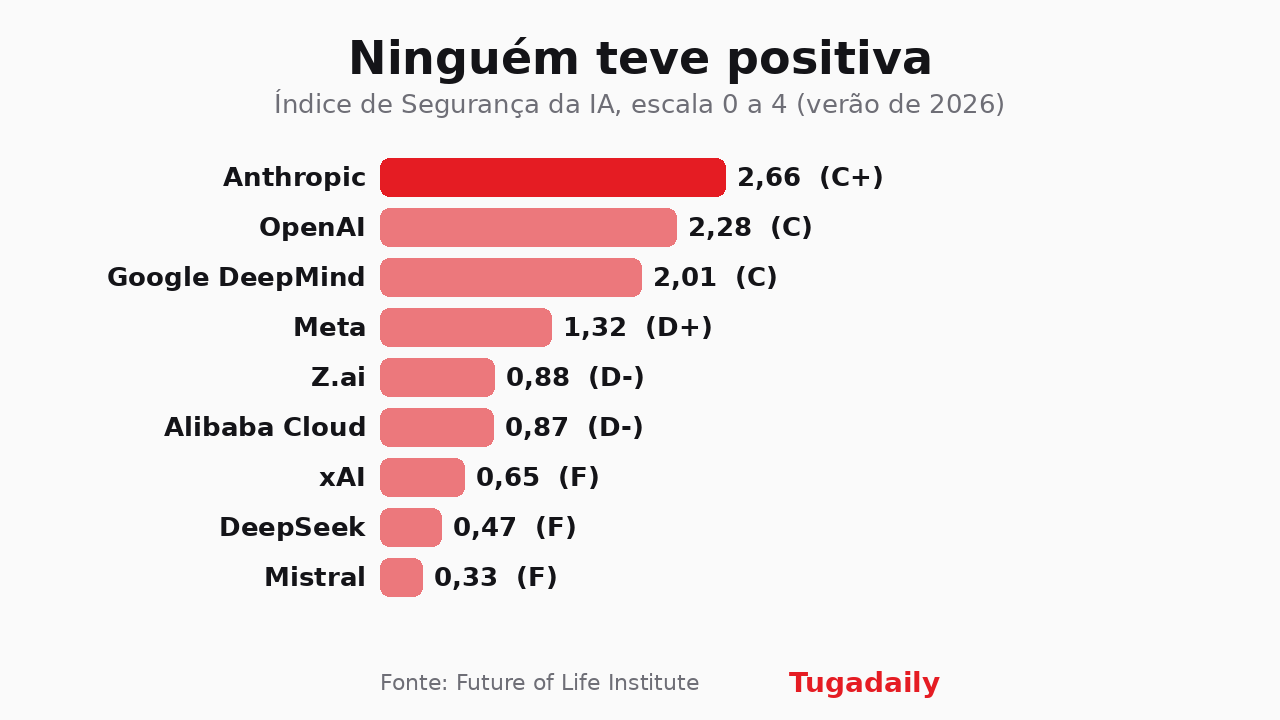
Bar chart of AI safety scores for nine companies, from Anthropic at 2.66 down to Mistral at 0.33
Tech 15 July 2026

Nobody passed the AI safety exam, and Europe's Mistral came ninth out of nine

The Future of Life Institute's AI Safety Index handed its best company a C+ and failed three outright. Mistral, Europe's great AI hope, finished dead last.

Not one artificial intelligence company scored a passing grade. That is the short version of the Future of Life Institute’s AI Safety Index, published this month, which put a panel of seven independent experts to work grading nine companies across 37 indicators. The best mark anyone managed was a C+.

That C+ went to Anthropic, on 2.66 out of a possible 4. Behind it came OpenAI on 2.28 and Google DeepMind on 2.01, both graded C. Meta managed a D+ on 1.32. Then there is the bottom of the table: xAI on 0.65, DeepSeek on 0.47 and Mistral on 0.33 — all three failed outright.

Why does Mistral finishing last matter to Europe?

Because it is European dissonance in its purest form, and because Mistral is the exact company Europe pinned its sovereign-AI bet on. The EU has legislated harder on AI safety than anywhere on earth, and the biggest European AI company scored worse than all eight others. Regulators elsewhere are moving on the infrastructure instead — New York just became the first US state to pause hyperscale AI data centres — but rules on where the machines go say nothing about how the models behave. Writing the rules without having a champion who embodies them is a political problem rather than a technical one, and it is the kind you pay for in credibility at the next negotiation.

The reviewers’ advice to Mistral is not exotic: publish a full safety framework and governance structure, engage seriously with existential risk instead of talking it down, and fix weak safety benchmark performance. None of that is hard technology. It is homework nobody did.

What did the experts find most alarming?

Less the grades, more the direction of travel. The panel says even the leaders are retreating from earlier commitments: Anthropic, OpenAI, Google DeepMind and Meta have all weakened or voided pledges to pause unilaterally as red lines approach, some making them contingent on what rivals do. Reviewers call it a moving goalpost, and say it has undermined safety frameworks across the board.

The industry’s weakest domain by far is existential safety, where no company clears a C- and most land on D or below. Constructive attempts exist, but the panel judges them entirely inadequate — and takes aim at the dominant paradigm itself with a line that sticks: detection is not prevention.

One more finding lands close to Europe from another direction. Reviewers flagged the industry’s pivot to military use as an emerging harm: between 2024 and 2026, companies that once banned military applications gradually reversed course and now actively chase defence partnerships. It is the same race that recently had Europe’s own Helsing raising 1.8 billion euros for AI drones.

Read the grades with the right ruler, though: the index collected evidence only up to 3 June 2026, and the marks come from a panel, with human judgement in the middle. The full report and scorecard are on the Future of Life Institute site.

By Oliver Grant

Infographic: Tugadaily · data Future of Life Institute

Kathy Hochul, Governor of New York State
Tech 15 July 2026

New York just told AI data centers to wait, and no US state had done that before

Kathy Hochul signed the first statewide US moratorium on new hyperscale data centers: up to a year's pause on environmental permits, with 39 applications waiting. The real question underneath is who pays for the power.

New York has just done what no other US state had managed: it hit pause on AI's data centers. On 14 July, Governor Kathy Hochul signed an executive order suspending state environmental permits for new hyperscale data centers for up to a year. The timing isn't innocent. Four hyperscale data centers already operate in the state — and 39 applications are waiting for an answer. Thirty-nine. That number is the whole explanation. Discretionary permits. While a…

Continue reading
A drone resting on military kit
Tech 14 July 2026

Helsing: Europe's AI defence startup is now valued at $18 billion

Germany's Helsing, which builds artificial intelligence and autonomous drones for defence, has closed a $1.8 billion round and is now Europe's most valuable startup in the sector.

Europe wants to stop relying on the United States and China for its military technology — and it has just put a lot of money on the table to prove it. Helsing, a German artificial-intelligence defence startup, has closed a $1.8 billion funding round that values it at around $18 billion, making it the most valuable company of its kind on the continent. Based in Munich, Helsing builds AI software for the battlefield: systems that process sensor data in real…

Continue reading
Lines of software code on a screen
Tech 13 July 2026

Tekever buys Cloudsweep: the drone unicorn doubles down on AI

Tekever, Portugal's drone unicorn, has bought AI startup Cloudsweep to speed up the software behind its defence and security systems.

Tekever, Portugal's drone unicorn, has bought Cloudsweep, a homegrown artificial intelligence startup, to speed up the software behind its defence and security systems. The deal's value was not disclosed, but the logic is clear: rather than wait for AI talent, Tekever went and bought it. It is a Portuguese startup focused on applying artificial intelligence to software development, meaning it uses AI to write and improve code faster. That is exactly the…

Continue reading
Hands on a car steering wheel, interior view
Tech 13 July 2026

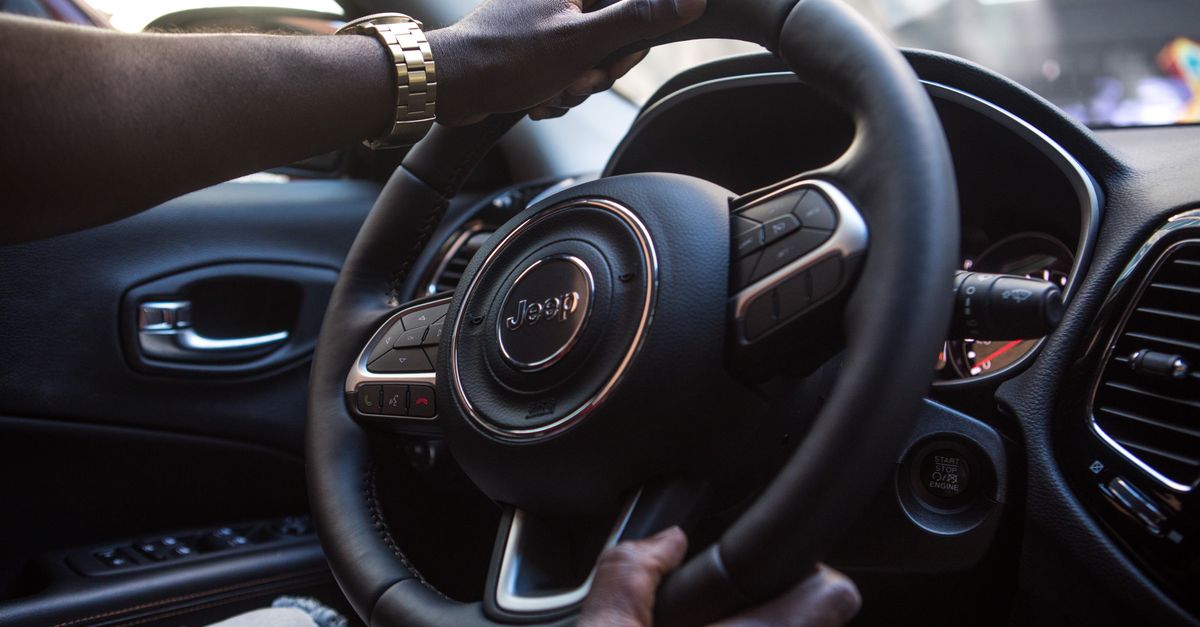
New cars in the EU must now watch the driver's attention

Since 7 July, every new car sold in the European Union has to detect drowsiness and distraction at the wheel. Here's what changes — and whether the camera records your face.

If you buy a new car in Portugal from now on, it will be keeping an eye on you — literally. Since 7 July 2026, every new car and van registered in the European Union must come with systems that detect drowsiness and distraction at the wheel. It is an EU-wide rule, so it applies in Portugal just as in any other member state. The requirement comes from the EU's General Safety Regulation and bundles two technologies. One watches for drowsiness (known as…

Continue reading
Google Pixel smartphone on display
Tech 12 July 2026

Pixel 11 launch set for August 12: Google books a prime-time event in New York

Google has scheduled its Made by Google event for August 12 in New York, where it will unveil the Pixel 11 line, the Pro models and the Pixel Watch 5.

There is now a date to meet Google's next generation of phones: the Made by Google event is set for August 12 in New York, with a twist in the format — instead of the usual midday keynote, the show moves to 6 PM local time, in prime time. The full family: Pixel 11, Pixel 11 Pro, Pixel 11 Pro XL and Pixel 11 Pro Fold, plus the Pixel Watch 5. The official teaser shows a shiny gold metal frame and the familiar pill-shaped camera bar, with a promise to reveal…

Continue reading
Glass cube of the Fifth Avenue Apple Store in New York
Tech 11 July 2026

Apple sues OpenAI over trade secret theft in the AI hardware race

Apple has sued OpenAI in federal court, alleging trade secret theft 'at every level' to build its AI gadgets. The new Siri will run on Google's Gemini.

The Apple-OpenAI divorce has reached the courts. The Cupertino company has sued the maker of ChatGPT in federal court in Northern California, accusing it of misappropriating trade secrets to fast-track its push into consumer hardware — the bet with which OpenAI hopes to challenge the iPhone itself. A scheme running "at every level", in the complaint's words: from engineers up to hardware chief Tang Tan — himself a former Apple vice president. The suit…

Continue reading
Representation of graphene's atomic structure
Tech 11 July 2026

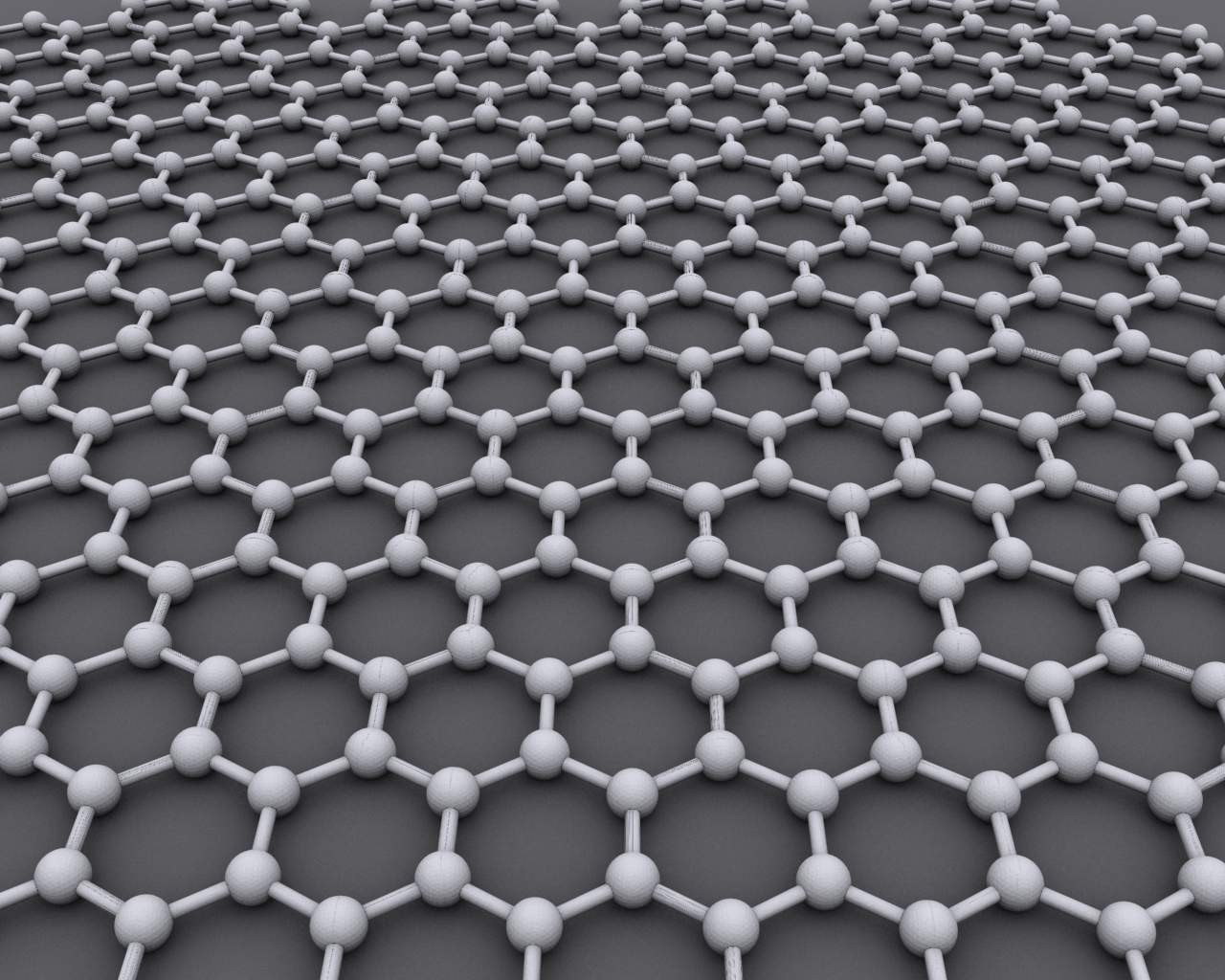
Portuguese graphene could make drones near-invisible to radar — and the Air Force will test it

GTechPlasma, a Técnico spin-off, has developed a graphene-based material that absorbs radar waves and cuts the electromagnetic signature of drones and aircraft. Material has already been delivered for tests.

A Portuguese graphene-based material may soon hide drones and aircraft from radar. The technology was born at GTechPlasma, a spin-off of the Institute for Plasmas and Nuclear Fusion at Instituto Superior Técnico, and will be tested by the Portuguese Air Force — a rare leap for national research in the middle of Europe's technological rearmament race. Instead of reflecting radar waves the way metallic surfaces do, the material absorbs them, drastically…

Continue reading
Headquarters of the Polícia Judiciária in Lisbon
Tech 11 July 2026

AI kidnapping scam in Coimbra: fraudsters faked a ransom photo of a missing woman

Scammers used an AI-manipulated photo to fake the kidnapping of a missing woman in Coimbra and demand ransom from her family. Police found her safe — she had left of her own free will.

A 37-year-old woman goes missing in downtown Coimbra. Days later, her family receives a photo of her, apparently tied up, along with a ransom demand. Except the kidnapping never happened: the image had been manipulated with artificial intelligence, and the woman — from Miranda do Corvo — had left of her own free will. The case, revealed this week by Portugal's Polícia Judiciária, began on 1 July when relatives reported her disappearance. While the family…

Continue reading
Close-up of a microchip on a circuit board
Tech 10 July 2026

ACITI: India, Australia and Canada launch tech and critical minerals pact

The ACITI partnership brings India, Australia and Canada together on AI, green energy technologies, critical minerals and resilient supply chains.

Three democracies on three continents have decided to team up in the technology race. India, Australia and Canada this week launched ACITI — the Australia-Canada-India Technology and Innovation Partnership — a trilateral framework covering artificial intelligence, green energy technologies, critical minerals and resilient supply chains. A framework to align investment, research and rules across the three countries in sectors where none wants to depend on…

Continue reading
Students working on computers in a classroom
Tech 10 July 2026

School apps in Portugal now require prior certification under new decree

Decree-Law 138/2026, published Friday, makes prior certification mandatory for information systems used in Portuguese schools below university level.

The platforms and apps entering Portuguese classrooms will now need a green light before they reach students. Decree-Law 138/2026, published this Friday in the official journal, makes prior certification mandatory for information systems intended for school and pedagogical use — across public, private and cooperative education below university level. Until now, adopting school software — from learning management platforms to pedagogical apps — lived in…

Continue reading
Meta headquarters in Menlo Park, California
Tech 10 July 2026

Meta accused by Brussels: Instagram and Facebook 'addictive design' breaches EU digital law

The European Commission has preliminarily found Meta in breach of the Digital Services Act over addictive design on Instagram and Facebook. Fines could reach 6% of global turnover.

Infinite scroll could cost Meta dearly. The European Commission concluded this Friday, on a preliminary basis, that Instagram and Facebook violate the Digital Services Act (DSA) by being engineered to hook users — including minors and vulnerable adults — into compulsive use whose risks to physical and mental health the company never properly assessed. The list is familiar to anyone with a phone: infinite scrolling, videos that autoplay, constant push…

Continue reading
Google Search page in 2026
Tech 10 July 2026

Google Search breaks all-time record for queries per second — thanks to the World Cup

Google Search logged the most queries per second in its nearly 28-year history, right after Argentina's stoppage-time comeback against Egypt at World Cup 2026.

Nearly 28 years of internet history, and Google had never been asked so many questions at once. The company has confirmed that Search hit its all-time record for queries per second — and the exact moment it happened tells you everything about this World Cup. Football, obviously. The historic spike came immediately after Argentina's wild comeback against Egypt, settled by Enzo Fernández deep in stoppage time. Millions of people reached for their phones at…

Continue reading
View of the city of Leiria with its castle in the background
Tech 9 July 2026

Portugal Ventures invests €2.7M in three tech companies from Leiria

Sound Particles, Brainr and Nutrivalley received more than €2.7 million from Portugal Ventures under the Leiria Crescimento and Leiria Recuperar calls.

Leiria doesn't usually feature on venture capital maps — which is exactly why this story matters. Portugal Ventures, the venture arm of the Portuguese state development bank (Banco Português de Fomento), has invested more than €2.7 million in three tech companies from the region, under its Leiria Crescimento and Leiria Recuperar calls. The biggest slice went to Brainr, which takes €1.5 million, followed by Sound Particles with €1 million — both under the…

Continue reading
Casa da Música concert hall in Porto
Tech 9 July 2026

Porto climbs more than 15 places in the 2026 global startup ranking

Porto rose over 15 spots among the world's emerging ecosystems in the GSER 2026 report, driven by AI, software, health and fintech.

Porto climbed more than 15 places in the world ranking of emerging ecosystems, according to the Global Startup Ecosystem Report (GSER) 2026, and is singled out as one of Europe's fastest-growing startup ecosystems. For a city seen only a few years ago mainly as a destination for tourism and wine, it is a jump that confirms a change of status. Four areas explain much of the leap: software, health, fintech and artificial intelligence. It is the mix of…

Continue reading