

Portugal's 10-cent farm diesel rebate runs again until December (and it only pays in the weeks prices climb)
The Council of Ministers, meeting in Bragança, extended the coloured-diesel support for farming, forestry, fishing and aquaculture to 31 December at an estimated cost above 15 million euros. The March decree being amended sets out the catch: the money is due only in weeks when the price beats a benchmark fixed in the first week of March.
Portugal’s Council of Ministers met in Bragança on Wednesday and agreed to keep paying 10 cents a litre on coloured and marked diesel until 31 December. The Government says the scheme covers farming, forestry, fishing and aquaculture, and that the extension will cost more than 15 million euros from the state budget.
None of this is new. The support was created in March and expired on 30 June, which was the cut-off written into the original text. What Wednesday did was switch the same machinery back on for another six months.
The machinery is where the interesting part hides.
It is a conditional refund, not a discount at the pump
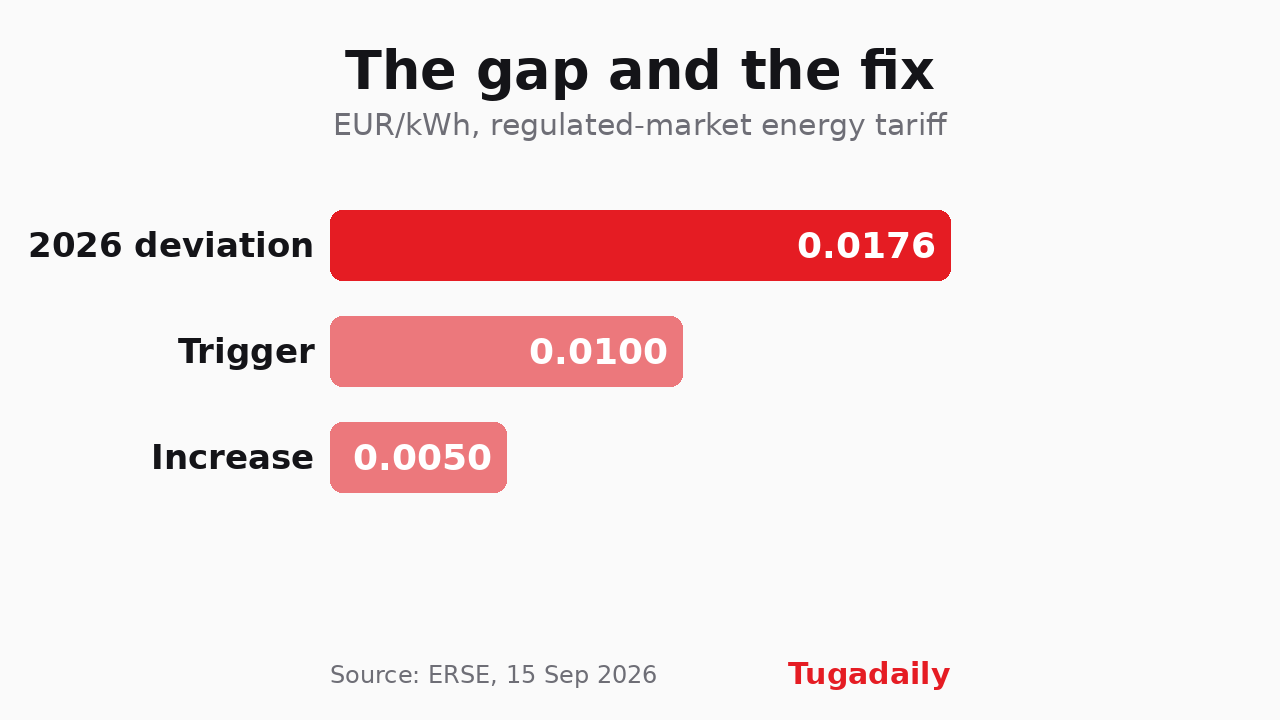
Decreto-Lei n.º 80-A/2026, published on 31 March, does not order anyone to lower a forecourt price. Article 7 says something else entirely: the 10 cents a litre is granted only in the weeks when the average price of coloured and marked diesel published by DGEG, the energy regulator’s statistics arm, sits more than 10 cents a litre above the average recorded in the week of 2 to 6 March.
There is, in other words, a line drawn in one specific week of March, and the money only fires in the weeks the price clears it. In a week when coloured diesel is cheaper than that benchmark, a farmer fills the tank at the market price and receives nothing at all.
Nor does the money arrive quickly. DGADR and DGRM work out who is eligible and for how many litres, pass that to IFAP, and IFAP makes a bank transfer to the account already on file in its beneficiary database.
Who does not get it
Owning a tractor is not enough. You need the coloured-and-marked diesel card issued by DGADR and a registration in IFAP’s beneficiary database. Anyone missing that second piece can register, but only in person, at the bodies listed on the institute’s website. Payment also depends on being up to date with tax and social security, and on having de minimis headroom left: for fishing and aquaculture the ceiling is 40,000 euros per company across three financial years.
One genuinely good clause is buried in article 8. Small farmers, holders of family-farming status, small aquaculture operators and small-scale artisanal and coastal fishing can stack this support with the uplift written into the 2026 state budget. Portuguese farm support rarely lets you have both.
Four of the five are still waiting
The March decree created five supports, not one. Alongside coloured diesel there was professional diesel for hauliers and coach operators, capped at 15,000 litres a vehicle, plus payments to taxi firms, social-sector organisations and volunteer fire brigades. Only farming and fisheries walked away from Wednesday with a renewal; the prime minister pushed the rest to the next Council of Ministers.
The text of the new decree has not appeared in Diário da República yet, and that is the document worth waiting for. It will show whether the reference week is still 2 to 6 March or whether the Government has quietly moved the trigger, which is the difference between a 15 million euro measure and a nearly costless one.
For context, this lands on top of the production-cost compensation package cleared by Brussels earlier this month, at a moment when pump prices are at record levels — which is exactly the condition under which article 7’s trigger tends to fire.
By Beatriz Mota
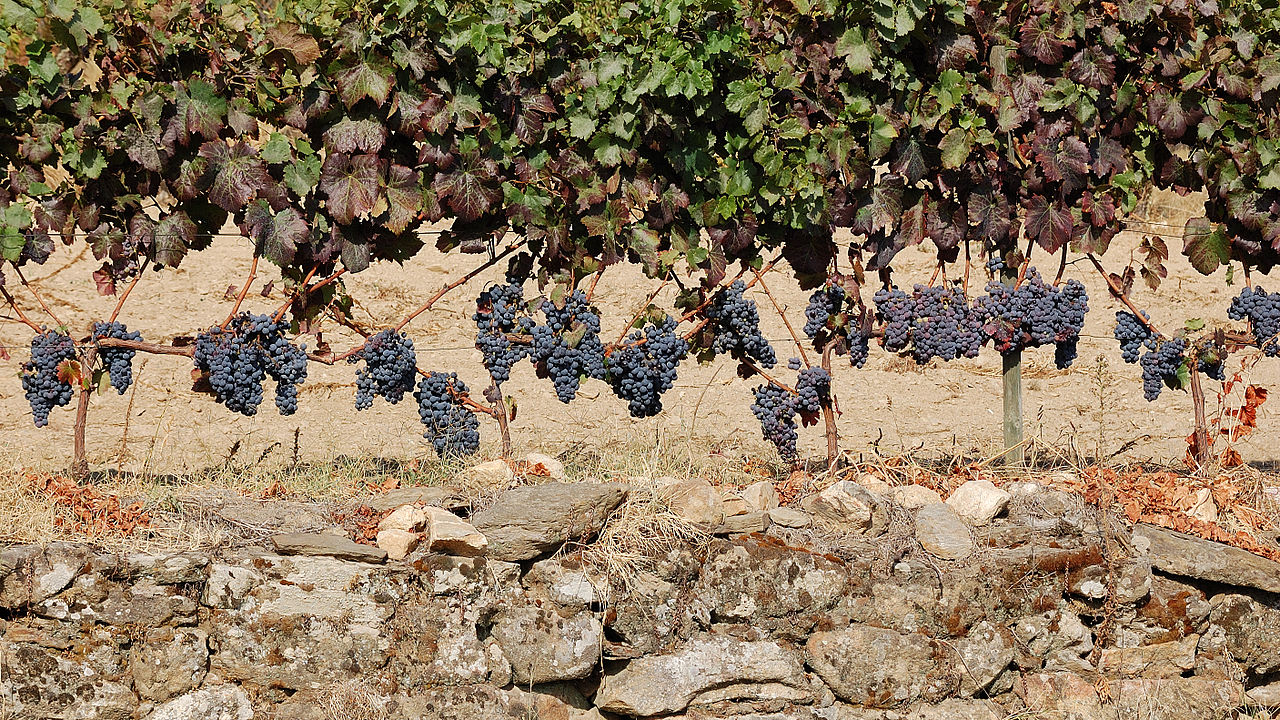
Illustrative · Photo: Sebastian Pichard / Pexels